
Last updated November 16, 2026
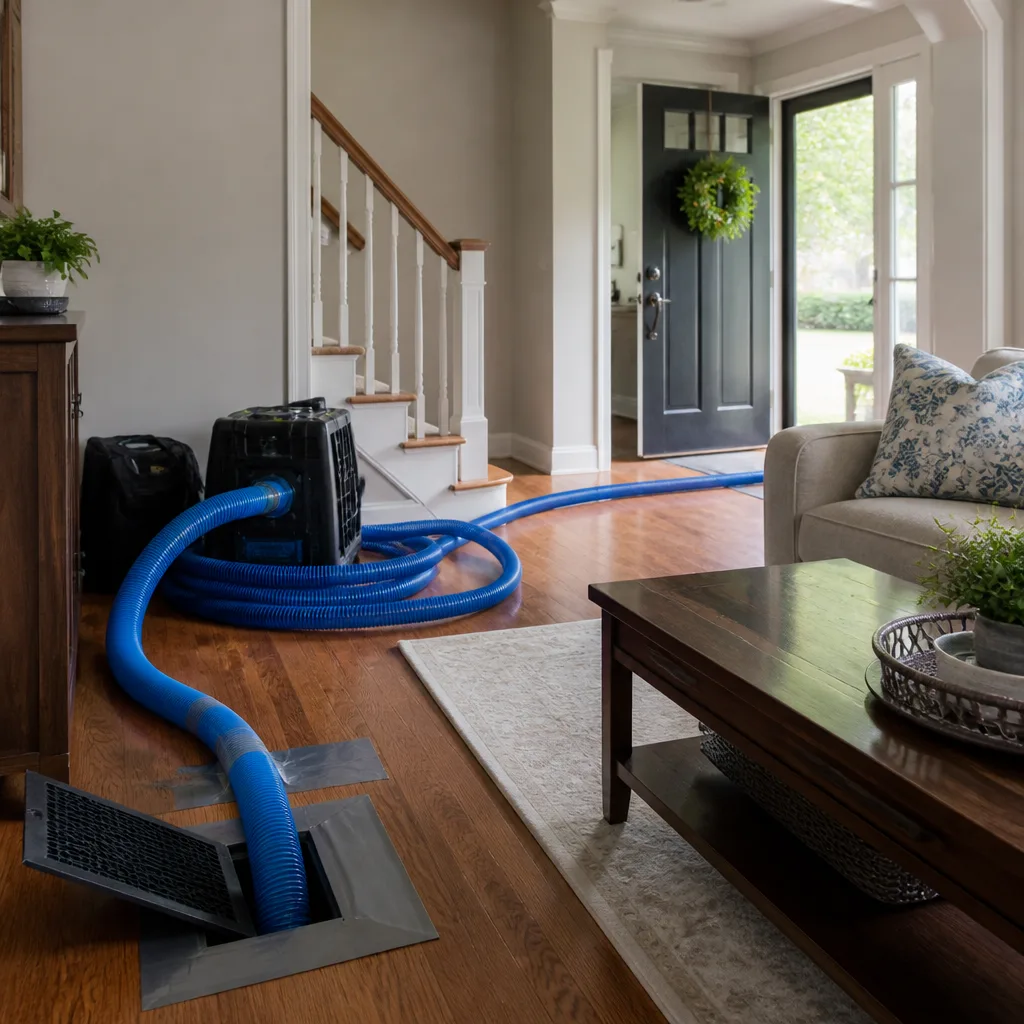 Whole-home duct cleaning
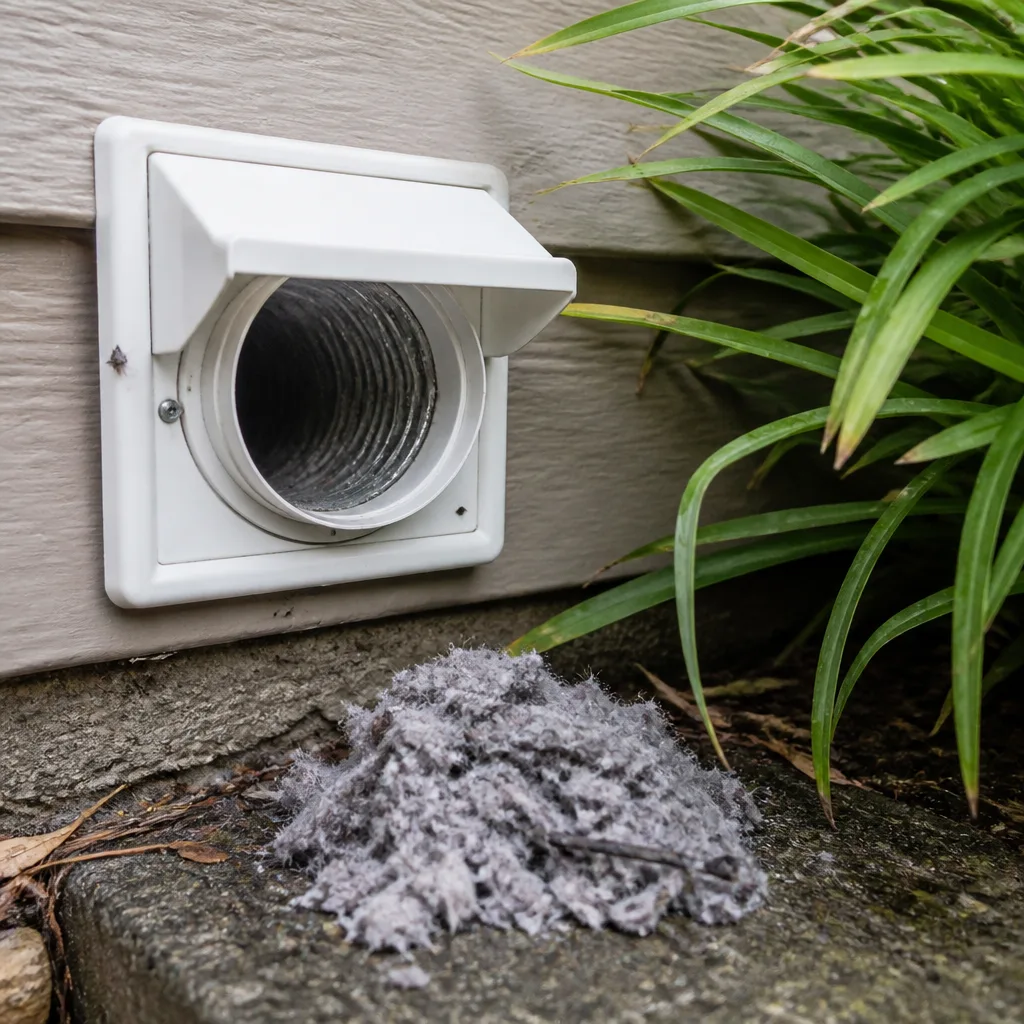 Dryer vent cleaning
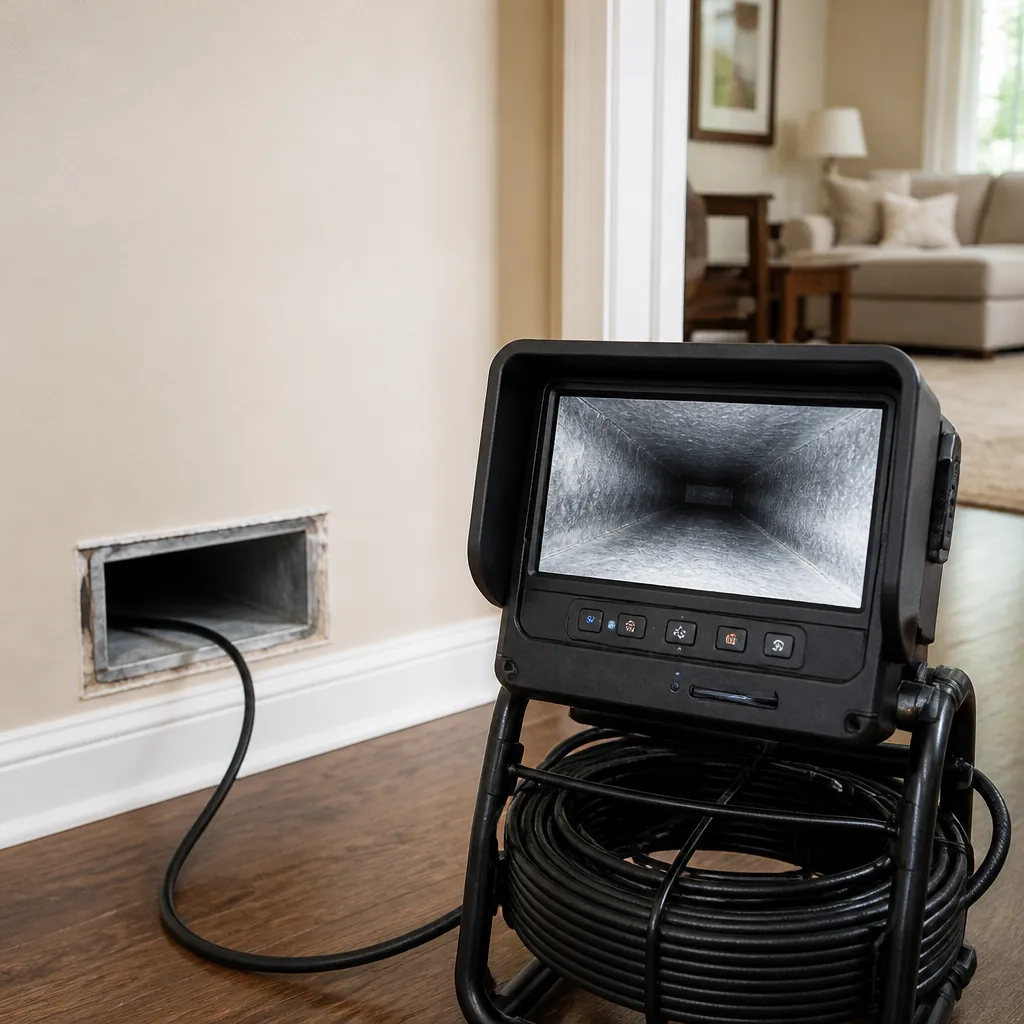 Camera inspection
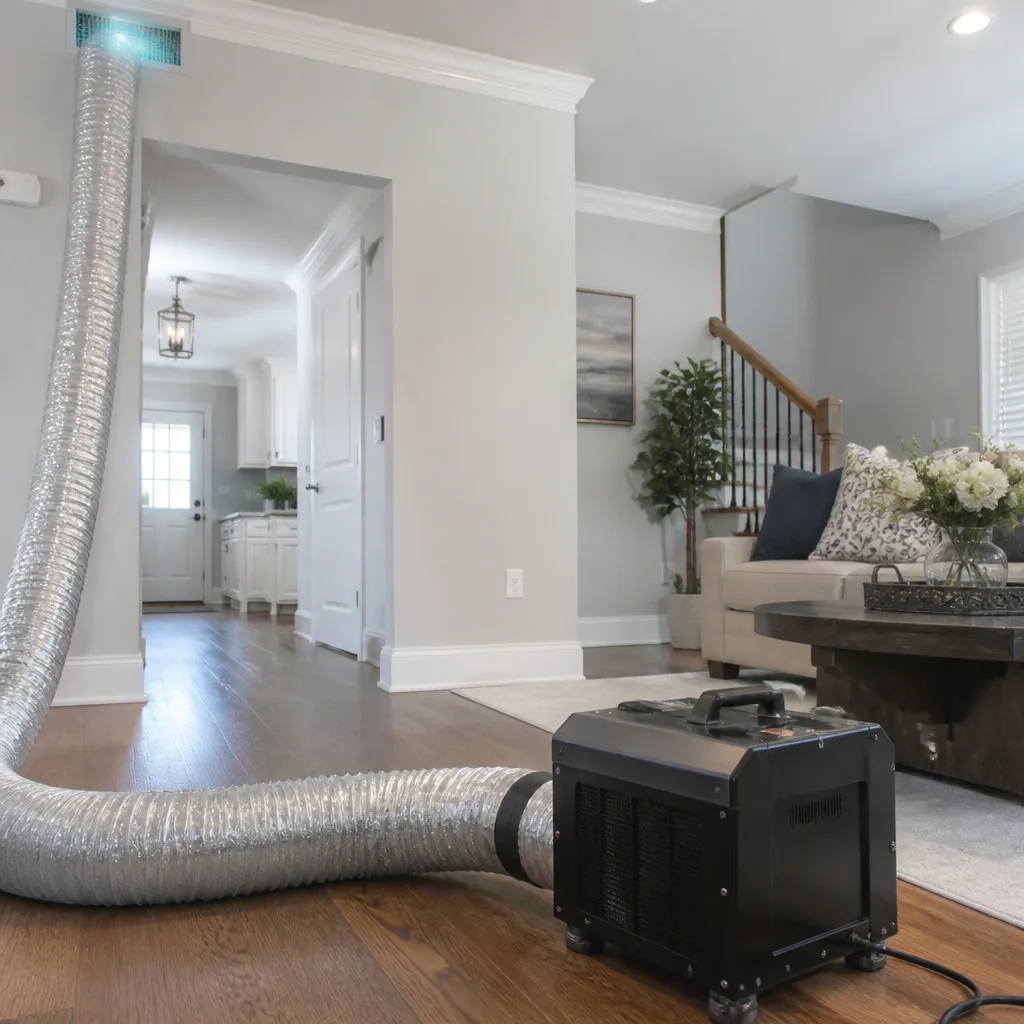 Sanitizing & deodorizing
Whole-system duct and dryer vent check with before-and-after photos - you see exactly what came out of your vents
That "$99 whole-house special" is a bait ad - the real number appears once they are in your hallway, or the "clean" is a shop-vac at the register. We photograph the inside of your ducts before and after instead.
The Complete Guide to Air Duct Cleaning in Glendale
A shop vac and a brush kit aren’t duct cleaning equipment. They’re the reason so many Glendale homes get “cleaned” every two years instead of every four to six. When a rotary brush is spun by a hand drill and the debris has nowhere to go but deeper into the trunk line, you don’t get a clean system. You get a system that looks better at the register and holds more dust in the runs. Most of the homes we walk into in Glendale don’t have a dirt problem. They have a first cleaning that was done wrong. This guide covers what a complete, equipment-verified clean actually involves, from the return intake to the supply register, and how to tell the difference before you hire anyone.
Quick Answer
Air duct cleaning in Glendale means removing the accumulated dust, caliche grit, and construction debris from every trunk and branch line using commercial-grade negative air pressure and rotary agitation, then verifying the result with before-and-after photos. A proper whole-system clean is scheduled once every four to six years for most homes, not annually, and should always include an inspection of the duct structure itself so sealing and repair happen at the same time rather than as a later add-on.
Styles & brands we work with
- Whole-home duct cleaning
- Dryer vent cleaning
- Camera inspection
- Sanitizing & deodorizing
Table of Contents
- Why Glendale Ducts Get Dirty Differently
- What Negative Air Pressure Actually Does in a Duct Trunk
- Source Removal vs. Surface Cleaning: The NADCA Standard
- A Full-System Clean, Step by Step
- Why Duct Repair Belongs in Every Cleaning Quote
- Dryer Vent Cleaning and the Fire Risk Homeowners Skip
- How Often Glendale Homes Really Need Duct Cleaning
- How to Choose a Duct Cleaner in Glendale
Why Glendale Ducts Get Dirty Differently
Most duct cleaning guides are written for humid climates where the enemy is mold and biological growth. Glendale isn’t that. The verified local profile here is desert: long dry stretches, a dust storm season that pushes fine particulate through every gap in a building envelope, and soil that includes caliche, the calcium-carbonate hardpan that turns to powder when it’s disturbed. That combination creates a contamination profile you won’t find in a guide written for Houston or Seattle.
What ends up in a Glendale duct system is mostly mineral and silica dust, not biological growth. It’s finer than what you’d see in a humid market and it behaves differently. Caliche dust is abrasive and slightly alkaline. It settles into the low points of horizontal runs, packs against the seams, and clings to the inside of flex duct where the corrugation gives it something to hold. A light vacuum pass doesn’t lift it. A rotary brush run at the wrong speed grinds it into the duct wall instead of removing it, which is exactly how a cheap cleaning makes the problem worse without anyone noticing until the next air quality complaint.
Dust storm season makes this worse in a specific way. When a wall of particulate moves through the valley, it finds every return air leak, every loose boot connection, and every unsealed plenum joint. Homes near the foothills or on the north side of Glendale tend to pull in more of it simply because there’s more loose ground upwind. Two homes on the same street with the same HVAC age can have very different duct conditions depending on how tight the envelope is and how the return was built.
That’s the first piece of local context worth holding onto: in Glendale, the question isn’t just how much dust is in the ducts. It’s what kind, and whether the system’s own leaks are letting more in every time the wind picks up. If your ducts are pulling in outdoor particulate through gaps, cleaning without sealing just resets the clock. Our air duct cleaning work starts with finding those entry points, not just emptying the trunk.
What Negative Air Pressure Actually Does in a Duct Trunk
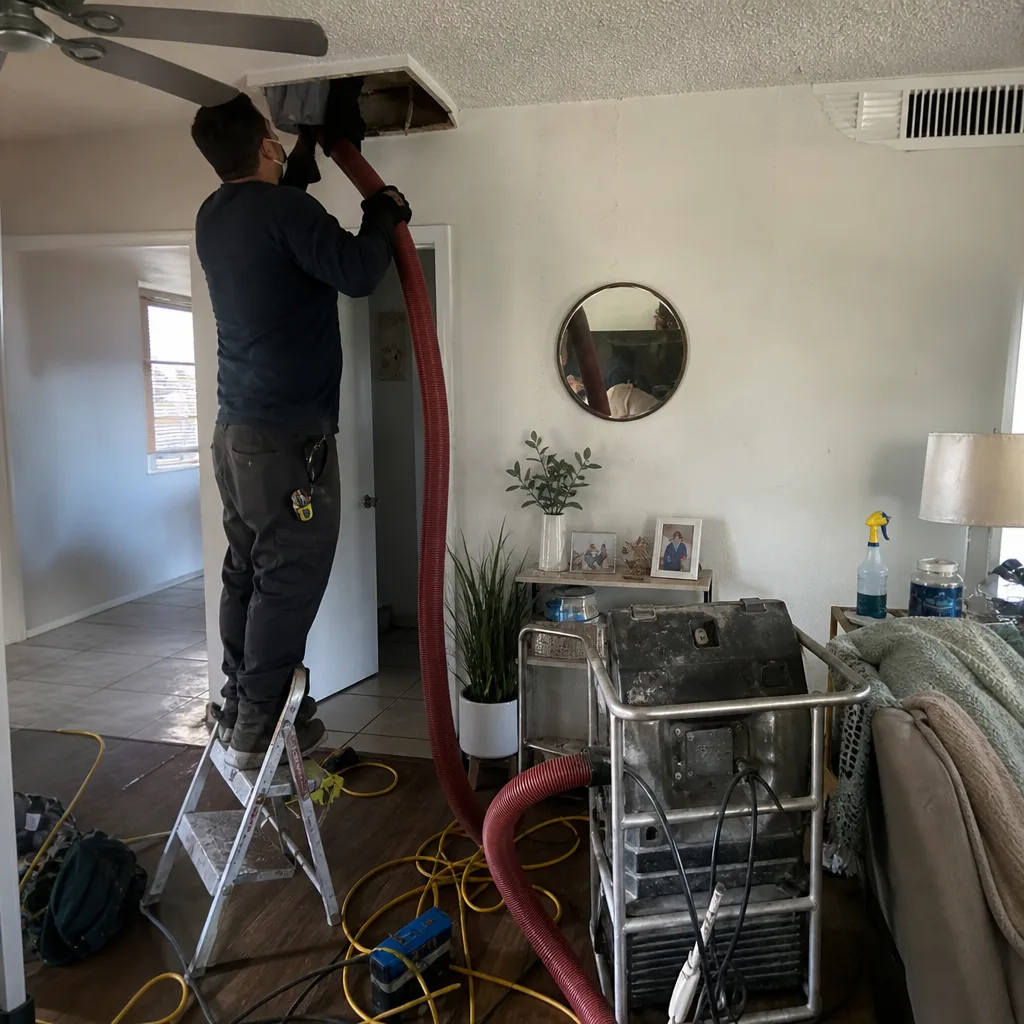
A standard shop vac attached to a register pulls maybe a few hundred cubic feet per minute at the nozzle, with almost no ability to hold pressure across a whole trunk line. A commercial negative air machine, like the Nikro units we run, does something different. It connects to the main trunk through a sealed access port and pulls the entire duct system into negative pressure, so every branch line is drawing air toward the collection point rather than pushing it around.
Here’s what that means inside the duct, in plain terms:
- Containment: Once the trunk is under negative pressure, agitation at any register pulls loosened debris toward the machine instead of into the room. Without containment, brushing a supply register just blows dust back into the living space.
- Reach: Negative pressure extends through every connected branch. A shop vac only cleans what the hose touches. A sealed negative air system cleans the whole connected run at once.
- Collection, not recirculation: The machine’s HEPA filtration captures the fine particulate. A shop vac without HEPA filtration exhausts it right back into the room you’re standing in.
- Verification: With the system under pressure and a camera inside, you can see whether the duct wall is actually clean or just disturbed. That’s the difference between a clean and a claim.
That’s why the equipment story matters more than the marketing. Rotobrush rotary systems give us the agitation, and Nikro negative air units give us the containment. Both are built for commercial and industrial work, not for a homeowner with a shop vac and a Saturday afternoon. When someone quotes you a duct cleaning price that looks unusually low, the first question to ask is what they’re connecting to the trunk line. If the answer is a portable vacuum at the register, the system isn’t under negative pressure and the debris isn’t going where it needs to go.
In Glendale, this matters more than in most markets because of the mineral content of the dust. Caliche grit is heavier than typical household dust. It settles deeper in the run and it doesn’t lift at gentle air speeds. Negative pressure plus rotary agitation is what gets it out. A blower-only approach moves the light stuff and leaves the heavy fraction compacted at the bottom of the horizontal runs, which is exactly the condition most of our Glendale customers are trying to fix when they call us the second time.
Source Removal vs. Surface Cleaning: The NADCA Standard
The National Air Duct Cleaners Association (NADCA) draws a hard line between two things that often get marketed as the same service. Surface cleaning wipes down what you can see from a register. Source removal pulls the contamination out of the system entirely, from the source, using the equipment and process that make it possible to actually get the duct clean rather than just make it look better from the outside.
Here’s the difference in practice:
- Surface cleaning: A vacuum attachment or brush is run into the register boot and the visible portion of the branch line. Loose dust near the opening is removed. The trunk, the plenum, and the far branches are untouched.
- Source removal: Every connected run is agitated with rotary equipment while the whole system is under negative pressure. Debris is collected at a sealed access point rather than dispersed. The plenum, trunk, and branch lines are all addressed, and the work is verified with photos.
The reason this distinction matters for Glendale homeowners is that surface cleaning is most of what gets sold at a low price point. It’s fast. It’s easy to bundle into an HVAC tune-up. And it does almost nothing for the actual contamination, which is sitting further into the system where the tool never reaches. Two years later the homeowner calls someone else because the dust is back, and the second round of “cleaning” grinds the same mineral dust deeper into the flex duct. By the third round the duct liner is abraded and the system genuinely needs repair, not cleaning.
Source removal meets the NADCA standard. Surface cleaning doesn’t. If you’re comparing quotes and one is significantly lower, the strongest question you can ask is whether the work meets NADCA’s source-removal standard and whether the technician will show you a camera view of the trunk before and after. A crew that can’t answer that clearly in the first conversation is telling you something about their process.
A Full-System Clean, Step by Step
A proper whole-system clean in a Glendale home follows the same sequence regardless of house size. What changes is the number of branch lines, the accessibility of the trunk, and whether the system has flex or rigid duct in the runs. The sequence itself is what makes the clean complete rather than partial.
- Pre-inspection with a camera. Before any equipment runs, we put a camera into the trunk line and into accessible branches to see the actual condition. That includes the type of contamination, the presence of construction debris, and any visible damage to the duct liner or seams. This step is where a lot of problems get identified that the homeowner didn’t know about.
- Access port installation. The negative air machine needs a sealed connection to the trunk. We cut access ports where the system allows and reseal them with products that hold up, not tape that will fail in the heat. This is one of the places where a cheap job starts to look different from a proper one: what gets left behind at the access points.
- Negative pressure established. The Nikro unit is connected and sealed, and the whole system is drawn into negative pressure. This has to be verified before any agitation starts. If the pressure isn’t holding, debris gets pushed into the living space instead of collected.
- Rotary agitation, run by run. Every connected branch is agitated with the Rotobrush equipment, working from the register back toward the trunk so debris moves toward the collection point. Agitation speed is matched to duct material; too fast on flex duct and you abrade the liner.
- Trunk and plenum cleaned. The main trunk and the plenum at the air handler are cleaned with larger rotary tools. The plenum is where most of the settled debris accumulates because it’s the low, wide section right above the equipment.
- Post-verification with photos. After the clean, the camera goes back in. We document the same trunk sections and same branches, and we review the before-and-after with the homeowner. This is the step that shouldn’t be optional. You shouldn’t have to guess whether your ducts are actually clean.
- Structural assessment. Once the system is clean and visible, we assess the duct structure itself for gaps, disconnected sections, and deteriorated connections. That assessment feeds directly into whether the home needs air duct repair before the system gets put back into service.
Seven steps. A surface clean is essentially two of them, done quickly, without the camera or the verification. That’s the difference in time, and it’s most of the difference in outcome.
Why Duct Repair Belongs in Every Cleaning Quote
Duct sealing and repair should be evaluated after every cleaning, not pitched later as an upsell. Here’s why that’s a structural point rather than a sales one. A duct system under negative pressure is a system that pulls air in through every gap it can find. If a branch line has a disconnected boot or a deteriorated flex connection, that gap pulls unfiltered air from the crawl space or the wall cavity straight into the supply stream. Cleaning a duct system and then putting it back into service with an open leak is like cleaning a room and leaving the window open onto a dusty street.
In Glendale specifically, two things make repair more common than in many markets. First, the heat cycling on attic and crawl-space duct runs. The system expands and contracts through the day, and flex duct connections at the boots and at the plenum are where that cycling shows up first. Second, the mineral dust itself is abrasive. A system that’s been running for years with caliche grit in the airstream will have more wear at the seams and at the joints than a system exposed to lighter household dust alone.
What we look for during the structural assessment:
- Disconnected or slipped boots at the register, where the supply terminates in the room.
- Deteriorated flex duct connections at the plenum and at branch splits.
- Seam failures in rigid trunk lines where the original tape or mastic has aged out.
- Crushed or kinked sections where the run was routed tightly through a joist bay.
- Return air leaks at the filter frame or the return boot, which pull unfiltered air from the return side.
When we find these during a cleaning, we flag them and give the homeowner a separate written scope for the repair. That’s different from discovering them months later during a “free duct inspection” that turns into a hard sales conversation. The repair and the clean belong to the same diagnostic visit because they’re answering the same question: is this system actually delivering clean air to the rooms, or is it leaking around the parts you can’t see?
Dryer Vent Cleaning and the Fire Risk Homeowners Skip
Dryer vent cleaning is a separate service from duct cleaning, but in Glendale homes it’s often the higher-priority one. The National Fire Protection Association (NFPA) advises that dryer vents be cleaned regularly to reduce fire risk, and it’s one of the few home maintenance items where skipping the work has a direct safety consequence rather than just a comfort one.
The reason a dryer vent fouls the way it does: every load of laundry pushes heated air and lint through the vent line. Most of the lint gets caught at the lint trap, but a fraction gets past and accumulates on the inside walls of the vent. Over time that buildup narrows the vent and traps heat in the dryer cabinet and the vent line itself. A dryer vent line with significant accumulation is a fire hazard, full stop. It’s also less efficient, and the dryer runs longer per load, which is often the first thing a homeowner notices before they think about fire risk.
Glendale’s dry climate doesn’t exempt a home from this. If anything, the heavy use that comes with summer laundry loads and the way a vent run can be routed through an unconditioned attic both contribute to the buildup. The vent should be inspected and cleaned on the schedule the manufacturer of your dryer recommends, which for most homes lands around once every year or two depending on how often the dryer runs.
What to watch for before it becomes a fire concern:
- The dryer takes noticeably longer to dry a load than it did a year ago.
- The top of the dryer or the vent line itself feels hot to the touch during a cycle.
- The exterior vent flap doesn’t open fully or opens weakly.
- Lint is visible around the vent hood or the vent line has visible kinks.
Our dryer vent cleaning covers the full run, from the dryer connection at the back of the appliance to the exterior termination. We use the same Guardsman-brand materials in the toolkit that we use on the duct service, because the parts need to hold up to heat and airflow rather than just look right on install day.
How Often Glendale Homes Really Need Duct Cleaning
Most Glendale homes don’t need annual duct cleaning. The realistic schedule is four to six years for a home with average dust conditions and a properly sealed system, and the guide that tells you every spring is usually selling a subscription rather than an air quality outcome. Here’s the honest breakdown of who’s at four years and who’s at six:
- Every four years: Homes near the foothills or on the north side pulling in more dust storm particulate, homes with pets, homes with more than one occupant who spends the day at home, and homes with an older duct system that hasn’t been sealed.
- Every five to six years: Homes on tighter envelopes with a well-sealed system and no pets, in areas of Glendale with less wind exposure.
- Sooner than four: After a major renovation, if the ducts were exposed to construction dust, or if the system has visible contamination at the registers. Also sooner if a prior clean was a surface job that pushed debris deeper, which is the case that tends to prompt the call in the first place.
The individual triggers worth watching are simpler than a calendar. Visible dust blowing from a supply register after the system starts up. A persistent musty or mineral smell when the air handler runs. Allergy or respiratory symptoms that get worse in the house and better outside. A noticeable drop in airflow at one or more registers. Any of those is a signal to get an inspection, and the inspection will tell you what the actual schedule for your home should be.
One more thing on interval: cleaning and sealing are separate questions. If your ducts are leaking, cleaning them resets the dust clock but the leaks pull more in every day, and the effective interval drops whether or not you clean more often. Sealing a leak is what extends the interval. If you’re in Glendale and you’ve been told you need cleaning every year, ask what’s leaking. The answer usually explains the frequency.
How to Choose a Duct Cleaner in Glendale
The single most useful question to ask a duct cleaning company is what equipment they bring and whether the work is verified with photos. The equipment answer tells you whether they can actually clean a system. The verification answer tells you whether they’ll show you the result. Both of those are more informative than any review or any price quote, because the market has plenty of companies that will show up with a shop vac and invoicing software.
What to look for:
- Commercial-grade rotary agitation and negative air equipment. Ask for the brand. Rotobrush and Nikro are the ones that hold up as answers, because those systems are built for commercial and industrial applications.
- Abatement-level air quality handling. If the home has had water intrusion, pest activity, or a renovation that pushed construction dust into the system, the cleaning needs to be more than surface agitation. Abatement Technologies equipment is what differentiates a remediation-capable crew from a light-cleaning one.
- Camera inspection before and after. No exceptions. If they don’t have a camera, they’re guessing at what’s in the system and at what got out.
- A company that handles repair. If the company can’t evaluate duct structure and quote repair, you’ll be back on the phone in a few months with the same problem, and the repair will be sold to you as a surprise.
- Familiarity with filtration systems. A crew trained on Honeywell and Aprilaire filtration understands how a duct system’s filtration interacts with the ductwork itself. That’s what lets them recommend IAQ upgrades that make sense instead of ones that just add a line item.
- Written scope before any work starts. What’s being cleaned, what’s being inspected, what’s being verified, and what repair is being quoted separately.
The companies to avoid are the ones with a fixed low price that somehow expands on-site. That pattern usually reflects a surface clean sold at a headline price and then repaired by an upsell once the technician is inside. A written scope agreed in advance is the thing that prevents it.
Common Mistakes to Avoid
- Hiring on price alone. A low headline price in Glendale usually means a surface clean with a shop vac, and the mineral dust in the run gets packed deeper rather than removed. You end up paying twice: once for the bad clean and again for the correct one.
- Skipping the camera inspection. Without a camera, neither you nor the technician knows what’s inside the trunk line or the branches. You’re paying for work with no verification, and any claim about the result is a guess.
- Ignoring duct leaks because the cleaning “fixed” the dust. Cleaning a leaking system resets the dust clock but the leak keeps pulling outdoor particulate in, including dust storm particulate. Sealing extends the interval; cleaning alone doesn’t.
- Cleaning without evaluating repair. Structural problems found after the clean should be part of the same conversation, not a later upsell. If your quote doesn’t include a structural assessment, ask why.
- Treating the dryer vent as an afterthought. It’s a separate service from duct cleaning and it’s the one with the fire-risk outcome. Skipping it for years because it doesn’t blow dust into the room is the kind of omission that only gets caught after a problem.
- Cleaning every year when four to six is the right interval. Annual cleaning is rarely the right answer in a desert climate with a well-sealed system. If a company is recommending yearly service before inspecting, they’re selling a schedule rather than reading your ducts.
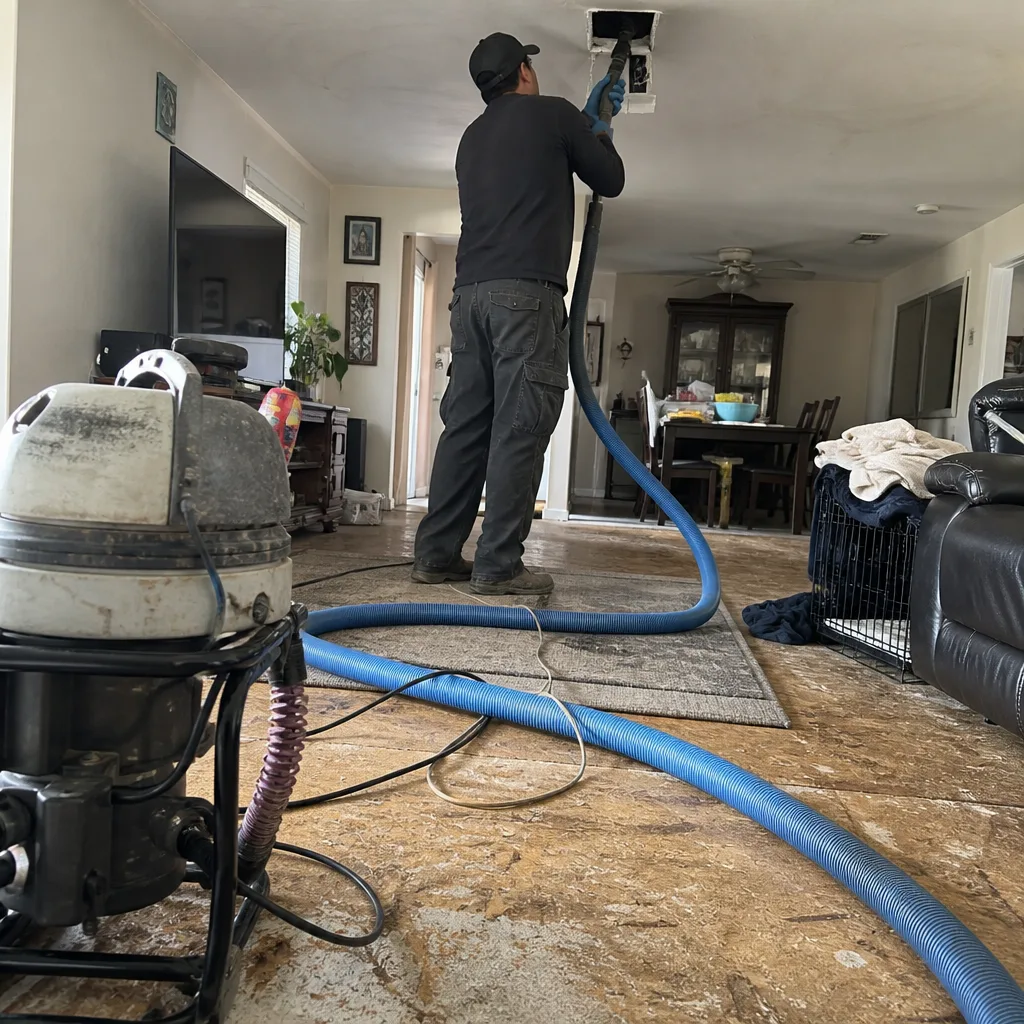
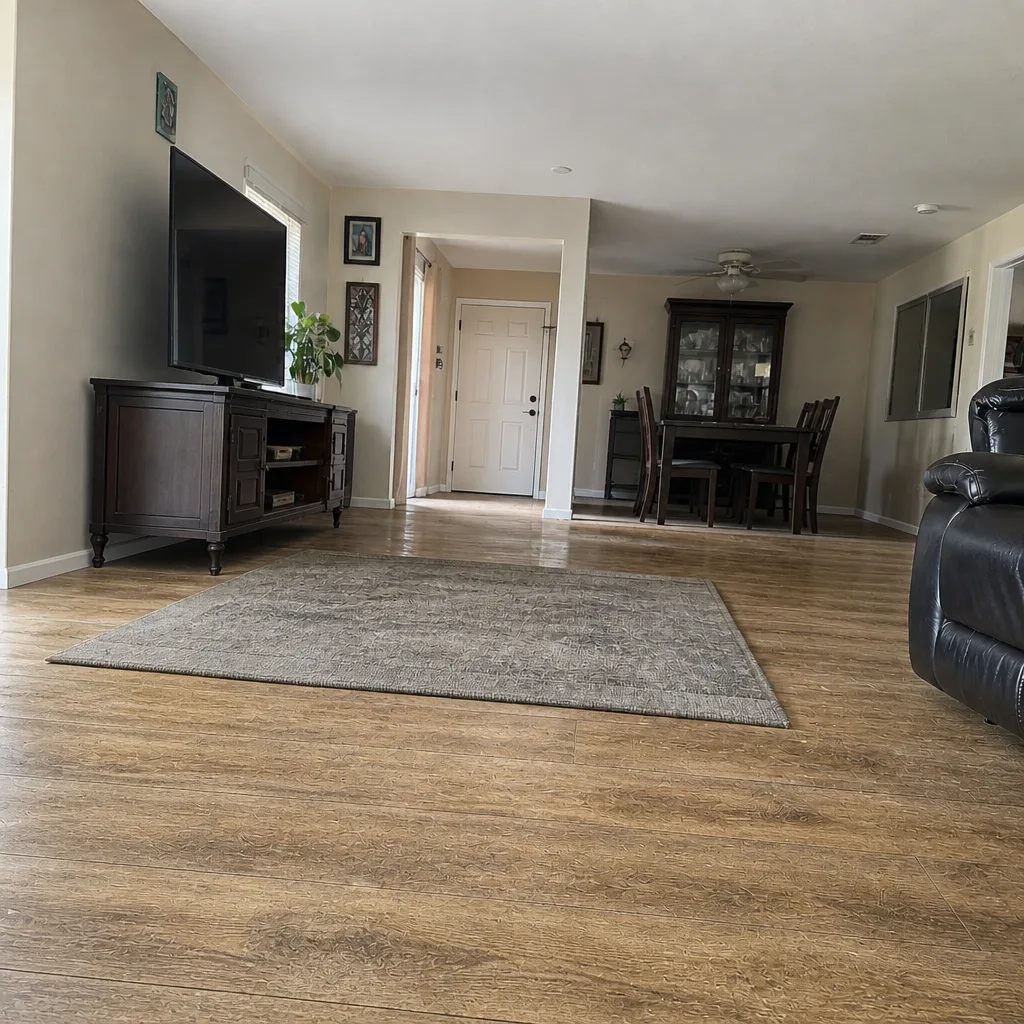
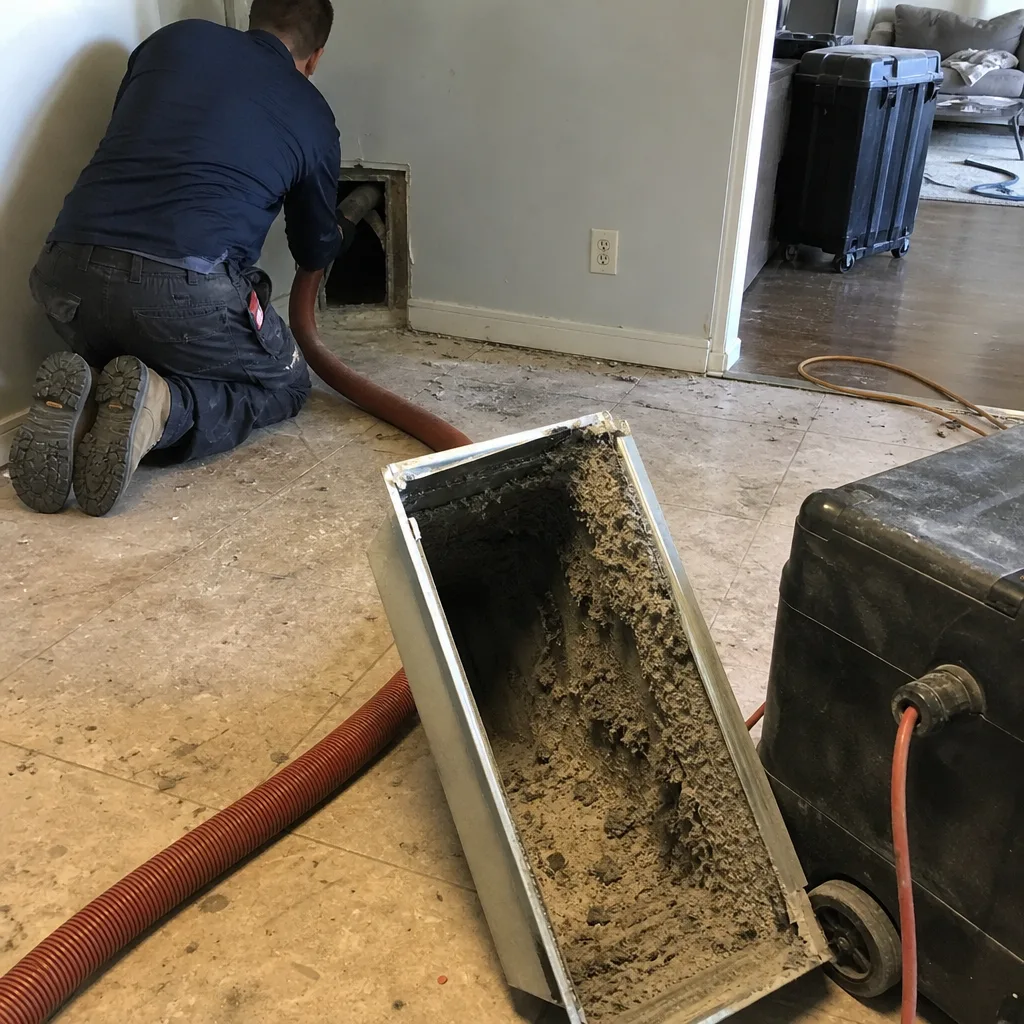
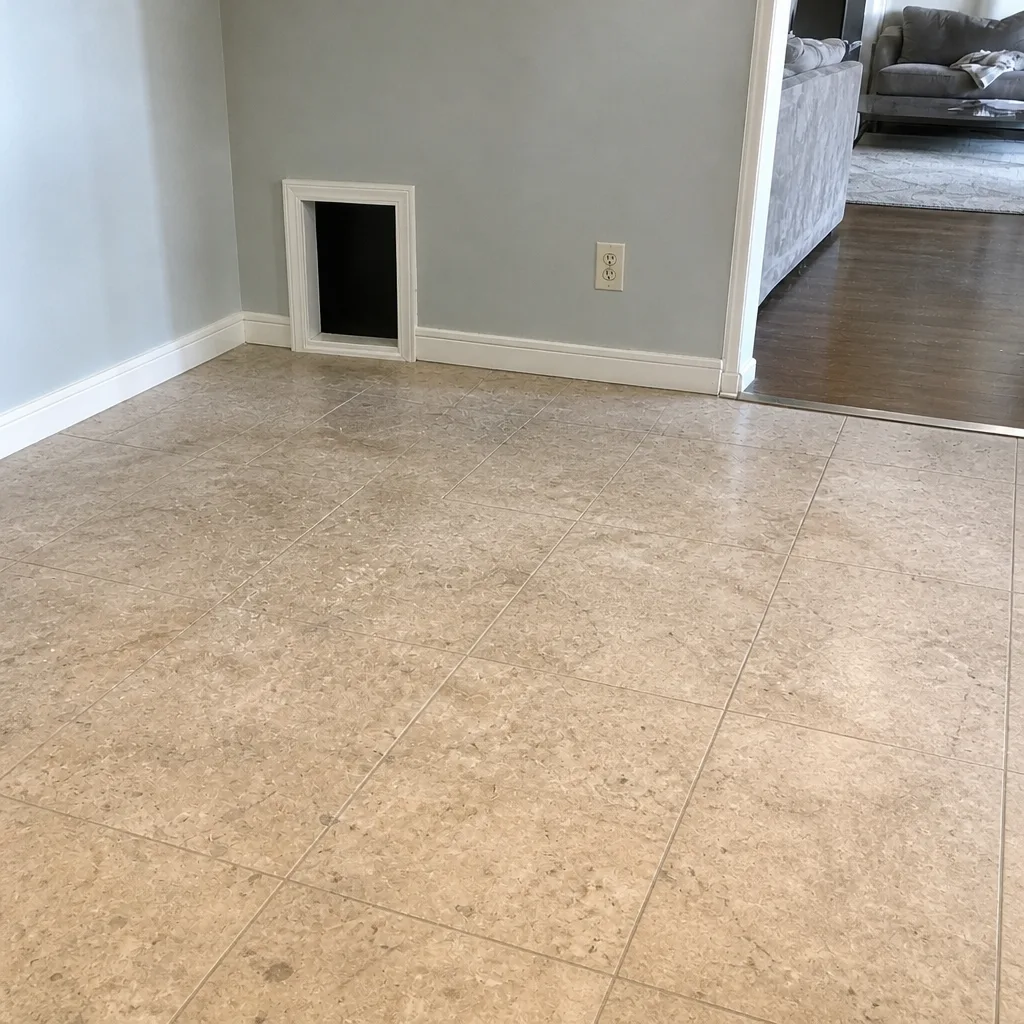
- Accepting a clean without before-and-after documentation. A before photo you never see an after for doesn’t tell you anything. The verification matters as much as the agitation.
See the difference
 Before
 After
 Before
 After
 Before
 After
When to Call a Professional
Call when you’re seeing dust blow from the registers after the air handler kicks on, when there’s a persistent mineral or musty smell tied to the system, when air flow drops noticeably at one or more rooms, or when the system hasn’t been serviced and you can’t find a record of a prior cleaning. Also call if the dryer is running longer than it used to, the vent line feels hot, or you haven’t looked at the vent in years. Call if a prior cleaning was done at a low price point and you’re not confident the work was complete. Glendale Duct Cleaning offers free estimates in Glendale – call (855) 745-4301. We answer 24/7. Fast dispatch from 7am to 7pm, Sunday through Friday.
Frequently Asked Questions
Air duct cleaning in Glendale is priced per system, not per vent, and the written estimate sets the final price after an inspection of the trunk and branch layout. Whole-system cleaning typically falls in a mid-range for a standard single-story HVAC layout, with additional cost for larger layouts, systems with extensive flex duct, or homes needing significant repair alongside the cleaning. We don’t quote a per-vent number because the honest unit of work is the system, not the register. Call (855) 745-4301 for an exact quote – estimates are free.
Cheap quotes are almost always surface cleaning: a vacuum attachment at the register, no negative pressure, no camera, no verification. What you’re paying for in a proper clean is equipment that connects to the trunk line and holds the whole system under negative pressure while rotary agitation runs every branch. That equipment costs money to own and to run, which is the honest reason the price is higher. A very low quote is usually a surface clean, and in Glendale’s mineral dust you’ll pay for it twice. Call (855) 745-4301 for a written scope and an exact quote – estimates are free.
You know because you see it: a camera inspection before the clean and the same camera views after, reviewed with you at the house. That’s the standard we hold ourselves to, and it’s the step that separates a real clean from a claim. Ask any company you’re considering whether they do before-and-after photo verification. If the answer is vague, that’s your answer. Call (855) 745-4301 for an estimate – estimates are free.
It makes the type of cleaning more important, not just the frequency. Caliche dust is mineral, abrasive, and heavier than typical household dust. It settles into horizontal runs and against seams, and it doesn’t lift at the air speeds a shop vac produces. The system needs negative pressure and rotary agitation to get it out, which is why a proper job in Glendale matters more than the calendar alone suggests. Call (855) 745-4301 for an exact quote – estimates are free.
Four to six years for most homes, not annually. Homes with pets, more occupants, or heavier dust exposure land closer to four. Homes with a sealed system and lighter dust land at five to six. The calendar is secondary to what the ducts actually show, and an inspection will tell you which schedule applies to yours. Call (855) 745-4301 for an exact quote – estimates are free.
It’s a separate service, and it’s the one with the fire-risk outcome. The NFPA advises regular dryer vent cleaning, and a vent line with significant lint accumulation traps heat in the vent and the dryer cabinet. If your dryer is running longer than it used to or the vent line feels hot, that’s the signal to schedule it. Call (855) 745-4301 for an exact quote – estimates are free.
The Bottom Line
The most important thing to know about duct cleaning in Glendale isn’t how often. It’s whether the clean is done correctly the first time. A surface clean with a shop vac and a brush pushes mineral dust deeper into the system and buys you two years at best before the problem comes back. A complete clean uses negative air pressure to hold the whole system, rotary agitation to reach every branch, and a camera to verify the result before the job is closed. After the clean, evaluate the duct structure for leaks and repair so the system stops pulling outdoor particulate in. That’s the difference between cleaning that resets the clock and cleaning that just makes the registers look better. Clean it, fix it, and protect it, in that order. If you want a straight answer about your own system, start at Glendale Duct Cleaning or call us directly.
Get a Free Estimate in Glendale
If you’re not sure whether your ducts were ever cleaned properly, the fastest way to find out is an inspection with a camera and a written scope. Call Glendale Duct Cleaning at (855) 745-4301 for a free estimate. Our technicians have up to experience with Rotobrush and Nikro equipment, and we work with your insurer if repair is needed. We answer 24/7. Fast dispatch from 7am to 7pm, Sunday through Friday.
Written by the team at Glendale Duct Cleaning.