
Last updated November 16, 2026
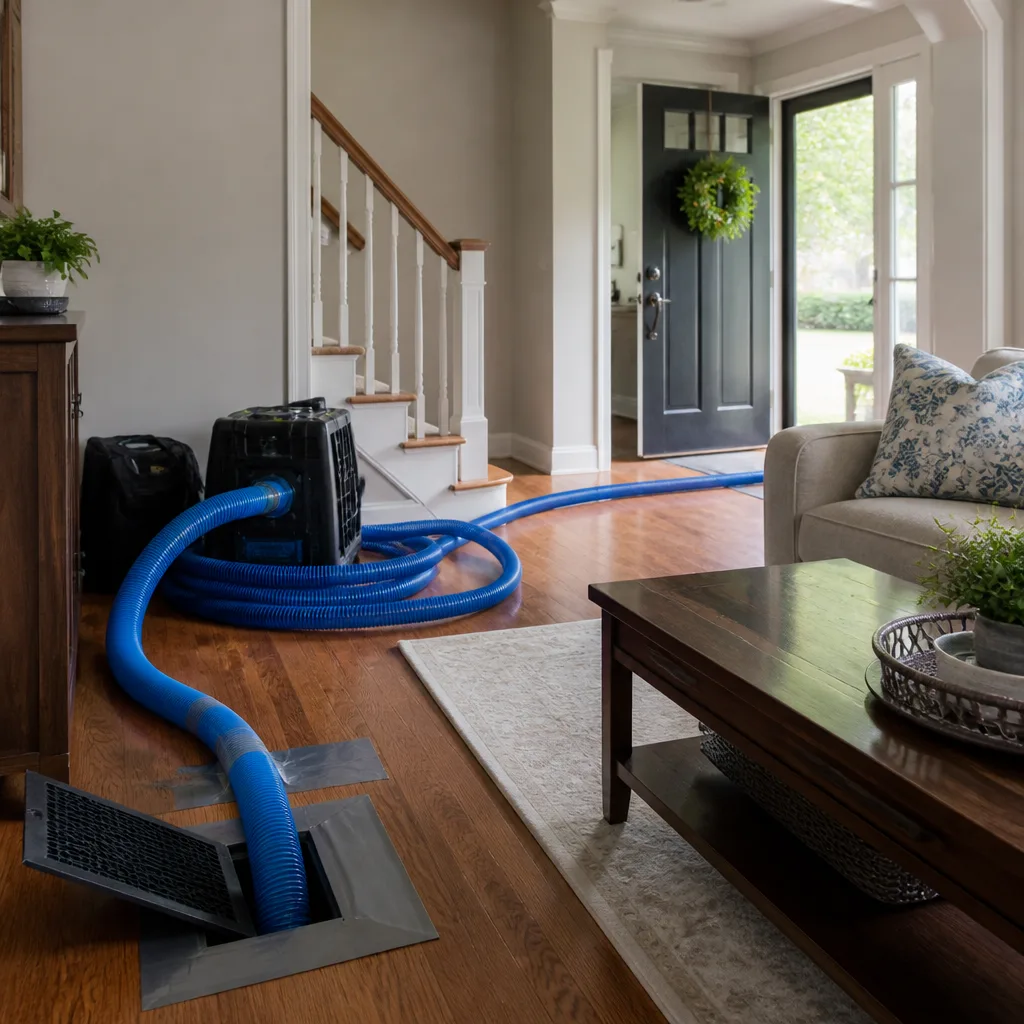 Whole-home duct cleaning
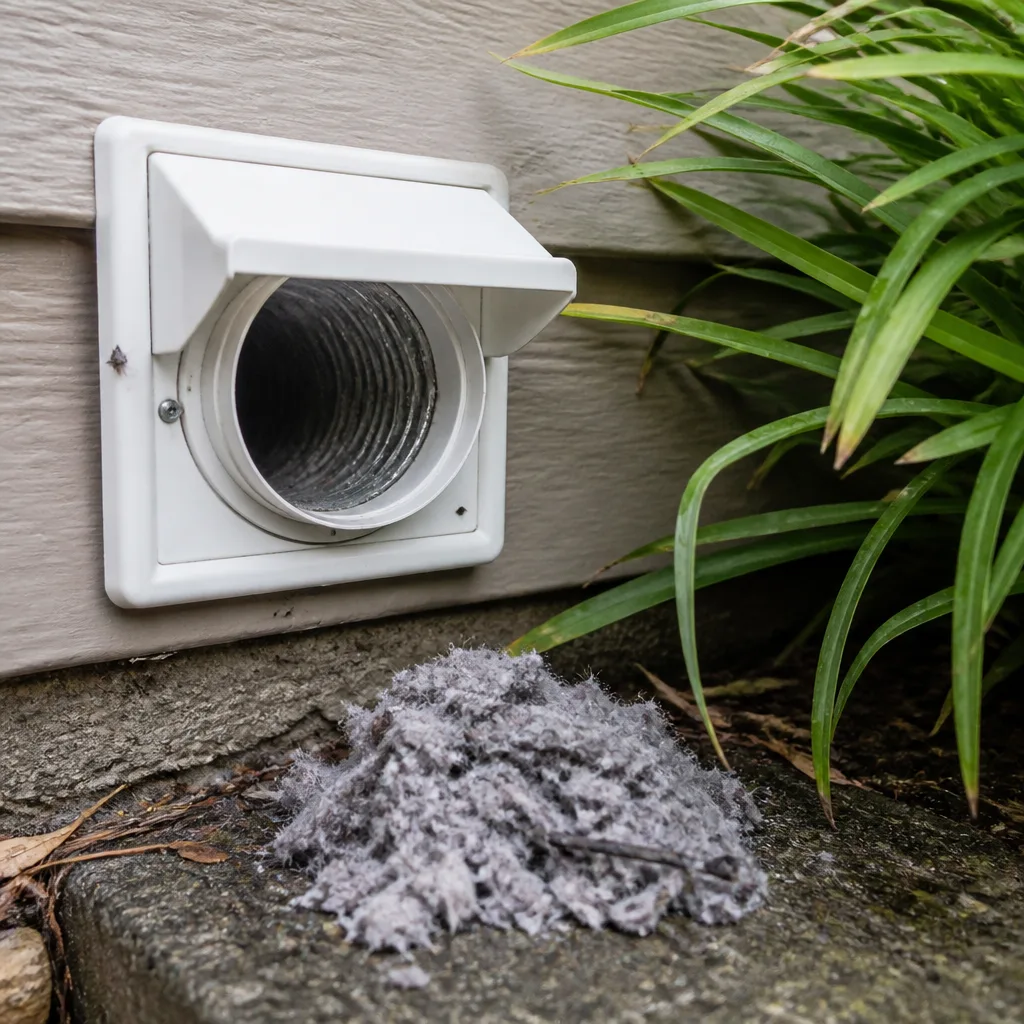 Dryer vent cleaning
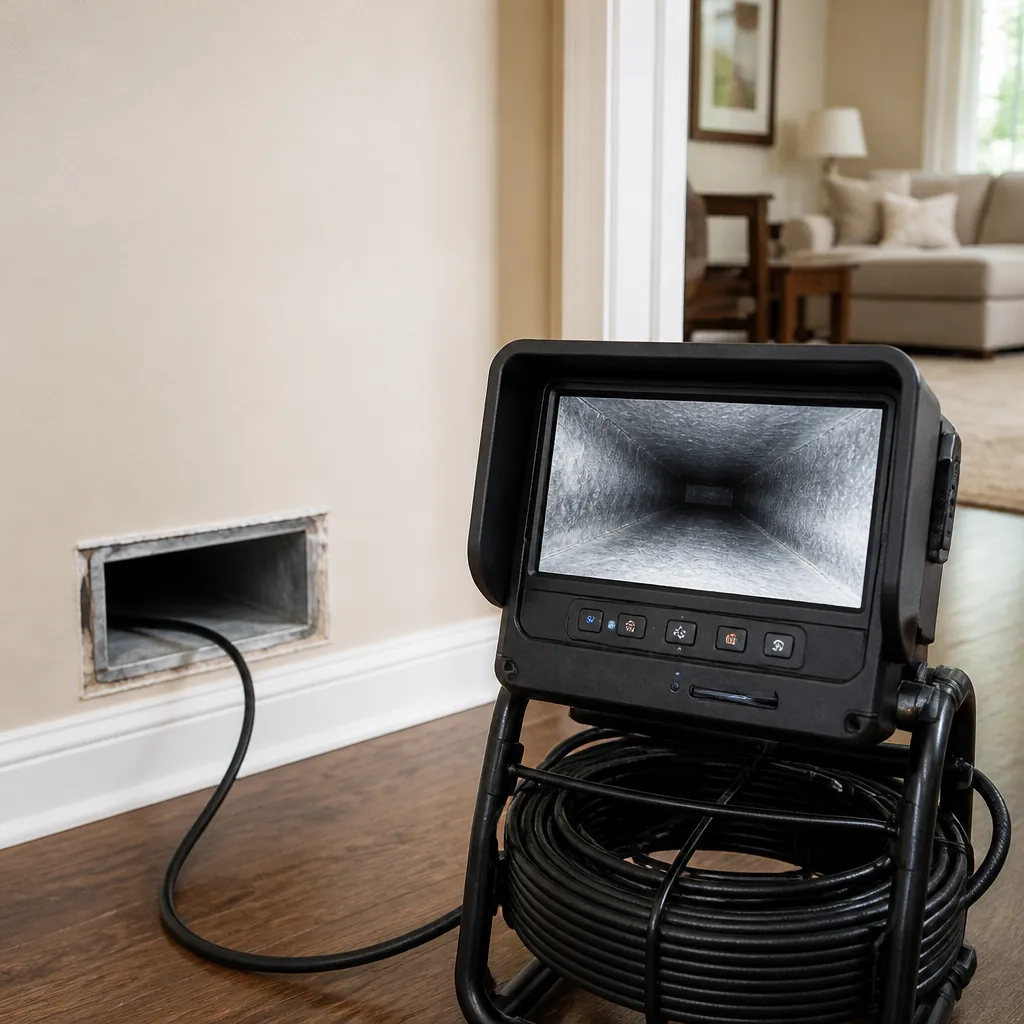 Camera inspection
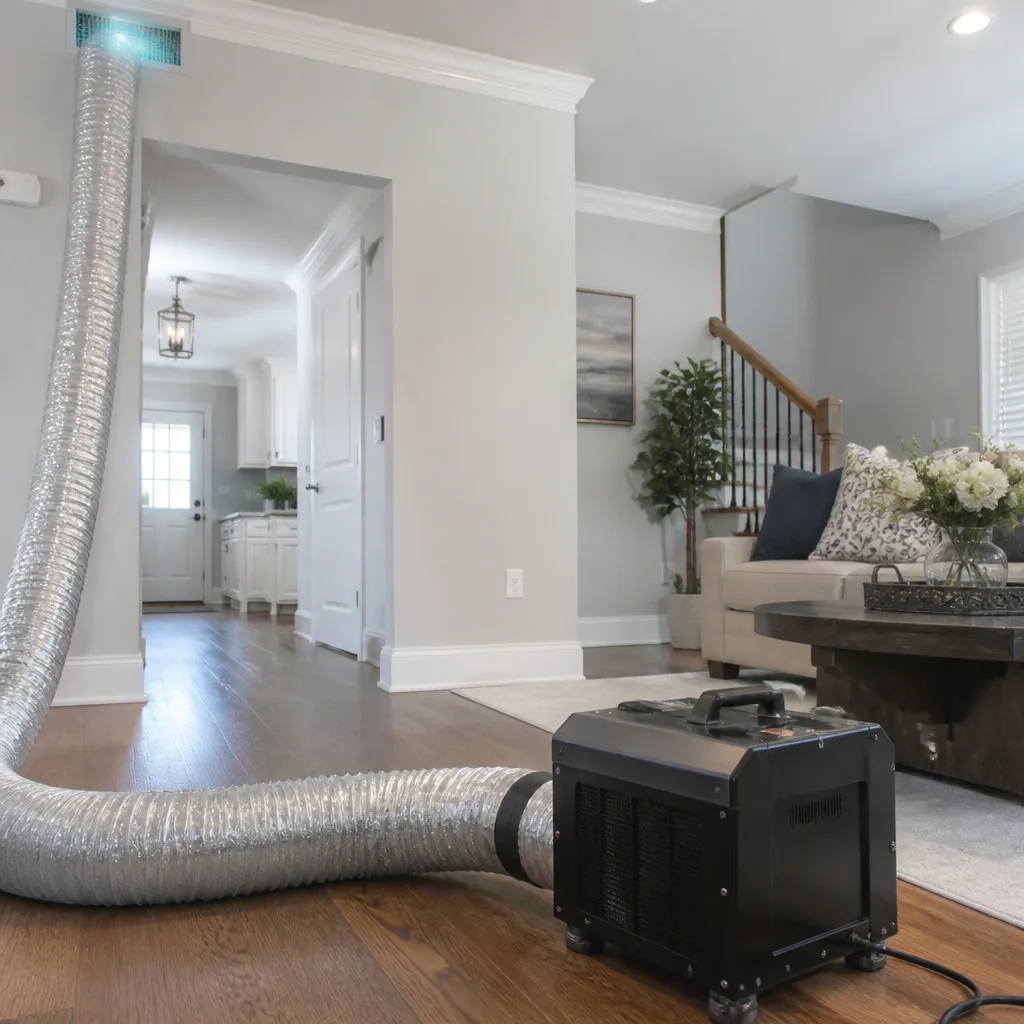 Sanitizing & deodorizing
Whole-system duct and dryer vent check with before-and-after photos - you see exactly what came out of your vents
That "$99 whole-house special" is a bait ad - the real number appears once they are in your hallway, or the "clean" is a shop-vac at the register. We photograph the inside of your ducts before and after instead.
DIY vs Professional Air Duct Cleaning: The Glendale Homeowner’s Decision Guide
Most homeowners who rent a shop vac and buy a brush kit assume they’re getting the same result as a professional crew, just without the invoice. They aren’t. The gap isn’t effort or elbow grease. It’s physics. A Rotobrush system moves roughly 450 CFM of negative air pressure. The most powerful shop vac you can buy at a hardware store tops out around 150 CFM, and that’s before you account for hose length, filter loading and the static pressure inside a 25-foot trunk line. This guide explains what that difference actually does inside your ducts, what a homeowner can legitimately handle around the house, and how to decide whether to call in a specialist here in Glendale.
Quick Answer
Professional air duct cleaning is worth it when your system has visible debris buildup, a recent renovation, or chronic dust and allergy complaints, because source-removal equipment generates the negative pressure needed to pull debris out instead of stirring it deeper. DIY cleaning is a reasonable choice for register covers, return grilles and a short, straight dryer vent run you can reach. For anything inside the trunk line or a flexible duct system, a pro with commercial-grade equipment is the safer and usually cheaper long-run decision.
Styles & brands we work with
- Whole-home duct cleaning
- Dryer vent cleaning
- Camera inspection
- Sanitizing & deodorizing
Table of Contents
- The Physics of Source Removal: Why CFM Decides Everything
- What DIY Cleaning Legitimately Accomplishes
- The Real Risk of DIY in Glendale Homes
- Cost Over 10 Years: DIY Re-Cleaning vs. Professional Intervals
- Dryer Vent Cleaning: Where DIY Actually Works
- When the Problem Isn’t Dirt, It’s Damage
- How to Choose a Duct Cleaner in Glendale
- Common Mistakes to Avoid
The Physics of Source Removal: Why CFM Decides Everything
Duct cleaning works on one principle: you have to capture debris and physically remove it from the system. Any method that loosens dust without capturing it doesn’t clean your ducts. It redistributes it. That’s the difference between source removal and a glorified blowout, and it comes down to two numbers.
CFM (cubic feet per minute) measures how much air a machine can move. Static pressure measures how hard it can push or pull against resistance. A residential shop vac is designed to pick up sawdust on a garage floor, a job with almost no resistance. The moment you attach a hose to a duct with 20 or 25 feet of run behind it, resistance climbs and effective airflow collapses. Professional systems are built for that resistance. A Rotobrush runs at roughly 450 CFM and pairs the vacuum with a rotary brush that agitates the duct wall so debris releases into the airstream. The vacuum then captures it.
Here’s what happens with a shop vac setup that can’t hold negative pressure:
- You disturb debris on the duct floor.
- The weak airflow can’t lift and carry it to the vacuum head.
- Air movement inside the system pushes the loosened dust downstream, where it settles in the trunk line or recirculates through supply registers.
- A week later the house is dustier than before you started.
This is the reason professional duct cleaning in Glendale homes starts with a negative-pressure setup at the main trunk. Capture comes first. Agitation comes second. Skip the capture and you’ve only made the problem more mobile. Professional-grade equipment isn’t a marketing line. It’s the whole reason source removal works at all.
What DIY Cleaning Legitimately Accomplishes
We’re not going to tell you nothing you do at home matters. Plenty does. The line between useful homeowner maintenance and wasted effort is clear once you know it, and it’s mostly about what you can physically reach.
Things a homeowner can genuinely handle:
- Register covers and supply grilles. Pop them off, wash them in the sink or hose them outside, let them dry, put them back. This removes surface dust that otherwise gets pushed into the room every time the system cycles.
- Return air grilles. The large returns pull in dust and pet hair all day. Vacuuming the face of a return grille with a brush attachment is quick, safe and worth doing a few times a year.
- The dryer lint trap and the space behind the dryer. Clear the trap before every load. Vacuum the lint that collects behind and under the appliance. Both are genuine fire-prevention steps.
- The exterior dryer vent flap. Check that it opens freely when the dryer runs and isn’t blocked by lint, nests or landscaping. That’s a five-minute inspection with real value.
- Filter changes. A clean filter is the single highest-impact thing any homeowner does for indoor air quality. Replace it on the schedule your filter and system call for.
What DIY doesn’t accomplish is anything inside the ductwork itself. Register covers are on the outside. The dust that causes allergy complaints, musty smells and reduced airflow lives on the inside surfaces of the trunk line and branch runs, places a shop vac hose can’t reach with any real capture power. Knowing that boundary saves you a wasted afternoon and a mess of stirred-up dust in your Glendale home.
The Real Risk of DIY in Glendale Homes
Homes across Glendale, from the older blocks near downtown to the newer builds out toward the foothills, share a construction habit that makes DIY duct work riskier than it looks: flexible duct. Flex duct is common in attic runs and branch lines because it’s inexpensive and fast to install. It’s also thin, and the inner liner is easy to puncture.
Here’s the scenario. You buy a long brush or a flexible rod kit and feed it into a duct from a register. Somewhere in the attic, that run turns a 90-degree elbow. A rigid brush pushed hard around a tight bend in a hot attic can tear the inner liner, crush the duct, or disconnect a joint you can’t see. Now you don’t have a cleaning problem. You have a leak blowing conditioned air into the attic, which means higher energy bills and a system that never quite keeps up.
The attic heat matters here. Glendale summers push attic temperatures high enough that working up there is a genuine safety concern on its own, before you add a brush and a ladder. Add in the chance of stepping through a ceiling or brushing against wiring, and DIY duct snaking stops looking like a bargain.
Structural duct problems are a separate issue from dirt. Crushed sections, disconnected joints, torn flex liner and sagging runs all reduce airflow no matter how clean the inside is. If your system has one of those problems, cleaning alone won’t fix it. That’s where air duct cleaning paired with repair work comes in, and it’s why we treat repair as a service in its own right rather than a footnote. A real inspection tells you whether you’re looking at dirt or damage.
Cost Over 10 Years: DIY Re-Cleaning vs. Professional Intervals
DIY duct cleaning looks cheaper on day one. It rarely is over a decade, because the work doesn’t hold. A shop vac pass that stirs debris without extracting it leaves the system in roughly the same condition within weeks. Homeowners who go the DIY route often end up re-cleaning repeatedly and still calling a professional once the dust and allergy complaints return.
Professional cleaning on a sensible interval gives you a verified baseline. A typical recommendation is every few years for most homes, more often in a house with pets, recent renovations or heavy dust loads. Between those visits, filter changes and register cleaning handle the maintenance. Here’s how the two paths tend to look over ten years:
- DIY path: repeated attempts, each one costing a weekend and a shop vac, none producing a documented before-and-after result, and a professional visit eventually anyway once the problem doesn’t clear.
- Professional path: cleaning at a sensible interval, source-removal equipment that actually extracts the debris, before-and-after photos of your own ducts, and a system that stays clean between visits.
We don’t publish per-vent prices or teaser rates, because those numbers are what create the bait-and-switch reputation this industry has to live down. What we do instead is one flat price per system, agreed in writing before any work starts. That’s the number that matters when you’re comparing a decade of DIY attempts against scheduled professional cleaning in Glendale.
Dryer Vent Cleaning: Where DIY Actually Works
There’s one clear scenario where DIY is the right call: a single accessible dryer duct run under about 10 feet with a straight path to the exterior wall. In that setup, a homeowner with a vent brush kit and a shop vac can do real, meaningful work, and should.
Why dryer vents deserve attention separate from HVAC ducts: lint is highly flammable, and a clogged vent is a documented fire risk. NFPA guidance points to failure to clean as a leading contributor to dryer fires, which is why we frame this service around fire prevention rather than convenience. The right question isn’t whether your dryer takes longer to dry a load. It’s whether lint has built up to the point where heat has nowhere to go.
Where DIY dryer vent work breaks down:
- Long runs. Anything past about 10 feet with bends is hard to reach thoroughly with a homeowner kit.
- Vertical runs. A vent that climbs through a wall or roof needs equipment that can push and pull effectively under load.
- Multiple 90-degree turns. Each bend is a lint collection point, and each one hides from a short brush.
- Compressed or crushed flex vent. If the vent has collapsed, clearing lint doesn’t solve the real airflow problem.
When the run is short and straight, handle it yourself. When it isn’t, that’s the point where dryer vent cleaning from a specialist with commercial-grade equipment is the safer choice. We use Rotobrush tooling built to reach the whole run, not just the first few feet, and we can tell you whether the vent itself needs repair.
When the Problem Isn’t Dirt, It’s Damage
Plenty of homeowners call us convinced their ducts need cleaning when the real issue is a structural fault. Dust is a symptom. Leaks, crushed sections and disconnected joints are often the cause. If you clean a damaged system without fixing it, the dust returns quickly because unfiltered attic air keeps finding its way in.
Signs you may be looking at a repair issue rather than a cleaning issue:
- Rooms that never heat or cool evenly, even after cleaning.
- Dust collecting near a register within days of cleaning.
- Whistling or hissing at vents, which can indicate a pressure problem from a disconnected or crushed run.
- A visible sag or kink in a flexible duct run you can safely see from the attic access.
- Higher energy bills that don’t track with weather or usage changes.
Glendale Duct Cleaning offers air duct repair as a standalone service because cleaning and repair are different problems that sometimes show up together. A technician who only cleans will tell you the dust is gone and leave the leak in place. Our approach is clean it, fix it, protect it. Repair where the ductwork is damaged, cleaning where the debris collects, and a sensible filtration setup so the next few years go better than the last few did.
How to Choose a Duct Cleaner in Glendale
The single most useful filter when hiring is whether the company can tell you what equipment it uses. If the answer is vague, that’s your answer. Duct cleaning is a technical service that lives or dies on capture power and agitation, and a company that can’t name its system probably doesn’t have one worth naming.
What to look for:
- Specific equipment. Rotobrush and Nikro systems are the names to look for, since they’re used in commercial and industrial settings. Abatement Technologies equipment signals remediation-level air quality capability, which matters if you’ve had water damage, a pest issue or a renovation.
- One flat price per system. Not per vent, not per room, not a coupon figure that grows on arrival. A written estimate before work starts is your protection.
- Before-and-after photos of your own ducts. This is the answer to the industry’s biggest trust problem. You shouldn’t have to guess whether your ducts are actually clean.
- Filtration knowledge. A good cleaner can assess your existing Honeywell or Aprilaire filter setup and tell you whether it’s doing its job. Suggesting a filtration upgrade isn’t an upsell when the current filter isn’t sized right for the home.
- Licensing and insurance. Ask directly. Any legitimate company should be able to confirm both without hesitation.
- A clear scope. Cleaning, repair and dryer vent work are three distinct services. Make sure the company you hire does all three or can tell you when you need one you’re not calling for.
Our technicians have up to experience, and our service toolkit includes Guardsman-brand products alongside the Rotobrush and Abatement Technologies gear. That combination is what separates a focused duct specialist from a general HVAC company that offers cleaning as an add-on. For a broader look at what’s available locally, see Glendale and what our work covers in the area.
Common Mistakes to Avoid
- Using a shop vac as your main duct cleaning tool. A shop vac can’t generate the negative pressure needed to extract debris from a long run, so it stirs dust rather than removing it. The result is a dirtier house a week after you “cleaned.”
- Pushing a rigid brush around a 90-degree elbow in a flex duct. Flexible duct liner tears easily, and a torn run in a Glendale attic means leaking conditioned air you’ll pay for every month.
- Accepting a per-vent quote or a coupon price without a written estimate. The low headline number is how the bait-and-switch happens. Ask for one flat price per system, in writing, before anything starts.
- Skipping the inspection and going straight to cleaning. If you have a crushed or disconnected run, cleaning doesn’t fix the dust problem. Ask the company to check the system’s condition, not just the interior surfaces.
- Treating dryer vent cleaning as optional. Lint buildup is a documented fire risk, and a long or vertical run won’t clear itself. If your dryer takes longer than it used to, that’s a signal to check the vent.
- Assuming a filter change is the same as duct cleaning. Filters catch what passes through them. Dust that already settled inside the trunk line and branch runs stays there until something extracts it.
- Hiring a company that won’t show photos. If the cleaner can’t tell you how the ducts looked before and after, you have no way to know the work was done.
See the difference
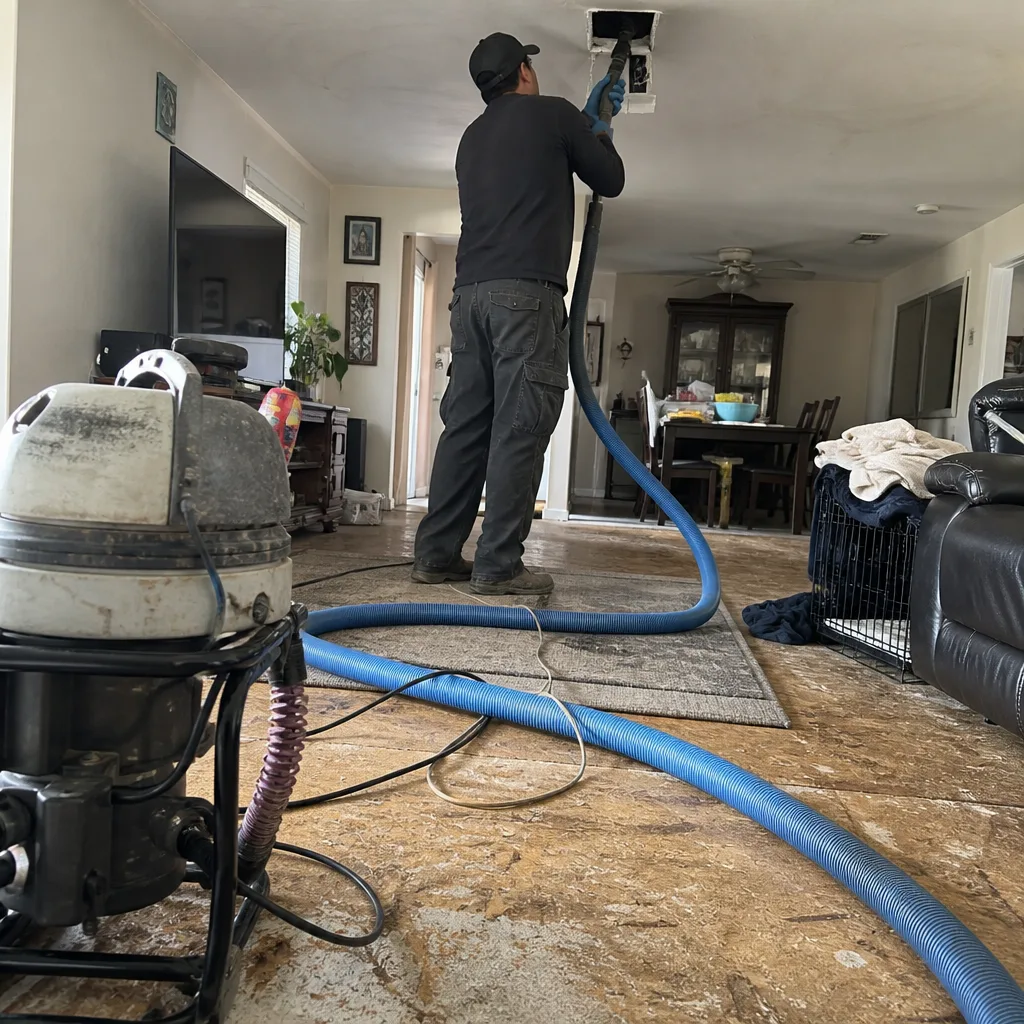 Before
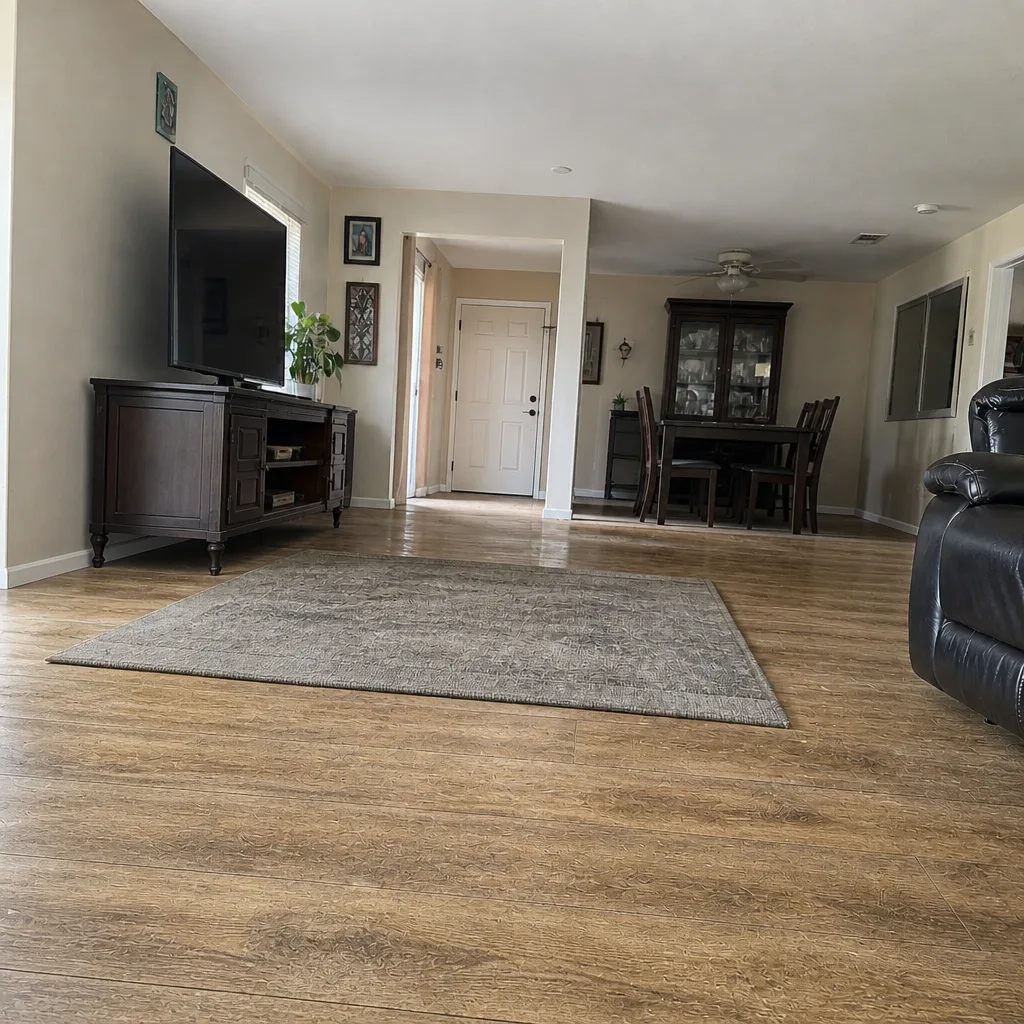 After
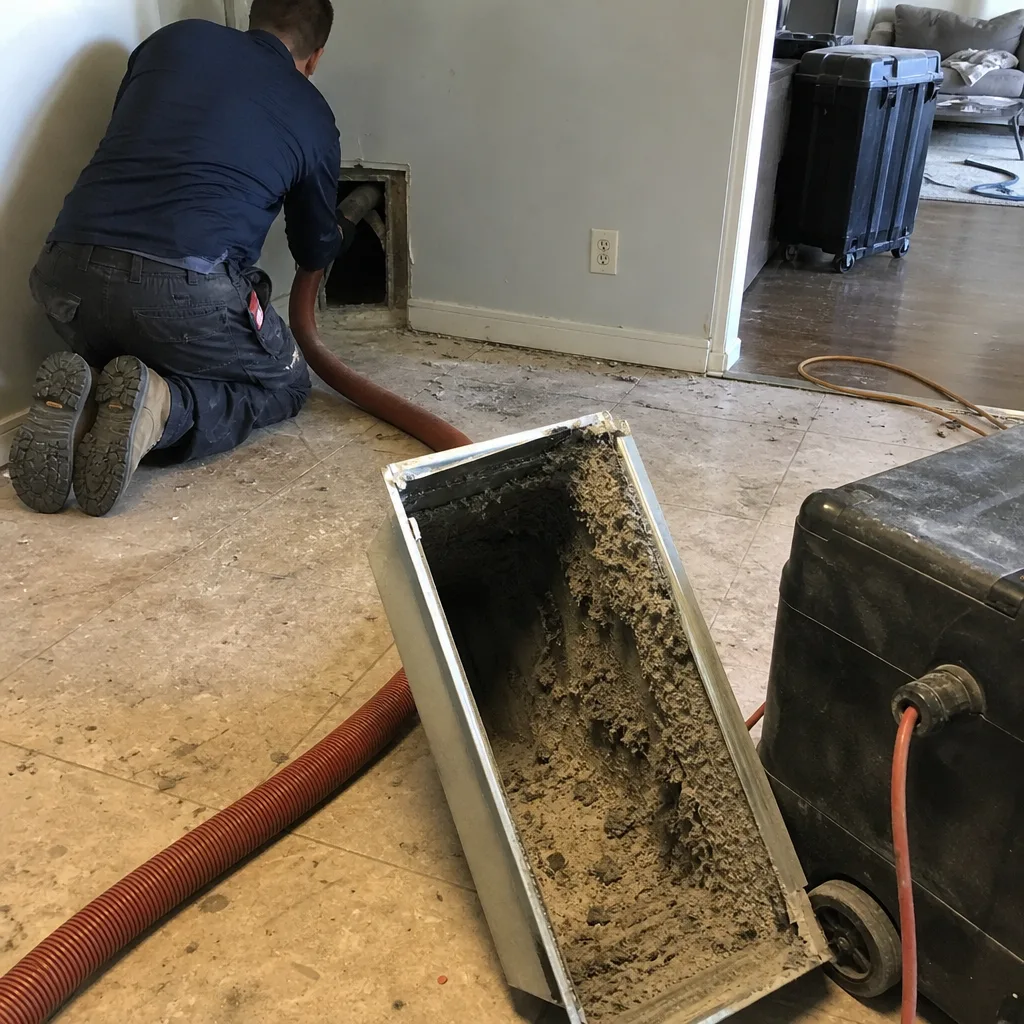 Before
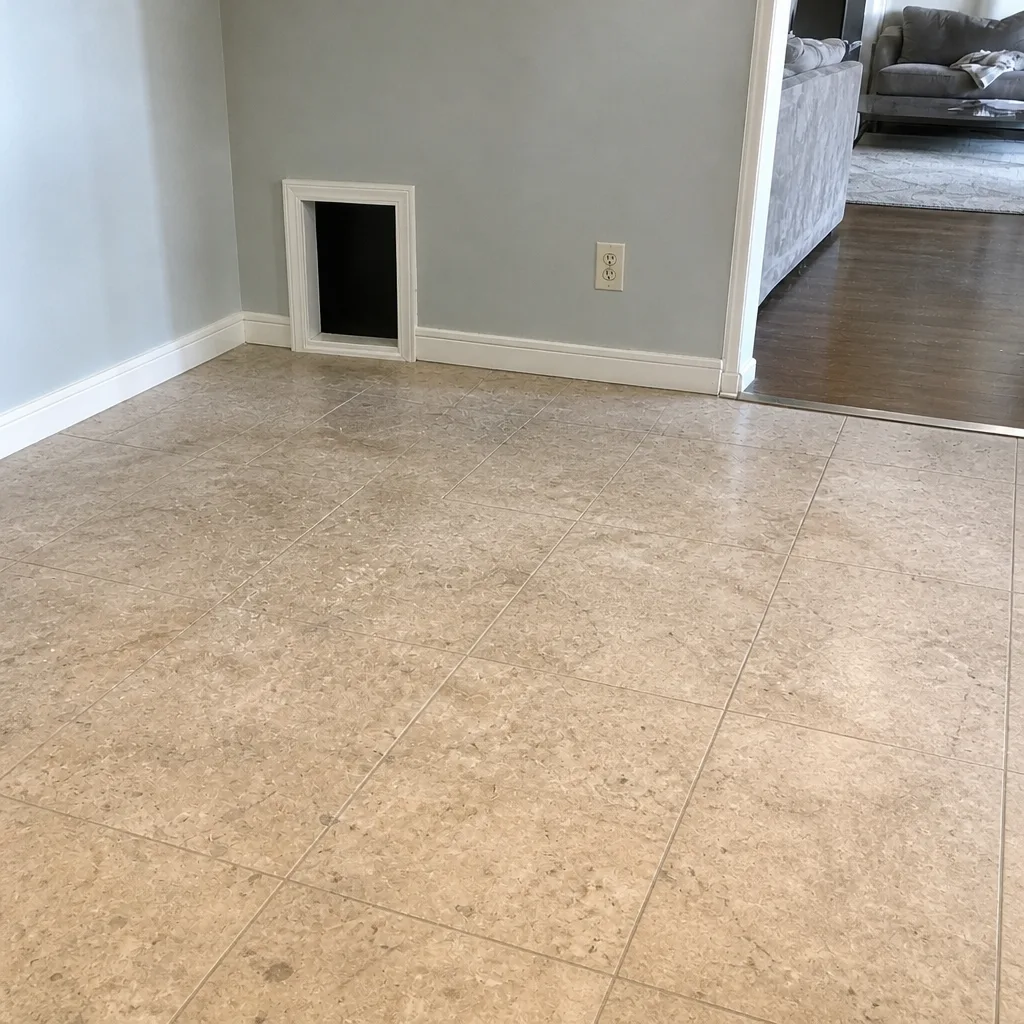 After
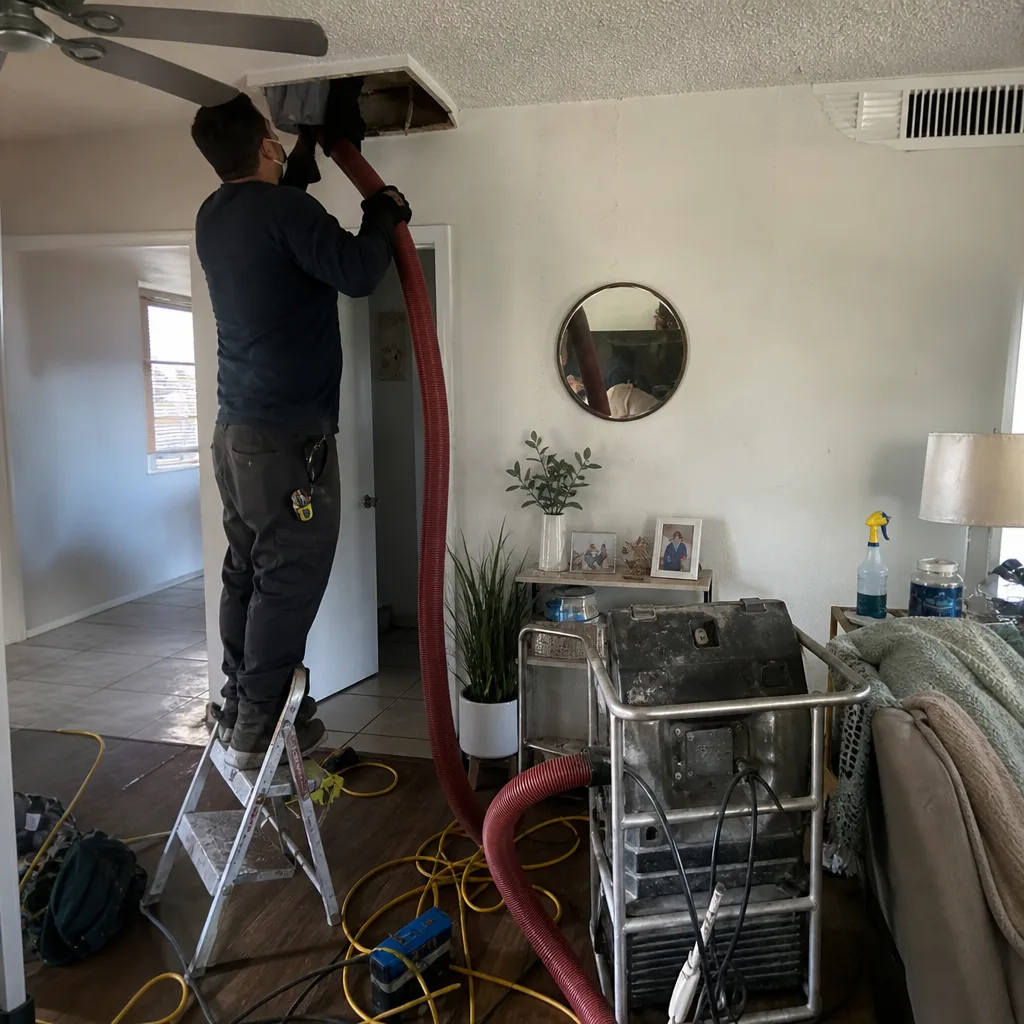 Before
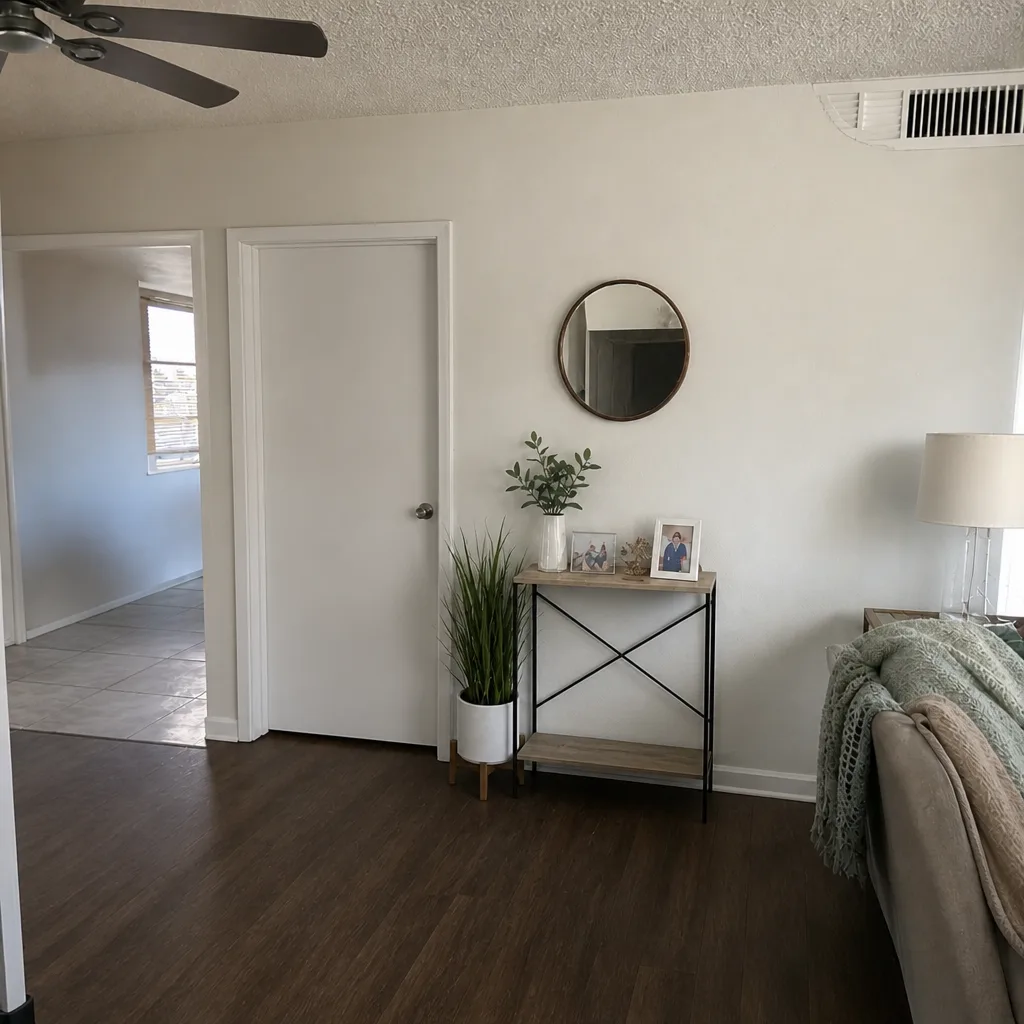 After
When to Call a Professional
Call a specialist when your symptoms point to a system-wide problem rather than a surface one. That includes chronic dust within days of cleaning, allergy or respiratory complaints you can’t trace to anything else, visible debris at the registers, a recent renovation or water event, a system that heats or cools unevenly, or a dryer that’s taking noticeably longer to finish a load. A short, straight dryer vent is the one job you can handle at home. The rest deserves a look from someone with the right equipment.
Glendale Duct Cleaning offers free estimates in Glendale. Call (855) 745-4301. We answer 24/7. Fast dispatch from 7am to 7pm, Sunday through Friday.
Frequently Asked Questions
Air duct cleaning is priced as one flat rate per system, agreed in writing before any work begins, not by the vent or the room. That structure is deliberate: per-vent pricing is how a low quote turns into a large invoice once a technician is on site. Call (855) 745-4301 for an exact quote. Estimates are free.
Not effectively, and sometimes not without doing damage. A residential shop vac can’t generate enough negative pressure to extract debris from a long duct run, so it stirs up dust that resettles deeper in the system. It also can’t safely navigate a flex duct elbow without risk of tearing the liner. Register covers and return grilles are a reasonable DIY job. The inside of the ductwork usually isn’t.
For most Glendale homes, every few years is a sensible interval, with more frequent cleaning if you have pets, recent renovations or heavy dust. Homes with no pets, clean filtration and no recent work can go longer. The honest answer depends on your system and household, which is why an inspection should come before a schedule.
Usually because the equipment and scope are different. A cheap quote often reflects a shop vac or blower pass with no real capture power, no before-and-after documentation, and a per-vent structure that grows once work starts. A professional quote reflects commercial-grade equipment like Rotobrush or Nikro, an inspection, and one flat price per system. Call (855) 745-4301 to compare a written estimate from us.
Ask for before-and-after photos of your own ducts, not stock images. A company using real source-removal equipment can show you what came out and what the inside of the system looked like afterward. If a cleaner can’t produce that, you shouldn’t have to guess whether the job happened.
It’s safe and genuinely useful for a single short, straight run under about 10 feet with a clear path to the exterior. Long runs, vertical vents and bends need equipment that can reach the whole length, and a collapsed or crushed vent needs repair rather than cleaning. Given the fire risk lint presents, a vent you can’t reach is worth having checked. Call (855) 745-4301 if you’re not sure which situation you’re in.
The Bottom Line
The DIY versus professional question in Glendale comes down to airflow and capture. A shop vac can’t generate the negative pressure a 25-foot trunk line requires, so a DIY pass tends to redistribute dust rather than remove it. Register covers, return grilles and a short straight dryer vent are worth doing yourself. Everything inside the ductwork, and anything that looks like damage rather than dirt, is a job for real equipment. One flat price per system, agreed in writing, with before-and-after photos, is what a professional cleaning in Glendale should look like. Start with a free estimate and a straightforward answer about your system’s condition.
Call (855) 745-4301 for a free estimate. We answer 24/7. Fast dispatch from 7am to 7pm, Sunday through Friday. Learn more about Glendale Duct Cleaning and the three services we focus on: air duct cleaning, dryer vent cleaning and air duct repair.
Written by the team at Glendale Duct Cleaning.