
Last updated November 16, 2026
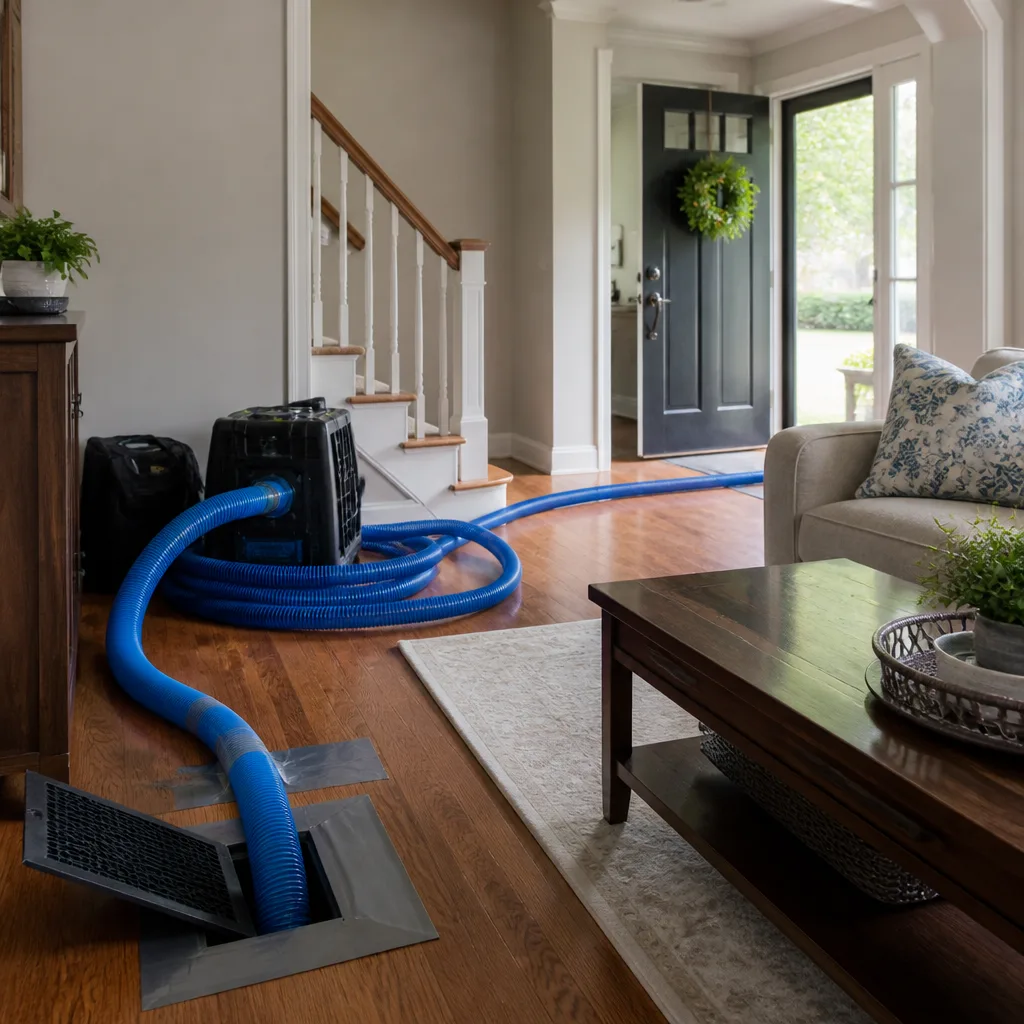 Whole-home duct cleaning
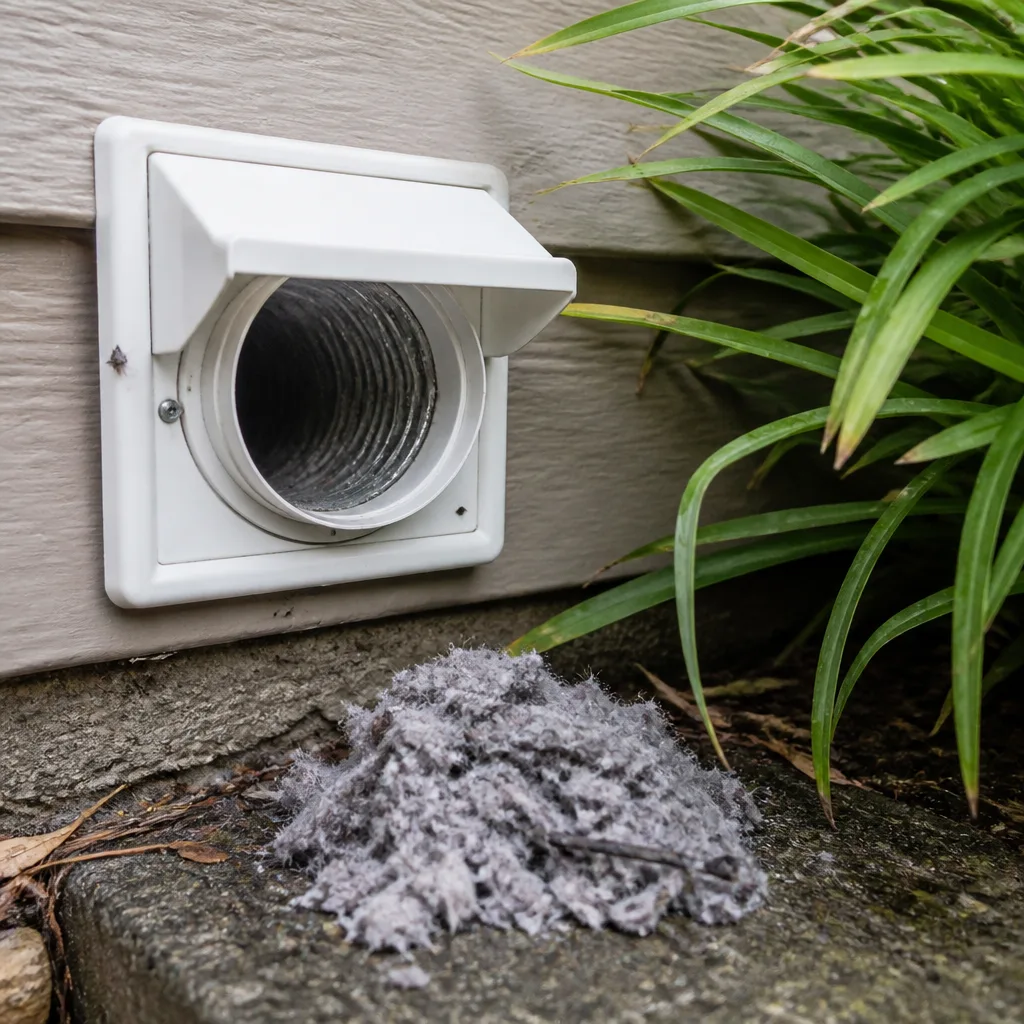 Dryer vent cleaning
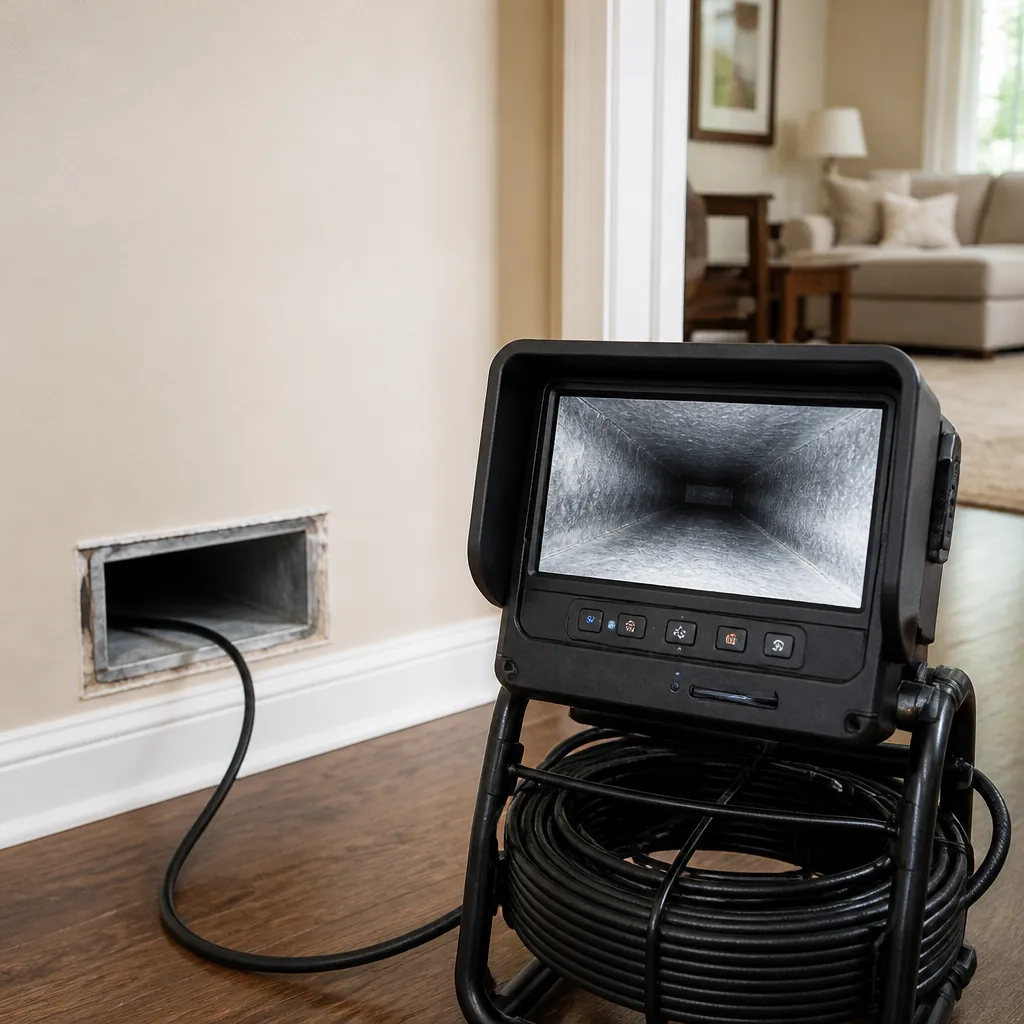 Camera inspection
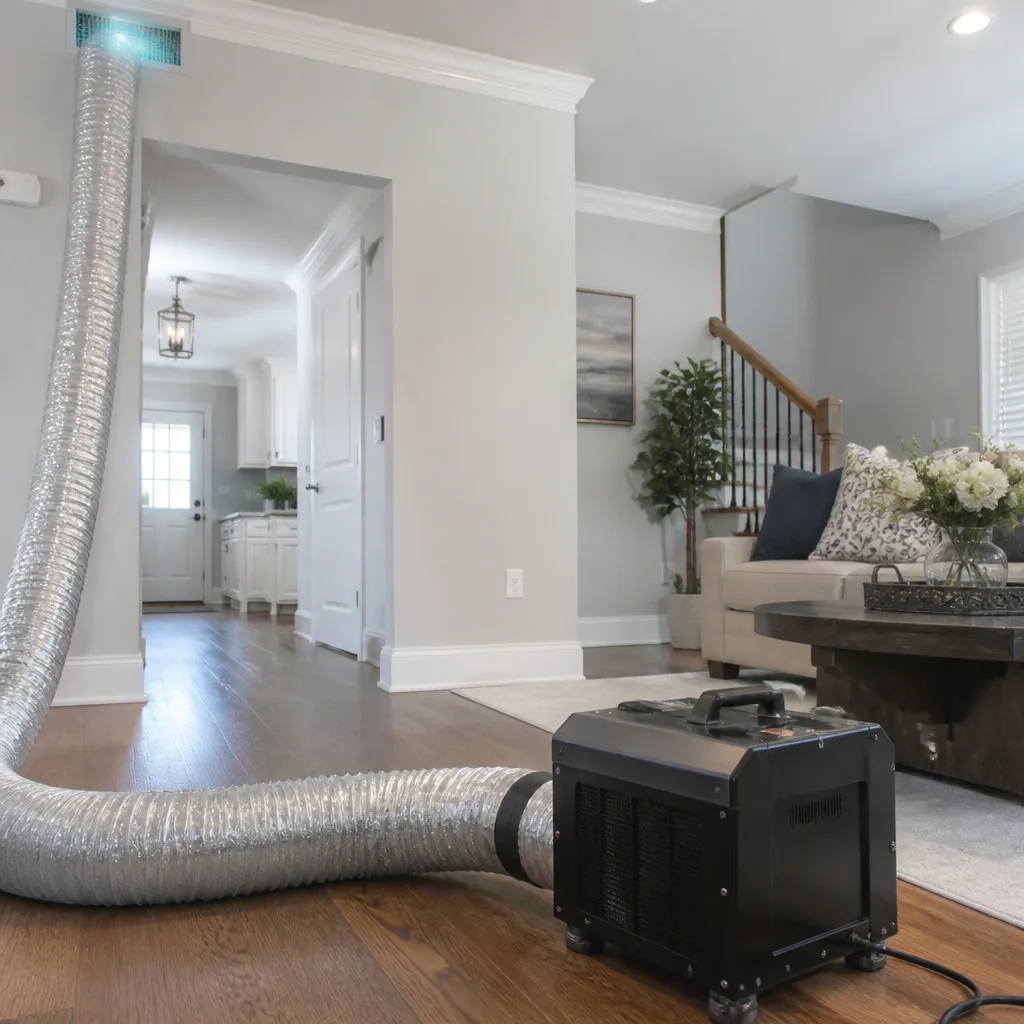 Sanitizing & deodorizing
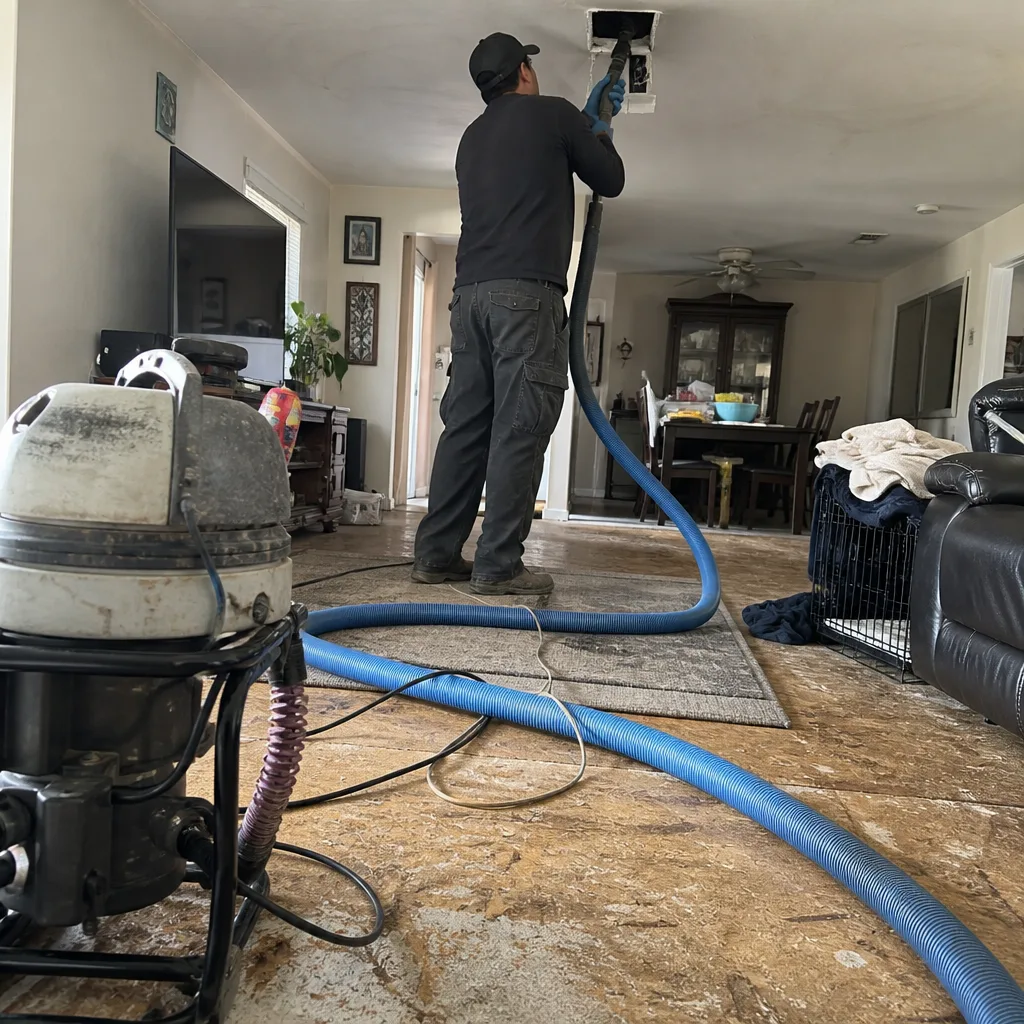
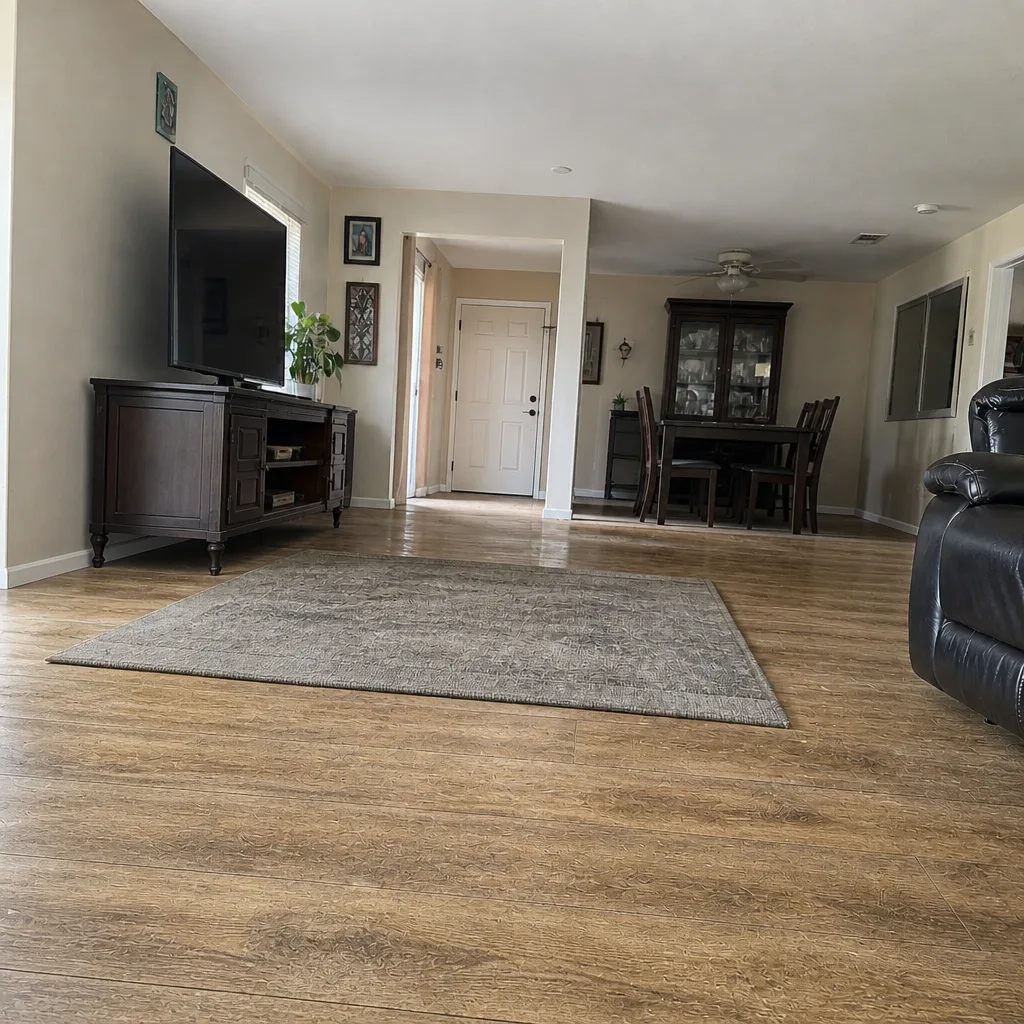
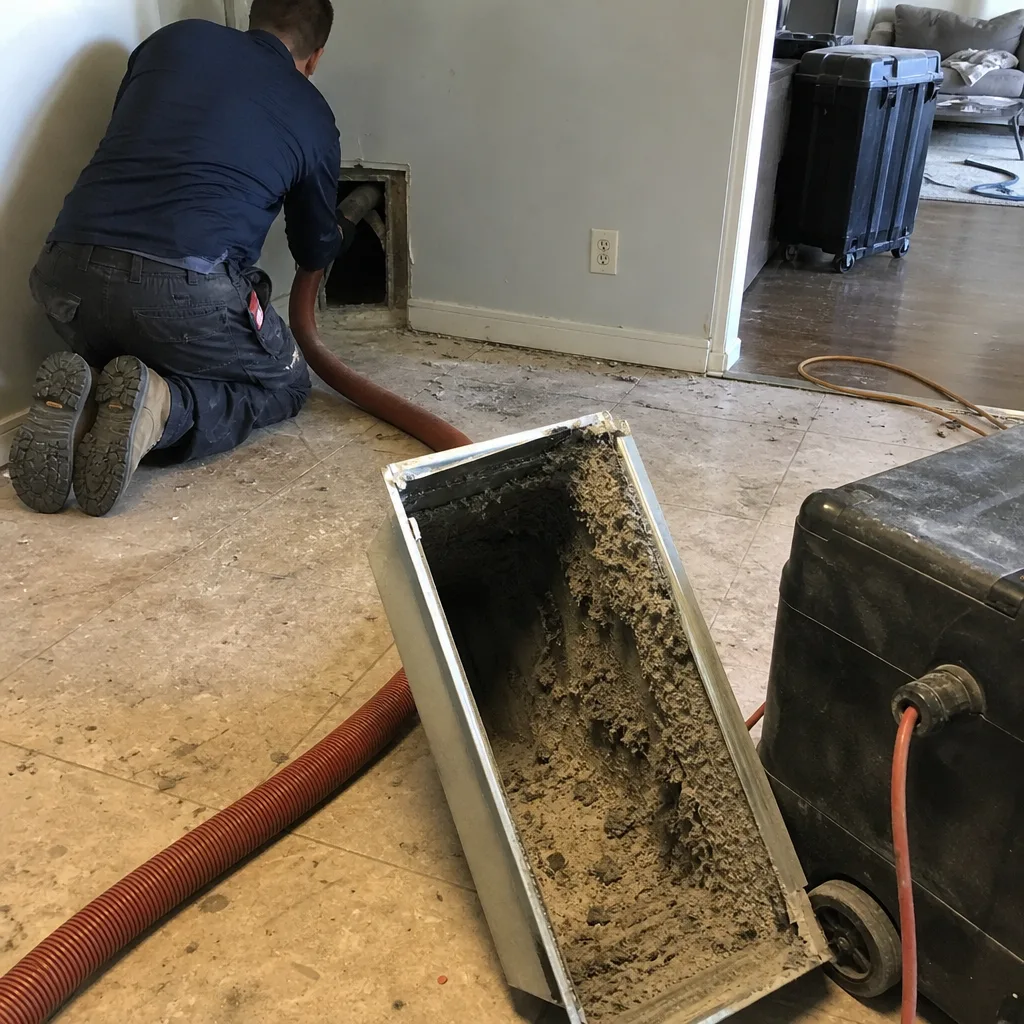
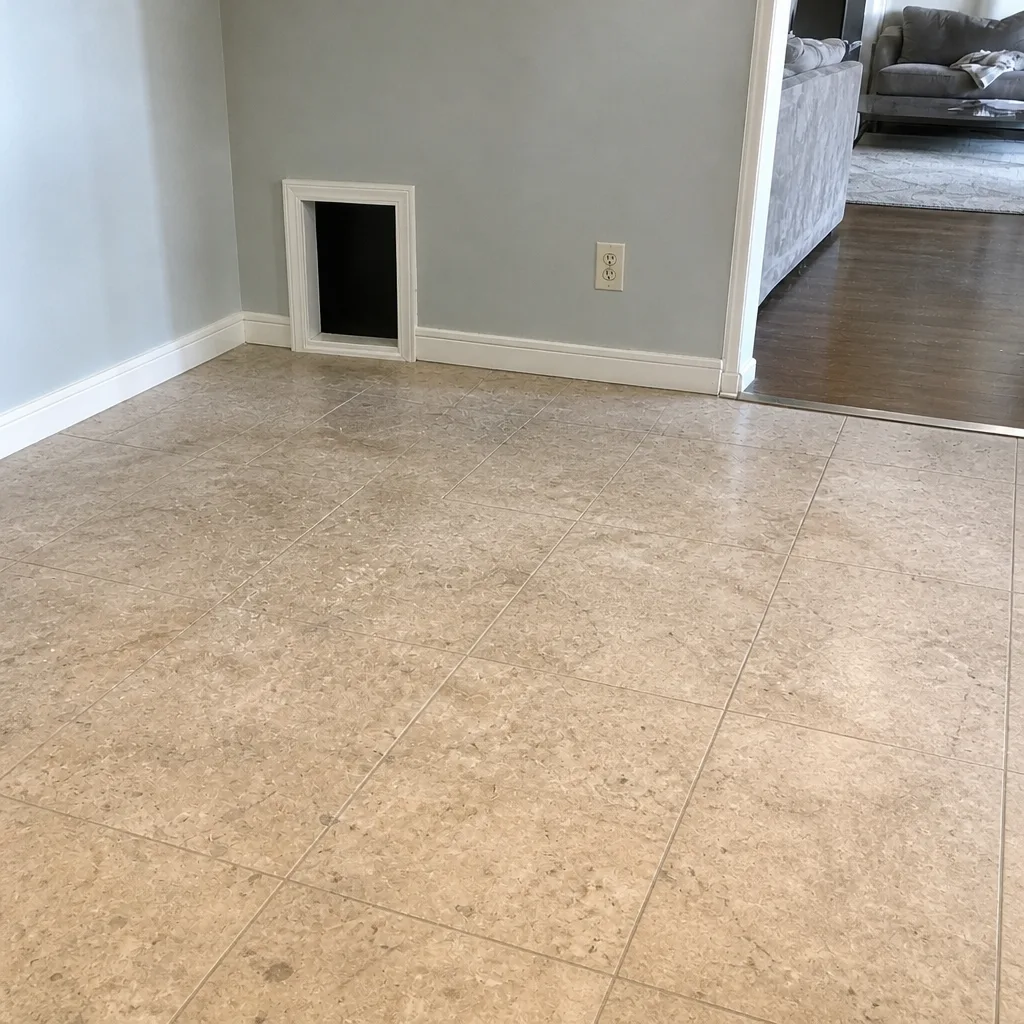
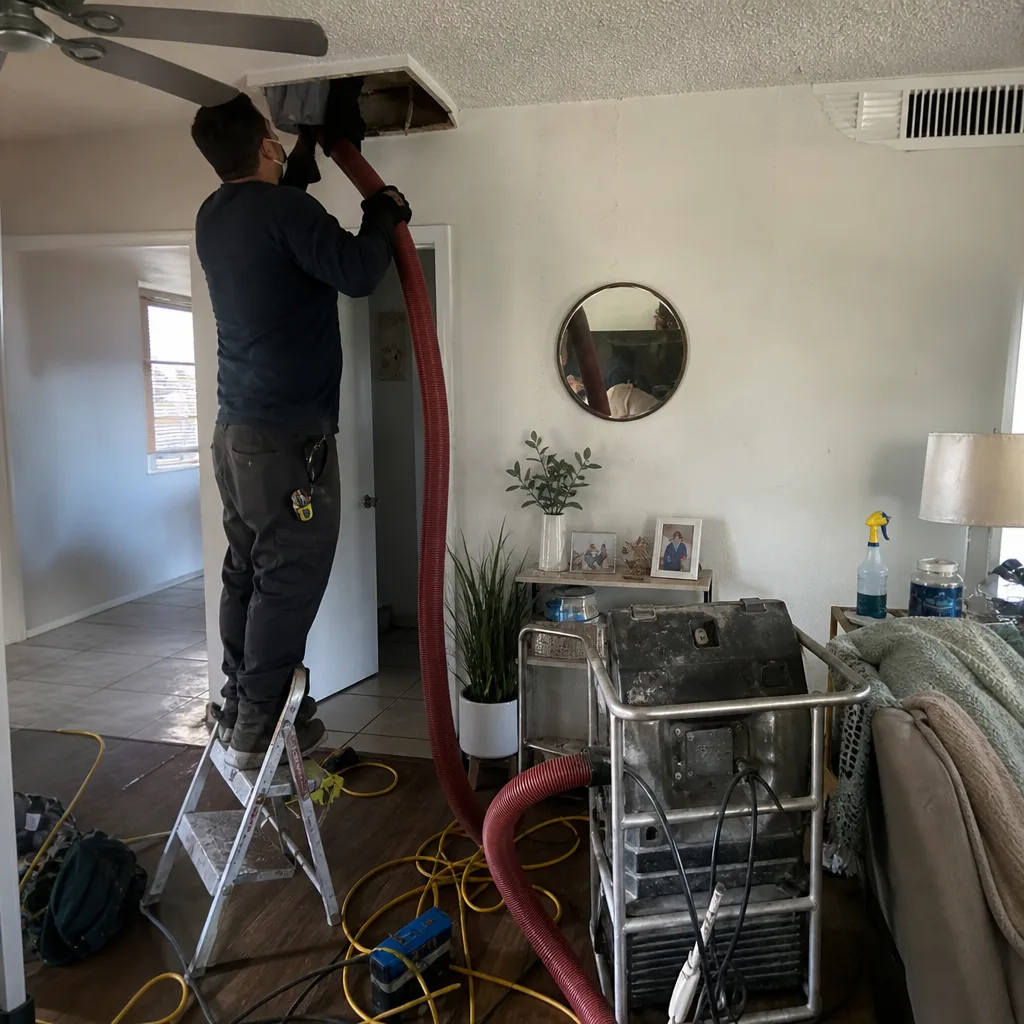
Whole-system duct and dryer vent check with before-and-after photos - you see exactly what came out of your vents
That "$99 whole-house special" is a bait ad - the real number appears once they are in your hallway, or the "clean" is a shop-vac at the register. We photograph the inside of your ducts before and after instead.
Choosing the Right Air Duct Cleaning Brand: A Buyer’s Guide for Glendale
Most homeowners never think to ask what equipment a duct cleaning company uses, which is a little like hiring a surgeon without knowing whether they’re holding a scalpel or a butter knife. The technician pulls up, the price sounds reasonable, and an hour later the ducts are supposedly clean. But the tools in that van decide everything about the result: whether the brush actually reaches the far end of a trunk line, whether the vacuum pulls debris toward it or just stirs it into the air, and whether the “clean” you paid for is measurable or just a matter of faith. In this guide, we’ll walk through the specific equipment brands that separate a real duct cleaning from a surface-level sweep, how to ask a Glendale contractor what they’re actually bringing, and why the answers tell you more than any ad ever will.
Quick Answer
The right air duct cleaning brand is the one that brings professional-grade, owned equipment matched to the job: a Rotobrush or Nikro rotary-brush-and-vacuum system for the cleaning itself, Nikro high-CFM negative-air units for source removal, and Abatement Technologies HEPA equipment when containment or post-renovation work is involved. A company that owns all three (rather than renting one rig and calling it a full service) can handle the range of conditions a Glendale home actually presents. Size and marketing budget matter far less than what’s in the truck and whether the person holding it can explain what each piece is for.
Styles & brands we work with
- Whole-home duct cleaning
- Dryer vent cleaning
- Camera inspection
- Sanitizing & deodorizing
Table of Contents
- Why the Equipment Brand Mattered More Than the Company Name
- What Rotobrush Systems Do That Standard Rigs Cannot
- Nikro and the Negative-Air Pressure That Makes Source Removal Work
- Abatement Technologies: When HEPA Containment Becomes Necessary
- The Questions That Reveal an Operator’s Real Knowledge
- Owned vs. Rented Equipment: What It Signals About a Company
- Honeywell and Aprilaire: Why Filtration Assessment Follows Cleaning
- Air Duct Repair and Dryer Vent Cleaning as Separate Disciplines
Why the Equipment Brand Mattered More Than the Company Name
If you’re comparing air duct cleaning companies in Glendale, the conversation usually starts with the name on the side of the van and the price on the phone. Neither tells you what happens once the technician is inside. The equipment is the part that determines whether the job is done.
Picture two companies. Both advertise air duct cleaning. The first brings a shop vacuum and a hand-operated brush. The second brings a mechanized rotary brush tethered to a high-powered vacuum and a separate negative-air machine set up at the main trunk. To the untrained eye, both look like “duct cleaning.” In practice, only the second is doing source removal, which is the standard that professional cleaning is measured against: getting the accumulated dust, debris and biological material out of the system at the source, not just dusting the surfaces it can reach.
The equipment question matters even more in a place like Glendale. Homes here run their HVAC systems across long hot stretches, pulling air through the same ducts day after day. Fine dust from the surrounding desert environment settles into ductwork, and any moisture or humidity event introduces conditions that a surface sweep can’t resolve. The system has to be handled with equipment that agitates and extracts at the same time, in the same place.
That brings us to a simple principle we’ll return to throughout this guide: commercial-grade equipment, residential pricing. The brands are the proof. When you can name the equipment a company uses, you know what kind of cleaning you’re buying. When a company can’t or won’t name it, you don’t.
What Rotobrush Systems Do That Standard Rigs Cannot
The Rotobrush system is the backbone of professional residential duct cleaning for one reason: it agitates and extracts at the point of contact. A rotating brush with whip-like tines works the inside of the duct while a vacuum pulls loosened debris back toward the machine, all at the same time. Standard rigs separate those two functions. The brush goes in first, and the vacuum goes in after, or vice versa. By the time the vacuum arrives, a lot of the debris has simply resettled.
Here’s why that distinction matters to a Glendale homeowner:
- Reach. Ductwork runs in long, straight lines from the air handler to each register. A manual brush reaches as deep as the technician’s arm and the tool length allow. A rotary system feeds through the duct.
- Agitation. Compacted dust clings to duct walls. The rotary brush loosens it systematically, not just where a hand brush happens to touch.
- Simultaneous extraction. The vacuum captures loosened material while it’s airborne, so less of it ends up back in the room or in the return side of the system.
- Coverage of trunks and branches. Supply trunks, branch runs, and returns each behave differently. A rotary system can be configured for all three.
Glendale homes with older ductwork often have flex-duct sections where the interior liner has begun to show wear. When we see that, we stop and assess before continuing. A rotary brush is a powerful tool, and it’s the right tool for a duct that can take it. We open up the access points, work the duct from both the register end and the plenum when the run allows, and always run the vacuum in front of the brush, not behind it. That’s the method Rotobrush systems are built for, and it’s why we use them rather than leasing a generic rig.
Nikro and the Negative-Air Pressure That Makes Source Removal Work
A rotary brush without a serious vacuum is just a fan moving dust around. The vacuum has to be strong enough and positioned correctly enough to create negative pressure in the whole system, so the air in the ducts is always moving toward the collection point. That’s the job Nikro equipment does, and it’s the piece most homeowners have never heard of.
Nikro makes high-CFM portable vacuum units designed for duct cleaning and remediation. “CFM” stands for cubic feet per minute, and it’s the number that matters for source removal. A residential shop vacuum might move somewhere in the low hundreds of CFM if it’s running well. A Nikro unit built for duct work moves far more, and it does so while connected to the main trunk through a sealed access point. That connection turns the entire duct system into a vacuum chamber for the duration of the cleaning.
Why is this how NADCA-compliant source removal actually works? Because of one principle: contamination goes toward the vacuum, not into the room. If you clean without establishing negative pressure first, the loosened material follows the path of least resistance, which is often back into the living space. With proper negative pressure in place, the air in the ducts is always moving from the rooms toward the collection device. The brush can work freely because physics is handling the containment.
The order of operations in a professional cleaning, in our experience, is:
- Inspect and set up. Locate main trunk access points and register locations; cover or protect the immediate area.
- Connect the vacuum. Attach the Nikro unit to the trunk access point and seal it, then switch it on before any brush contact.
- Agitate. Work each duct run with the rotary brush from the register end, letting the negative pressure pull loosened debris.
- Clean the air handler and plenum. The blower housing, evaporator coil area, and return plenum often hold the thickest debris and need dedicated attention.
- Clean registers and grilles. Remove and clean separately; they’re a major collection point.
- Verify and photograph. Check the collected material, document with before-and-after photos of the same run, and confirm the system is sealed back up.
If you’re hiring in Glendale, ask which vacuum model the company is bringing and whether it runs during the entire cleaning, not just as a final pass. The answer tells you a lot.
Abatement Technologies: When HEPA Containment Becomes Necessary
Not every duct cleaning job needs the same level of containment. But some do, and a company that doesn’t own the equipment for those jobs will either decline them or fake them. This is where Abatement Technologies becomes essential to the conversation.
Abatement Technologies builds HEPA-rated air scrubbing and negative-air equipment for remediation, restoration and healthcare environments. HEPA filtration captures particles at 0.3 microns with very high efficiency, which makes it the standard when airborne contamination is confirmed or suspected. When is that true in a duct system?
- After a renovation or remodel. Drywall dust, sawdust, and construction debris find their way into exposed ductwork during a project. HEPA air scrubbing keeps those fines contained while the ducts are cleaned, rather than letting them exhaust into the living space.
- When mold is confirmed or suspected near ductwork. If a visual inspection shows growth on the interior of the coil, plenum or duct lining, the cleaning plan changes. The area needs containment, and the work needs to be done with HEPA-rated equipment, often with the air scrubber running for the duration.
- When occupants have respiratory or immune concerns. Some households simply want an added margin. HEPA equipment delivers it.
- When contamination is visible on the return side. A very dirty return plenum is a sign that material is circulating and being re-deposited throughout the system. Containment-based cleaning is the safer route.
In our experience, most routine residential cleanings in Glendale don’t require the full HEPA setup. But a company that owns and understands Abatement Technologies equipment can recognize when it’s needed and use it correctly. A company that has to rent it on the fly, if it can get it at all, is unlikely to know how to deploy it well. That difference is worth asking about when you call.
The Questions That Reveal an Operator’s Real Knowledge
The easiest litmus test of a duct cleaning company isn’t a review score. It’s whether the person you talk to can name their equipment and explain, in plain language, what each piece does. A trained technician can. A salesperson reading a script can’t.
Ask these questions before you book, and listen to how the answers land:
- “What equipment will you bring, and what does each piece do?” The right answer names specific brands and explains the role of each piece. Rotobrush or Nikro as the primary system. Nikro or equivalent for negative-air vacuum. Abatement Technologies or equivalent for HEPA if needed. Vague answers (“industry-standard equipment,” “professional tools”) are a signal.
- “Does the vacuum stay on during the entire cleaning?” For source removal to actually work, yes. If the vacuum only comes on partway through, some of the debris has already been disturbed into the air.
- “How do you verify the ducts are clean?” Before-and-after photos of the same run, ideally with the brush position visible, are the standard. Video inspection is even better.
- “What’s your process if you find a duct liner in poor shape or suspected growth?” The right answer involves stopping, assessing, and switching to a containment plan. The wrong answer involves pushing the brush through anyway.
- “Do you do duct repair if you find a disconnected run or a crushed section?” Rotobrush will show you duct problems that a surface sweep would miss. A company prepared to fix them is more valuable than one that just documents the issue.
- “Can you recommend a filtration system that fits my ductwork?” Companies trained on Honeywell and Aprilaire systems can assess existing filtration and recommend an upgrade where it makes sense, rather than trying to sell one at every visit.
You can ask all of these politely in a two-minute phone call. If a company pushes back hard on any of them, that’s an answer too.
Owned vs. Rented Equipment: What It Signals About a Company
A company that owns its equipment has made an investment in the results it can deliver. A company that rents on demand has made an investment in flexibility. Those aren’t the same thing, and the difference shows up on your job.
Owned equipment gets used weekly. The operator knows its quirks, its capacity, and its limits. They know which brush head works best on a flex-duct run versus a rigid trunk. They know how to seal the vacuum intake cleanly so the negative pressure holds. They know the sound of a rotary brush that’s working correctly versus one that’s snagging on a seam. That’s fluency you can’t fake on a rented rig.
A rental rig, in contrast, gets hauled out for exactly the kind of job the operator took yesterday. The frictions of daily use are someone else’s problem. In practice, we see rental-heavy operations make a few predictable choices: they skip the piece that’s hard to rent, they rush the air handler because setting up the containment takes time, and they use a single tool for jobs that really want two or three.
How do you verify ownership? Ask directly. “Is that equipment yours, or do you rent it?” Then listen for specifics. “We use a Rotobrush for residential cleaning and a Nikro for the vacuum side; we own both.” Compare that to “we rent what we need,” which is technically fine and practically a signal. Also worth asking: “How often does the equipment get serviced?” A serious operator knows their job schedule for filter changes and brush replacements.
Honeywell and Aprilaire: Why Filtration Assessment Follows Cleaning
A duct cleaning isn’t the end of the job. It’s the reset. Once the system is clean, the next question is what you’re going to do to keep it that way. That’s where filtration comes in, and that’s why we’re familiar with Honeywell and Aprilaire systems.
These are the filtration brands that show up most often in mid-to-high-end residential HVAC. Honeywell makes media filters, electronic air cleaners, and bypass humidifiers that most HVAC builders install as upgrades. Aprilaire makes similar lines plus whole-home dehumidifiers that become very relevant in a climate like Glendale’s, where dry heat is the norm and humidity swings track seasonally.
After cleaning, an assessment of the current filter setup makes sense: what’s installed, what size it is, whether it’s being changed on schedule, and whether the homeowner’s concerns (allergies, dust accumulation on surfaces, general air quality) call for a different solution. This is where you separate a real air quality specialist from a cleaning service. A cleaner cleans. A specialist walks you through the filtration decision, offers honest advice about what will and won’t help, and lets you decide.
We also keep Guardsman-brand products in the service toolkit. Guardsman is a recognized name in HVAC coil care and surface protection, and having them available means post-cleaning recommendations can extend to the components immediately upstream and downstream of the ducts.
None of this is a reason to clean your ducts. It’s a reason to have the conversation with someone who can actually answer it. For a deeper look at the cleaning service itself, see our air duct cleaning page.
Air Duct Repair and Dryer Vent Cleaning as Separate Disciplines
A duct system that looks dirty and a duct system that’s broken are two different problems, and only one is solved by cleaning. Air duct repair is a distinct service that addresses structural issues: disconnected runs, crushed flex sections, failed mastic or tape at the seams, leaks at the plenum, and collapsed takeoffs. These aren’t cosmetic. A disconnected duct leaks conditioned air into a crawl space or attic for years, and your HVAC system runs longer to compensate. A crushed section chokes a whole room’s airflow.
When you’re hiring, ask whether the company offers repair as a service they actually perform, or if they only clean and refer the repairs elsewhere. A one-stop specialist who cleans and repairs can spot a structural problem during cleaning and address it in the same visit, or quote it honestly and separately. A cleaning-only service can only tell you what they see.
Dryer vent cleaning deserves the same consideration, but for a different reason. Lint buildup in a dryer vent is a fire risk, and NFPA guidance treats dryer vent maintenance as a real fire-prevention measure, not a convenience. The right dryer vent cleaning is done with equipment that reaches the full length of the vent, removes the lint accumulation, and confirms proper airflow out the exterior termination. It’s a fire-safety service, not an add-on. If you haven’t had yours serviced, dryer vent cleaning is worth scheduling alongside any duct work.
Our three services fit together as a progression: clean it, fix it, protect it. Cleaning gets the system to a known baseline. Repair addresses structural problems the cleaning reveals. Protection, through filtration and proper maintenance, keeps the whole system performing between visits.
Common Mistakes to Avoid
- Booking on price alone. A low advertised number often reflects a surface sweep with a shop vacuum. The equipment that produces source removal costs real money to own and maintain, and a company pricing at the bottom of the market can’t afford it.
- Not asking about equipment. In a Glendale home with an aging duct system, the difference between rotary agitation and a manual brush is the difference between cleaning the ducts and stirring them. Ask the brand names before you book.
- Assuming cleaning alone solves structural problems. A crushed return or disconnected flex line isn’t fixed by cleaning. If the company doesn’t offer repair, ask how the repair will be handled by whoever does.
- Skipping the dryer vent. Many homeowners clean their ducts and leave the dryer vent untouched. The vent is the more serious fire risk, and it’s a separate job with its own equipment.
- Ignoring the air handler and plenum. A cleaning that focuses only on the supply ducts misses where the debris concentrates. Ask whether the air handler, blower, coil area, and return plenum are part of the scope.
- Believing a same-day quote without a walk-through. Any number given on the phone before the system is seen is a placeholder. A written estimate follows an inspection, and the final price should be agreed before work starts.
- Overlooking filtration after the work. A clean system with the wrong filter setup will be a dirty system again faster than it should be. Have the filtration conversation while the technician is there.
See the difference
 Before
 After
 Before
 After
 Before
 After
When to Call a Professional
If you can see visible dust streaking from the registers, if anyone in the house has recurring allergy symptoms that worsen indoors, or if you’ve just finished a renovation that exposed any part of the system, that’s when professional cleaning pays off. The same goes for a dryer that takes longer to dry a load than it used to, which often means lint restriction in the vent. On the duct side, a room that never gets enough airflow, or a system that seems to run longer than it should, usually means a structural problem that a duct repair specialist should look at before cleaning. Glendale Duct Cleaning offers free estimates in Glendale; call (855) 745-4301 and we’ll walk through what’s going on with your system.
Frequently Asked Questions
Ask about Rotobrush or Nikro rotary-brush-and-vacuum systems for the cleaning itself, Nikro or equivalent high-CFM units for negative-air vacuum, and Abatement Technologies (or similar HEPA-rated) equipment if containment or post-renovation work is involved. Those three categories cover the range of conditions most Glendale homes present. If the company can’t name the specific equipment they use, that’s a signal worth heeding.
Yes. Owned equipment gets used weekly, so the operator knows how it behaves and how to set it up for each job. Rented equipment tends to be chosen for the job at hand, and a rental-heavy operation often skips the pieces that are harder to rent. Ask directly whether the equipment is owned or rented, and how often it’s serviced; the answer tells you a lot about the quality of the work.
Before-and-after photos of the same duct run, with the brush and vacuum visible in the images, are the clearest proof. Video inspection is even better. A company using Rotobrush and Nikro systems can produce this because the equipment is designed to be documented. If a company can’t or won’t show you the condition of your ducts before and after, that tells you something too.
For most Glendale homes, a professional cleaning every few years is reasonable, with more frequent attention if someone in the household has allergies, if pets are present, or if a renovation has recently exposed the system. Homes on the edge of the desert, where fine dust accumulates quickly, may benefit from a shorter interval. There’s no universal number that fits every house; the answer depends on what’s actually in your system.
Cleaning removes accumulated dust, debris, and biological material from the system, which reduces the amount of material that can circulate when the air is running. That’s a measurable improvement, but it isn’t a complete solution on its own. Proper filtration (Honeywell and Aprilaire systems, for example) and regular filter changes are the other half; a good duct cleaning specialist will talk through both.
Stop, assess, and plan. A disconnected run, crushed section, or suspected growth near the coil isn’t something to brush through; it’s something to address with the right method or repair. A company that offers air duct repair as its own service can handle structural problems that cleaning alone can’t, which is why we list repair alongside cleaning as one of our three core services rather than shipping it out.
The Bottom Line
Equipment brand is the most reliable signal of a duct cleaning company’s real capability, and it’s the most overlooked question on the buyer’s mind. Rotobrush handles the agitation-and-extraction at the point of contact. Nikro establishes and holds the negative pressure that makes source removal work. Abatement Technologies brings HEPA containment when the job calls for it. A company that owns all three and can explain what each one does is the one you want handling your ducts, your dryer vent, and any repair work that comes up. Company size and marketing spend are far less informative than whether the person on the phone can name the rig in the truck. Our technicians have up to experience and use this equipment daily across Glendale Duct Cleaning jobs, from routine cleanings to post-renovation work. If you’re ready to have your system looked at honestly, call (855) 745-4301 for a free estimate. We answer 24/7. Fast dispatch from 7am to 7pm, Sunday through Friday.
Written by the team at Glendale Duct Cleaning.