
Last updated November 16, 2026
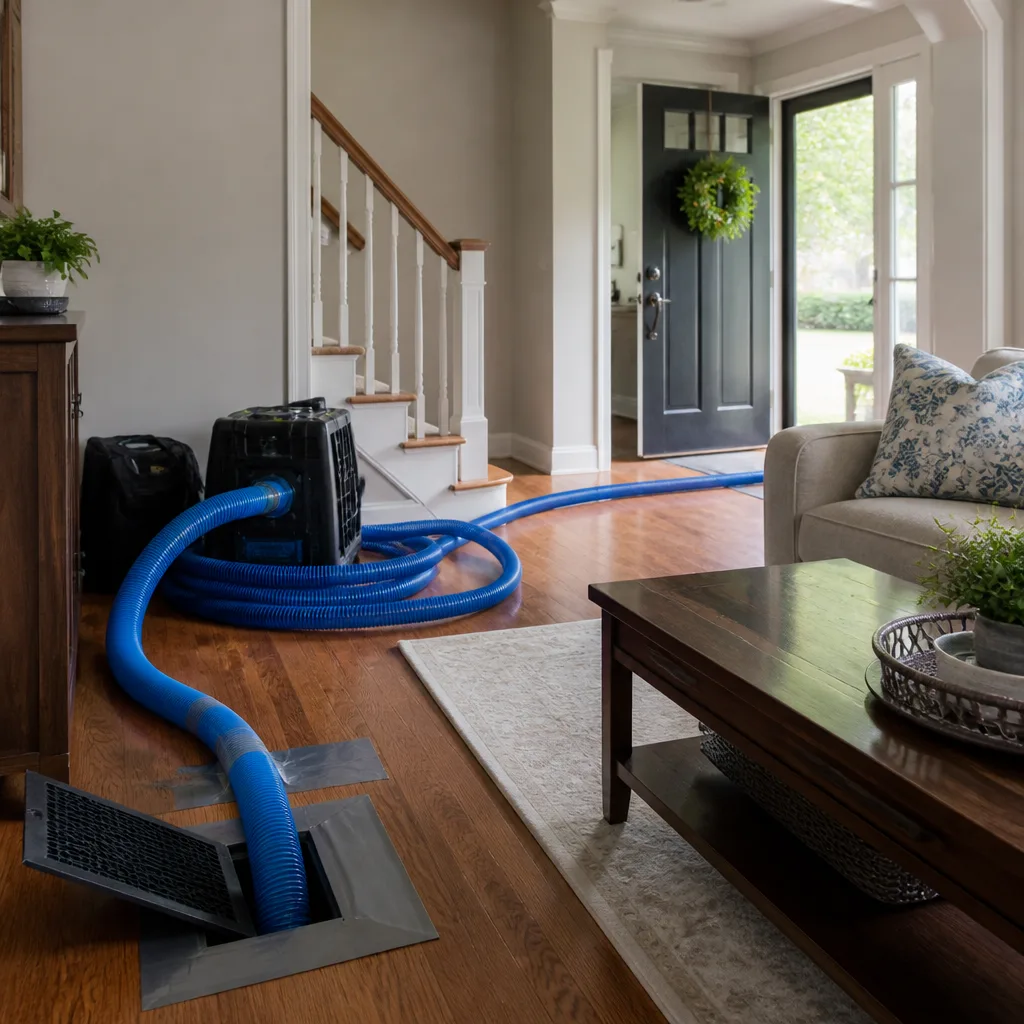 Whole-home duct cleaning
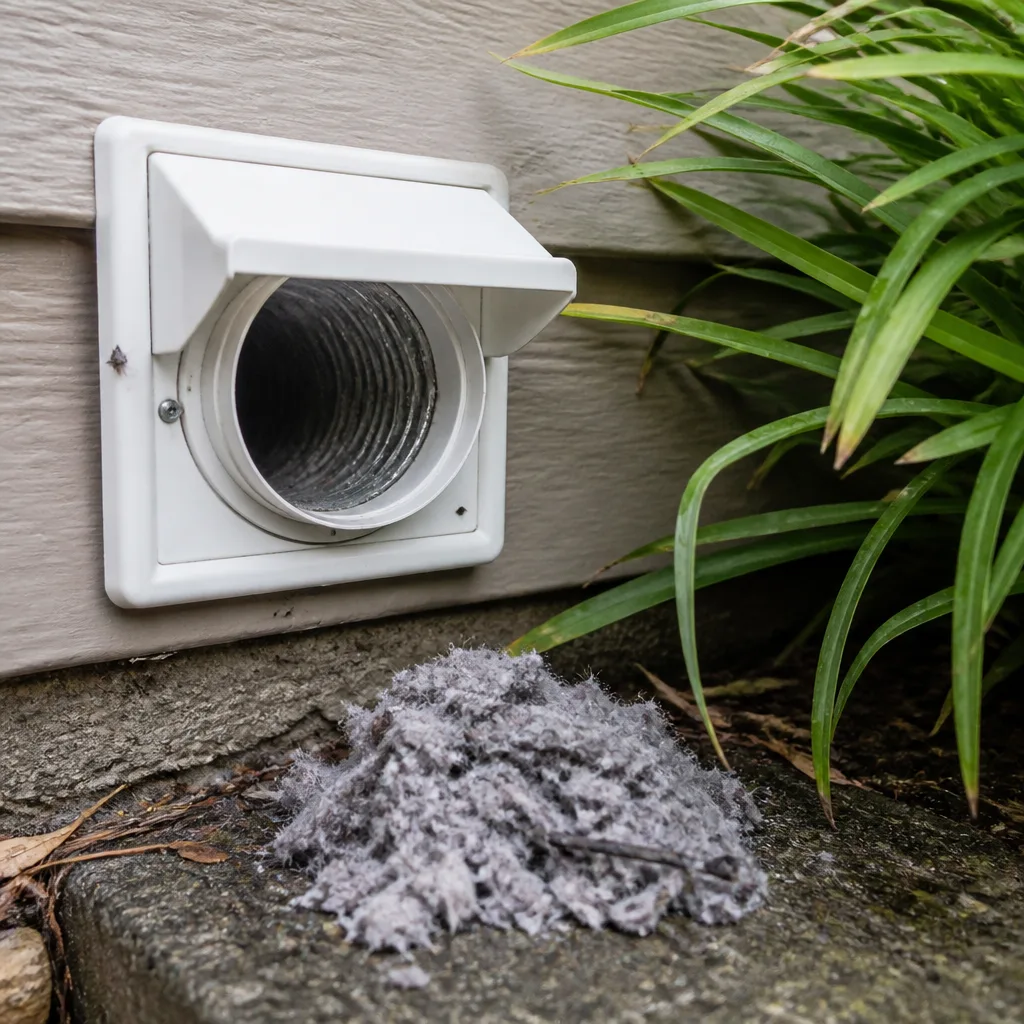 Dryer vent cleaning
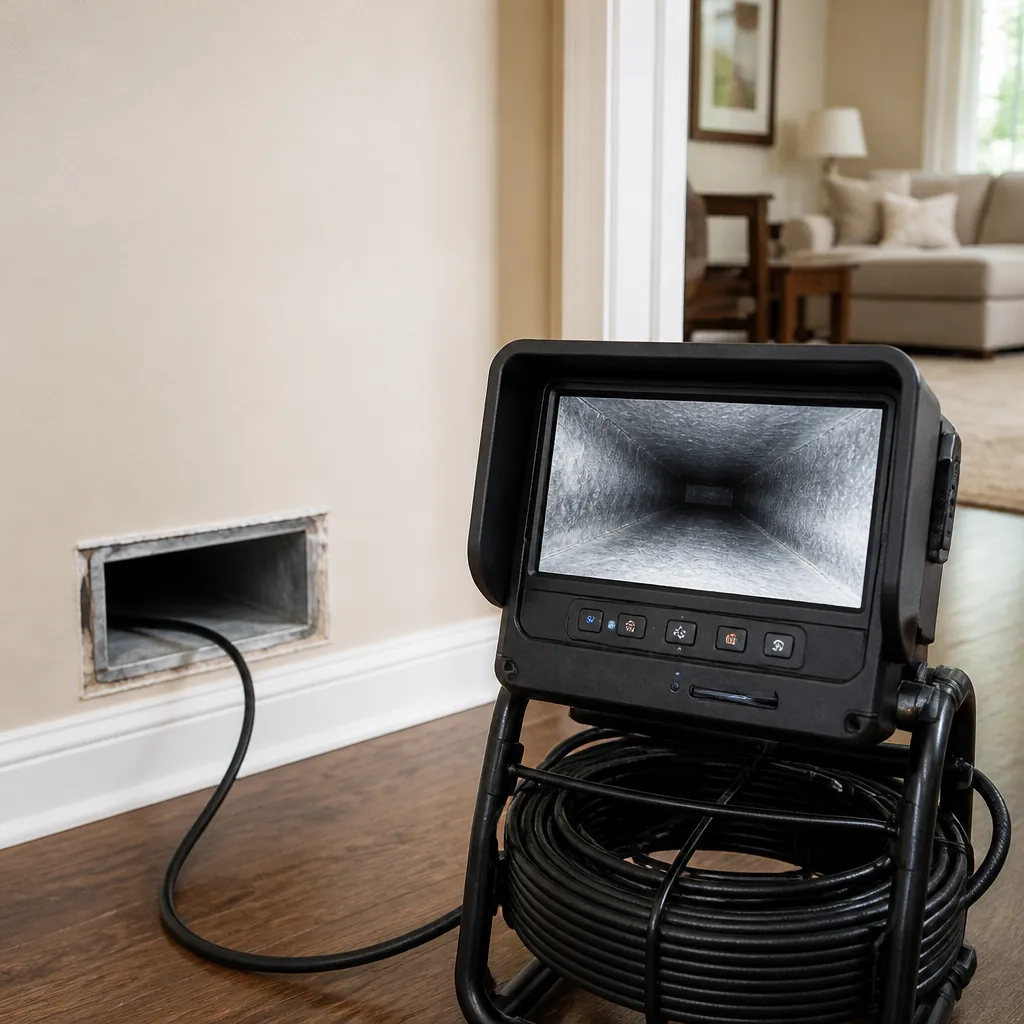 Camera inspection
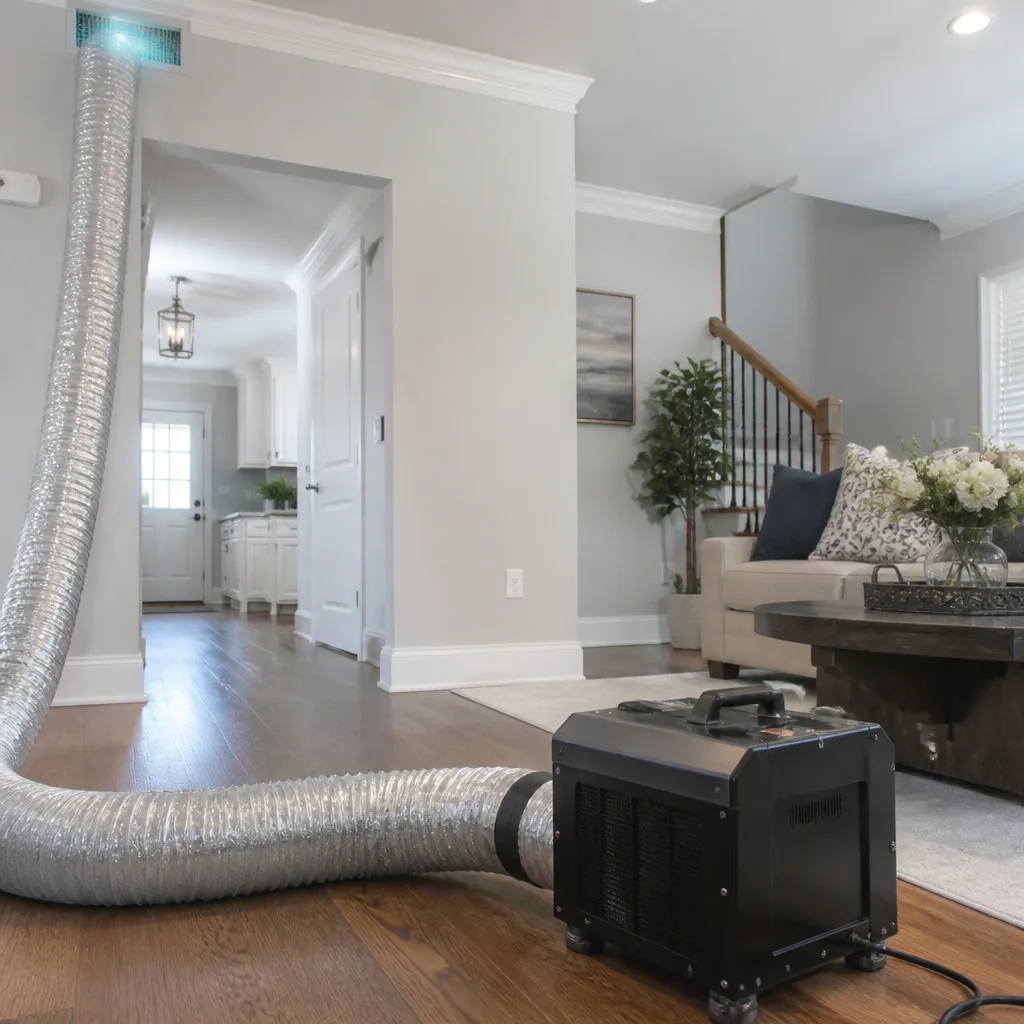 Sanitizing & deodorizing
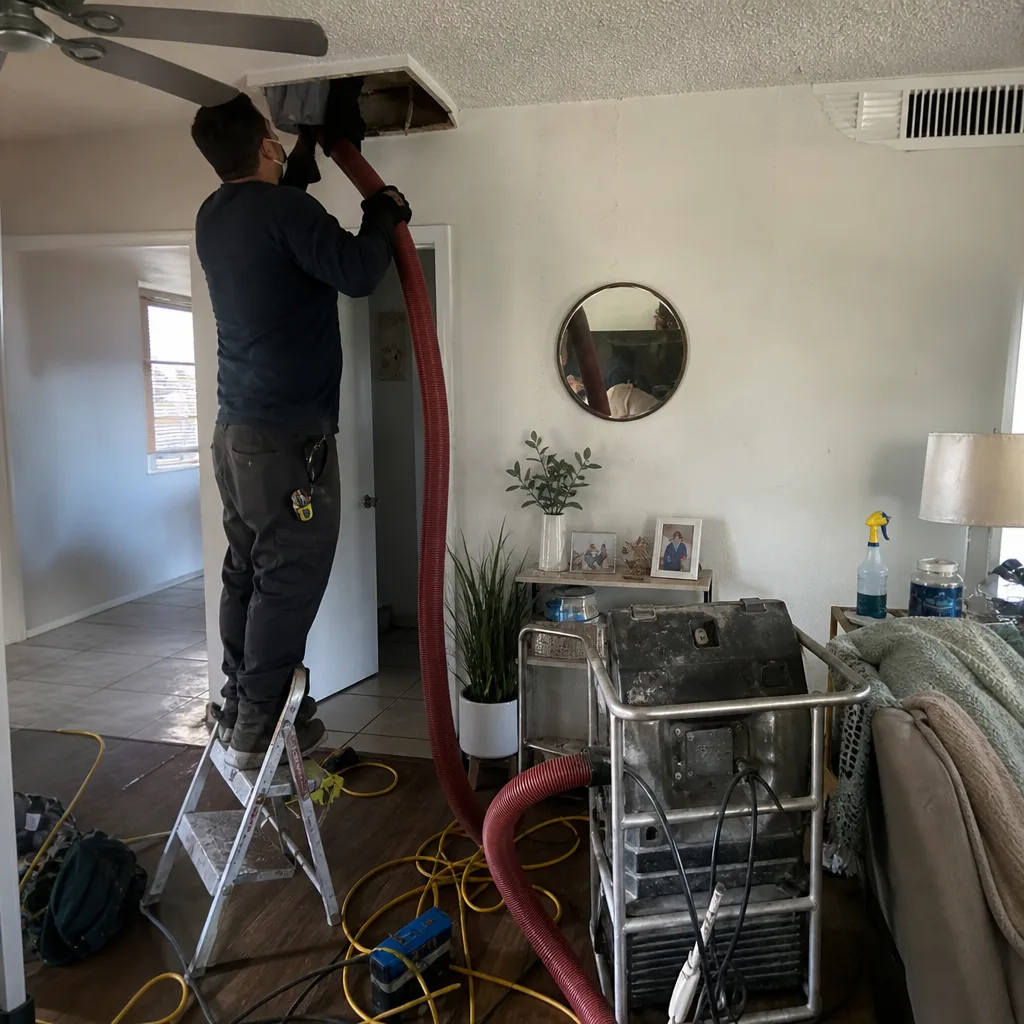
Whole-system duct and dryer vent check with before-and-after photos - you see exactly what came out of your vents
That "$99 whole-house special" is a bait ad - the real number appears once they are in your hallway, or the "clean" is a shop-vac at the register. We photograph the inside of your ducts before and after instead.
Air Duct Cleaning Warning Signs: A Glendale Homeowner’s Reference Guide
Dust on your supply registers isn’t always a dirty duct problem. Sometimes it’s a return leak pulling hot attic air straight into your living room, and no amount of cleaning fixes that until the breach is sealed. That’s the part most Glendale homeowners miss: the sign you’re looking at tells you which problem you actually have. A musty smell points somewhere different than uneven airflow, and both point somewhere different than a dust film that reappears a week after a cleaning. This guide maps each warning sign to its likely cause so you can tell whether you’re facing contamination, a structural failure, or both.
Quick Answer
The main air duct cleaning warning signs are visible dust streaking from registers, a musty or stale odor when the system starts, uneven airflow between rooms, rising dust after a haboob, and allergy symptoms that worsen indoors. In Glendale, the sign itself points to the cause: surface dust usually means contamination, odor often means moisture or biological growth, and uneven airflow usually means a collapsed flex duct or a blockage. Cleaning solves the first, repair solves the third, and some homes need both.
Styles & brands we work with
- Whole-home duct cleaning
- Dryer vent cleaning
- Camera inspection
- Sanitizing & deodorizing
Table of Contents
- Mapping the Symptom to the Cause
- Why Dust on Your Registers Isn’t Always a Duct Cleaning Problem
- Allergy Flare-Ups: Duct Bypass vs. Contamination
- Warning Signs That Show Up After a Haboob
- How to Self-Inspect a Register With a Flashlight and Your Phone
- Signs a Previous Cleaning Made Things Worse
- The Dryer Vent Warning Signs Homeowners Overlook
- What Professional Duct Work Costs in Glendale
Mapping the Symptom to the Cause
Every warning sign carries information. The trick is reading it correctly before you spend money on the wrong fix. Here’s how the symptoms break down in the homes we assess around Glendale.
- Visible dust on registers or drifting from vents: surface contamination inside the duct, or a return-side leak pulling unfiltered air in. If the dust returns within a couple of weeks of cleaning, suspect the leak.
- Musty, stale, or damp odor at startup: moisture somewhere in the system, often condensation on interior duct surfaces or biological growth on insulation lining. This one needs eyes on the interior, not just a vacuum.
- Uneven airflow, weak rooms, or a room that never cools: a collapsed or disconnected flex duct, a crushed run, or a blockage. Cleaning won’t restore airflow that a broken duct is stealing.
- Higher-than-usual dust after a dust storm: a filter bypass or a return leak that let fine particulate past the filter and into the airstream.
- Allergy symptoms that ease outdoors and worsen indoors: often a bypass problem moving attic or wall-cavity air into the living space, not just dirty duct walls.
- Rattling, popping, or whistling at a vent: pressure imbalance from a restricted or disconnected duct run.
Notice the pattern. Cleaning addresses contamination. Air duct cleaning is the right call for dust and odor that trace back to what’s growing on duct surfaces. Repair addresses the structural failures (collapsed runs, disconnects, leaks) that cleaning can’t touch. Our Glendale Duct Cleaning team treats repair as a standalone service for exactly this reason: a cleaning crew that only cleans will clean a broken system and hand you back the same complaint.
One more thing about the local context. Glendale sits in the Salt River Valley, where summer highs push past 110°F and the system runs nearly nonstop from May through September. That duty cycle matters. A duct that’s slightly undersized or a return that’s marginally sealed gets stressed hard for months at a time, which is why airflow problems surface here faster than in milder climates. The desert dust is real, but it’s rarely the whole story.
Why Dust on Your Registers Isn’t Always a Duct Cleaning Problem
A thin film of dust on a supply register is normal. A growing ring of dark dust streaking outward from the grille, or dust that reappears on a freshly wiped surface within days, is a signal that something upstream is delivering particulate faster than filtration can catch it. That’s the difference between surface contamination and an active breach.
Here’s what separates the two:
- Wipe the grille clean and wait. If it stays clean for weeks, you had a settled film. If dust rebuilds in days, air is carrying it in continuously from somewhere.
- Check the return grille, not just the supplies. Dust concentrated at returns suggests the filter isn’t catching what it should, or the return duct has a leak pulling unfiltered air.
- Look at the filter’s edges. A filter that sits loosely in its slot lets air slip around it. That bypass sends dust straight into the system regardless of filter rating.
- Note which rooms dust first. Dust clustering in one area points to a duct problem near that branch rather than a whole-system contamination issue.
In Glendale homes, we see a specific pattern: a return duct that runs through an unconditioned attic or a hot garage space develops a small gap at a joint, and every time the system pulls air, it pulls attic air and insulation fibers along with it. The register gets dusty, the homeowner books a cleaning, and the dust comes right back. The fix is sealing the breach, then cleaning what got through. Cleaning first is wasted money if the hole is still open.
That’s why a proper assessment starts with the equipment. Rotary-brush-and-vacuum systems like Rotobrush and Nikro let a technician work the full interior of the duct and see what’s actually on the walls, but the diagnosis of a leak comes from inspecting joints, boots, and connections, not from the cleaning tool itself. If a company quotes a cleaning without looking at your return side, they’re guessing.
Allergy Flare-Ups: Duct Bypass vs. Contamination
If your allergies ease up when you leave the house and hit hard when you’re home, the instinct is to blame dirty ducts. Often the real culprit is a bypass: air that skips the filter entirely and enters your living space unfiltered. Cleaning contaminated ducts helps. Sealing a bypass helps more, because it stops the source.
Telling them apart comes down to a few questions:
- Does the reaction track with the AC running? Symptoms that flare when the system kicks on point to what the airstream is carrying into the room. That’s often a bypass or a return leak.
- Is the dust grainy and gray, or fine and dark? Insulation fibers and attic dust tend to look lighter and coarser. Sooty or dark residue suggests something else is in the airstream.
- Does the filter look bypassed? Pull the filter and check whether the frame or slot is sealed. A visible gap around the edges is a bypass you can fix today.
- Are symptoms worse in rooms far from the air handler? Long, leaky duct runs lose air and pick up contaminants along the way, so the far rooms often show it first.
Glendale’s allergy season runs long. The valley’s spring pollen load combined with year-round dust means an indoor system moving contaminated air hits people harder and for more months than it would in a wetter climate. That’s a reason to be precise about the cause, not a reason to panic-clean. If the problem is a leak, cleaning won’t calm the symptoms. If the problem is contamination, sealing won’t either. The right diagnosis, then the right service, in that order.
For homes where filtration itself is the weak point, technicians trained on Honeywell and Aprilaire systems can assess whether the current filter setup is sized right for the home and the dust load, and recommend a fix that matches how the system actually runs. That’s not a sales pitch for a gadget. It’s the difference between filtering the air and pretending to.
Warning Signs That Show Up After a Haboob
Haboobs, the dust storms that roll through the valley in monsoon season, are the single best stress test a duct system gets. A wall of fine dust moves fast, pressure changes, and every weak point in your envelope and your ductwork gets probed at once. If something was going to fail, it often fails during or just after one.
Here are the signs to check for in the days following a dust storm:
- Register color change. Registers that were light gray now look darker or have a new dust ring. That’s particulate that made it through.
- Filter bypass evidence. Pull the filter and look for a dust stripe along the edges of the housing where air slipped past. A clean filter face with a dusty slot edge is a bypass signature.
- Surge in AC runtime. If the thermostat shows longer run times than before the storm, the system is working harder to move the same air, which points to a restricted filter, a partially blocked duct, or a leak that’s stealing pressure.
- New musty smell. Moisture and dust together can seed odor problems on interior duct lining. If the smell is new since the storm, it’s worth an inspection.
- Whistling or popping vents. A blocked or disturbed run changes the pressure balance and makes itself heard.
What you do next matters more than what you noticed. The wrong move is a quick vacuum of the registers, which does nothing for what’s inside. The right move is documenting the changes, checking the filter housing, and if the signs cluster, having the duct interior inspected with proper equipment. A system that weathered the storm without issues can wait. One showing three or more of these signs usually can’t.
How to Self-Inspect a Register With a Flashlight and Your Phone
You can document what’s inside your ducts before you call anyone, and you should. A clear look at the interior helps a technician diagnose faster, and it gives you a record of the before state. Here’s the process we recommend to Glendale homeowners.
- Turn the system off at the thermostat. You don’t want the fan running while you’re handling grilles and peering into the duct.
- Remove a supply register carefully. Most are held by two screws. Set them somewhere you’ll find them again.
- Shine the flashlight into the boot. Point it down the branch duct and look for dust buildup, debris, or anything that shouldn’t be there. Note what you see.
- Take a photo with your phone flash on. A still image catches more than the eye does, and it’s a dated record of the condition.
- Repeat at a second register in a different room. Comparing two locations tells you whether the issue is local or system-wide.
- Look at the boot connection. Where the duct meets the register opening, check for gaps, loose tape, or disturbed insulation lining.
- Check the filter slot with the same flashlight. Look for gaps around the filter edges and dust streaks that show bypass.
Two safety notes. Don’t reach into a duct; you can’t see what’s sharp or loose in there, and the interior lining can be fragile. And if you see signs of moisture, staining, or anything that looks like mold growth, stop and call a professional rather than handling it yourself. Duct interiors can harbor biological growth that isn’t safe to disturb without proper containment.
The photos you take serve one more purpose: they let you compare what a company shows you afterward against what was really there before. We use before-and-after photos of your own ducts for exactly this reason. You shouldn’t have to guess whether your ducts are actually clean.
Signs a Previous Cleaning Made Things Worse
A botched cleaning can leave a system in worse shape than it started, and the signs are specific enough to spot. If you had ducts cleaned and the problem got worse, here’s what to look at.
- Compacted debris at elbows. A weak vacuum or a rushed job pushes dust into the bends instead of pulling it out. Look for clumps sitting in the elbow of a branch run.
- Disturbed insulation lining visible at supply boots. Aggressive brushing or improper tools can shred the interior lining, and the fibers then enter the airstream. Torn or hanging lining at a boot is a red flag.
- New dust in rooms that were clean before. If a cleaning knocked loose contamination but didn’t remove it, it recirculates through the house.
- Disconnected or loosened flex runs. Registers that now whistle or have weak airflow may have had a connection knocked loose during the work.
- No photo documentation. A crew that didn’t show you the before and after probably didn’t have much to show.
This is where equipment separates a real cleaning from a cosmetic one. Professional rotary-brush-and-vacuum systems like Rotobrush and Nikro are built to work the full duct interior and pull material out rather than push it around. Remediation-level equipment such as Abatement Technologies exists for situations where surface cleaning isn’t enough. Most residential cleaners never invest in gear at that level, which is part of why results vary so much.
If you suspect a previous cleaning made things worse, the fix is often repair plus a proper cleaning, in that order. Our Glendale team treats air duct cleaning as a full-lifecycle job: clean, repair, and protect. If the structure is compromised, no amount of cleaning will hold.
The Dryer Vent Warning Signs Homeowners Overlook
Duct cleaning and dryer vent cleaning are different jobs with different risks, and the dryer vent is the one where the stakes are highest. Lint is highly flammable, and a clogged vent traps it right next to a heat source. The NFPA has long flagged dryer vents as a leading cause of home fires, and the warning signs are easy to miss because they show up gradually.
Check for these:
- Clothes take longer than one cycle to dry, and the time keeps creeping up.
- The dryer feels hot to the touch on top or at the door.
- There’s a burning or scorched smell when the dryer runs.
- The exterior vent flap doesn’t open fully or stays closed.
- Lint is visible around the vent opening or behind the dryer.
- The duct run is long, flexible, and has bends where lint collects.
If two or more of these apply, have the vent inspected and cleaned. This is a dedicated service for us, framed around fire prevention rather than convenience. A blocked vent is a fire hazard, and it’s one of the few home risks where a simple cleaning is the whole fix. We handle it as a standalone service so it isn’t an afterthought to a duct job. Our dryer vent cleaning service covers the full run from dryer to exterior.
What Professional Duct Work Costs in Glendale
Pricing in this trade varies widely because “duct cleaning” covers anything from a quick vacuum to a full remediation-level job. The honest way to quote is per system, not per vent, and to put the number in writing before work starts. Here are typical estimated ranges for the services involved.
- Whole-home air duct cleaning: typically a few hundred dollars for a standard single-family system, scaled by the number of branches and the condition found.
- Duct repair (sealing, reconnecting flex runs, patching boots): priced per job by the written estimate, based on how many breaches and how accessible they are.
- Dryer vent cleaning: generally a modest flat range for a standard run, higher for long or complex routes.
Those are ranges, not quotes. The final number comes from a written estimate after we look at your system. If a company offers one flat price per system agreed before work starts, that’s the honest structure. A low teaser rate that balloons once the technician is on site is the opposite, and it’s worth walking away from.
If you want to read more about the scope of each service, the air duct cleaning page lays out what a proper job includes, and the dryer vent cleaning page covers the fire-prevention side. Estimates are free.
Common Mistakes to Avoid
- Cleaning when the real problem is a leak. If dust returns within weeks, you paid for a cleaning that couldn’t fix the cause. Inspect the return side first.
- Trusting a quote given without looking. A price quoted over the phone without eyes on the system is a guess. Ask for a written estimate after an inspection.
- Hiring a company with consumer-grade equipment. A shop vac and a hose doesn’t reach the full duct interior. Ask what rotary-brush-and-vacuum system they use.
- Skipping the dryer vent because the ducts were just done. They’re separate systems with separate risks. The dryer vent is the fire hazard, and it needs its own service.
- Ignoring the filter slot. A bypass at the filter lets dust in no matter how clean the ducts are. Check for gaps and seal them.
- Assuming Glendale dust is just normal Arizona dust. Some of it is. The dust that rebuilds in days, or clusters in one room, is a system signal, not climate background.
- Accepting a job with no before-and-after photos. You can’t verify what was done without seeing the interior before and after. Ask for photos of your own ducts.
See the difference
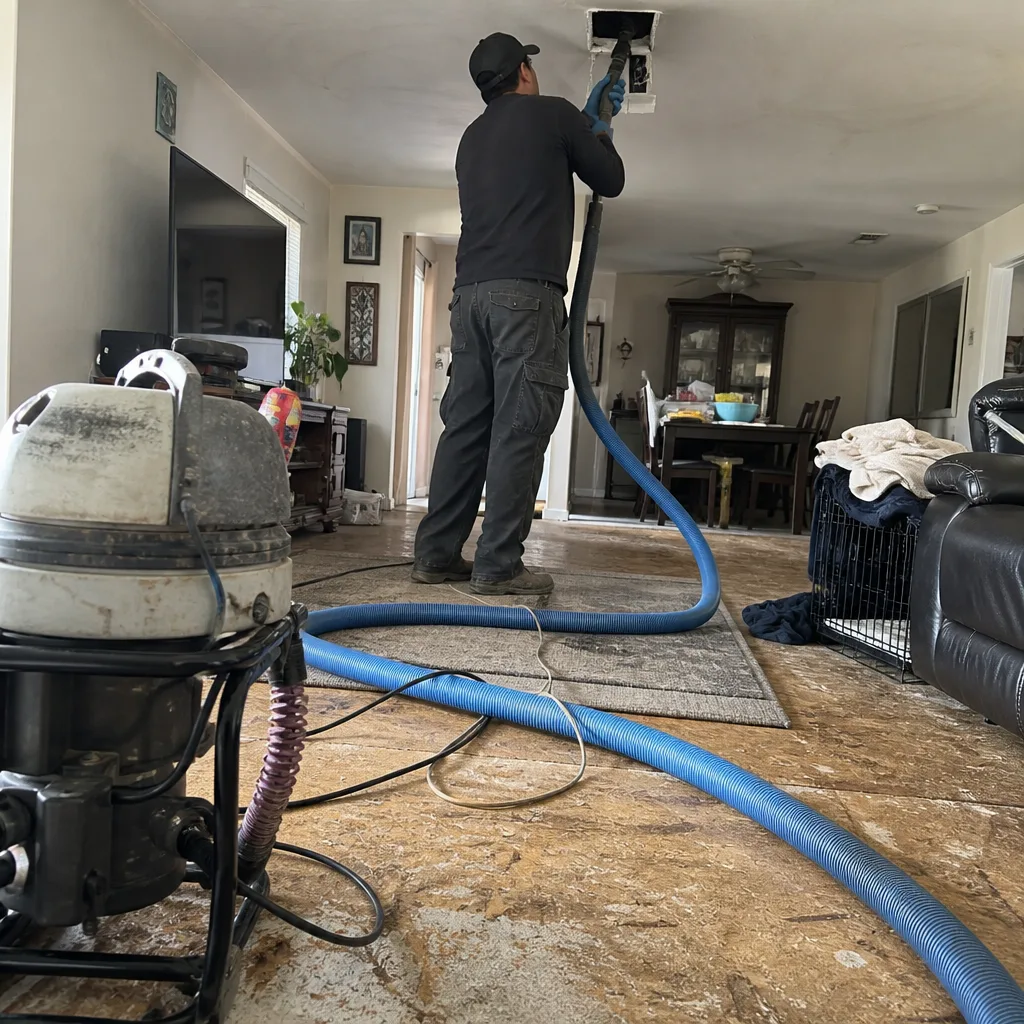 Before
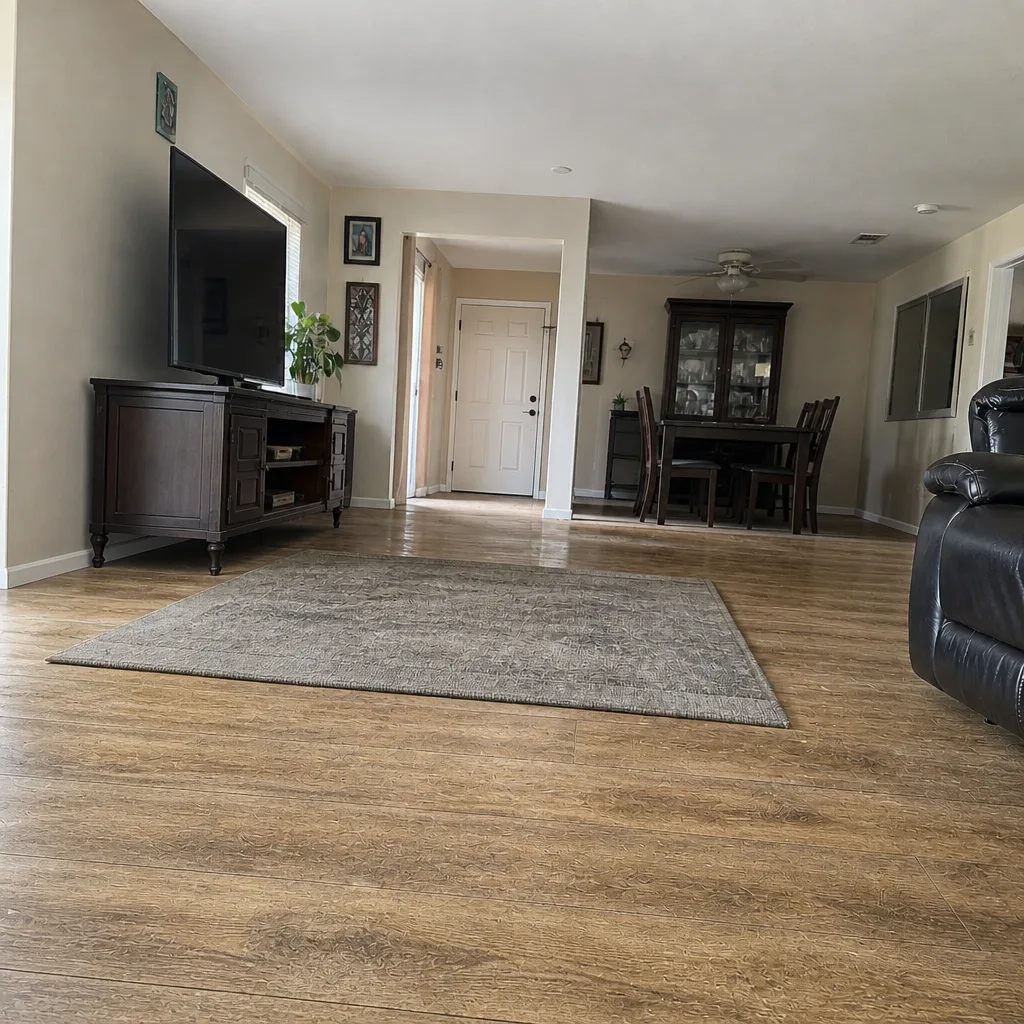 After
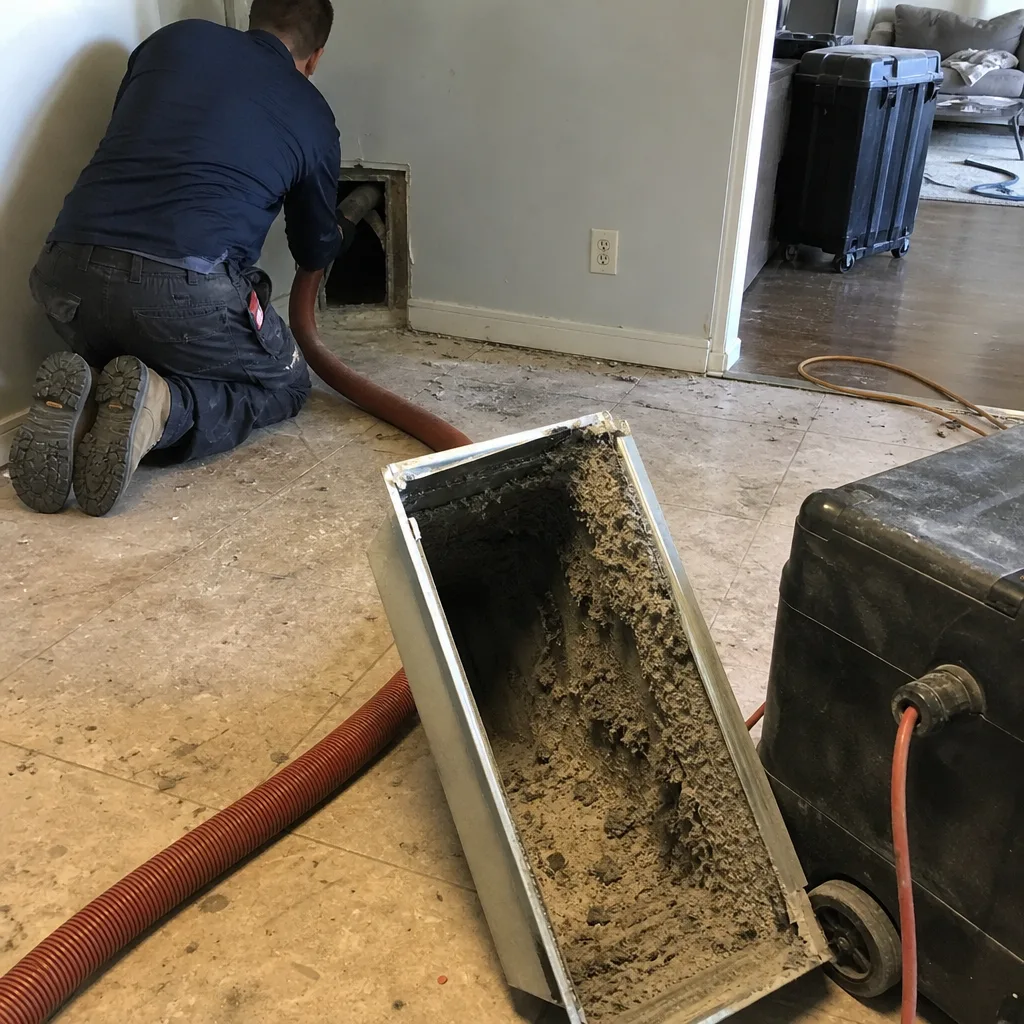 Before
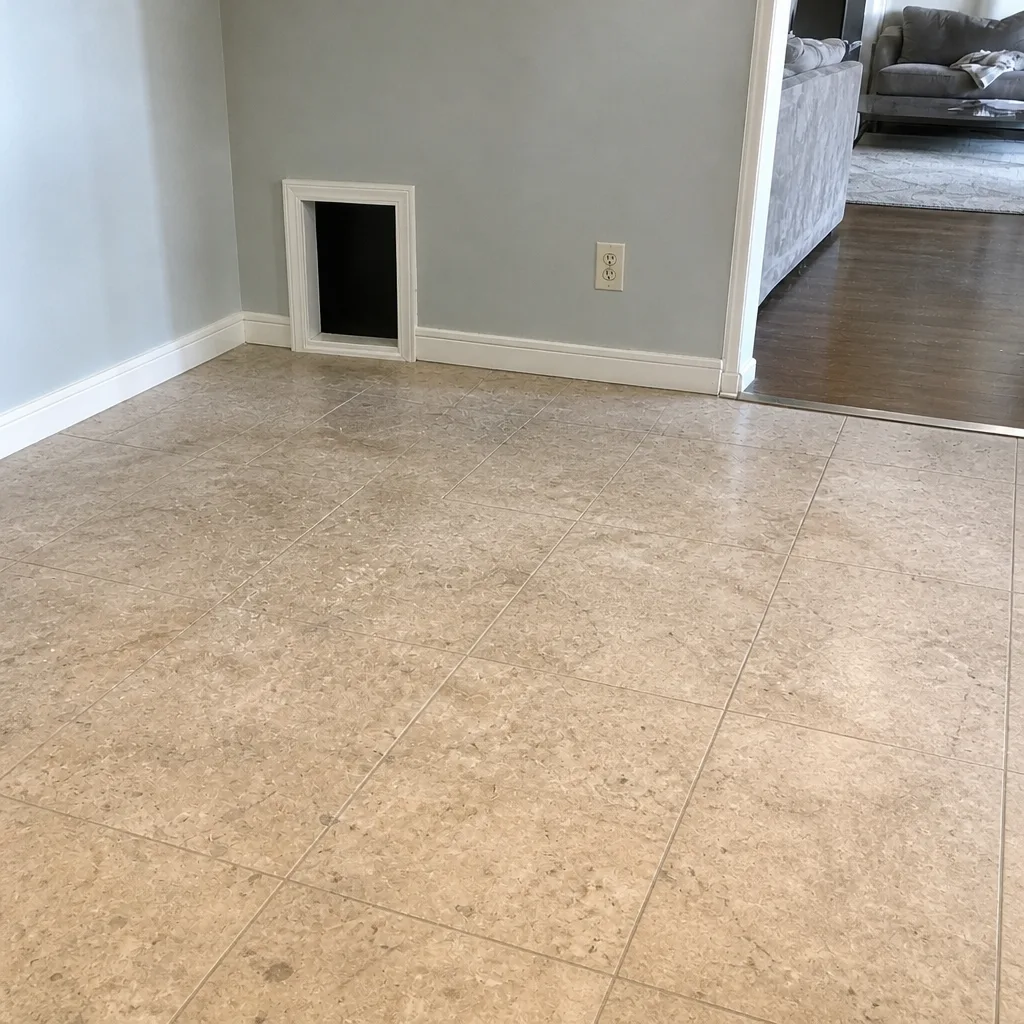 After
 Before
 After
When to Call a Professional
Some signs you can handle yourself. Others need professional eyes. Call when dust rebuilds on registers within days of cleaning, when a musty odor persists after the system runs a while, when airflow is uneven or a room never cools, when you see moisture or suspected biological growth inside a duct, when the dryer takes longer than one cycle, or when a previous cleaning left debris or disturbed lining behind. Those are all conditions where the cause has to be diagnosed with proper equipment before any work begins.
What separates a real assessment from a sales visit is the gear and the diagnosis. Our technicians have up to experience and use professional rotary-brush-and-vacuum systems like Rotobrush and Nikro, along with remediation-level equipment from Abatement Technologies where the job calls for it. We handle air duct cleaning, dryer vent cleaning, and air duct repair as three connected services: clean it, fix it, protect it. Glendale Duct Cleaning offers free estimates in Glendale. Call (855) 745-4301. We answer 24/7. Fast dispatch from 7am to 7pm, Sunday through Friday.
Frequently Asked Questions
Typical whole-home air duct cleaning for a standard single-family system in Glendale runs in the few-hundred-dollar range, scaled by the number of branches and the condition found. The written estimate sets the final price, and we don’t quote per vent or offer teaser rates. Call (855) 745-4301 for an exact quote. Estimates are free.
Cheap quotes usually reflect consumer-grade equipment, a rushed surface vacuum, or a price that grows once the technician is on site. A shop vac and a hose can’t reach the full duct interior, and a low teaser figure often turns into a much larger invoice. Ask what rotary-brush-and-vacuum system they use and whether the job includes before-and-after photos. Call (855) 745-4301 to talk through what a proper job includes.
Ask for before-and-after photos of your own ducts, not stock images. A company that can’t show you the interior before and after has no proof the cleaning reached anything. We photograph the before and after on every job. Call (855) 745-4301 to schedule.
There’s no universal number. Homes with pets, allergy sufferers, recent remodeling, or a history of dust-storm exposure tend to need it sooner than others. A homeowner who can self-inspect and document register and filter conditions will know when the system is asking for it. When in doubt, get an inspection. Call (855) 745-4301.
A thin settled film is normal. Dust that rebuilds within days of wiping, or clusters in one room, is a warning sign of a leak or bypass rather than simple surface contamination. Check the filter slot and the return side before booking a cleaning. Call (855) 745-4301 if you want help interpreting what you see.
Yes. A rushed job can compact debris at elbows, disturb insulation lining at supply boots, or knock a flex run loose, all of which put more contamination into the airstream. Signs include new dust in rooms that were clean and whistling vents. A proper fix often means repair first, then a full cleaning with professional equipment. Call (855) 745-4301.
The Bottom Line
The warning signs aren’t all the same message. Dust that rebuilds points to a breach, odor points to moisture or growth, uneven airflow points to a collapsed run, and post-haboob changes point to a filter bypass. Read the sign correctly and you’ll know whether you need cleaning, repair, or both. Read it wrong and you’ll pay for a cleaning that was never going to work. Document what you see, check the filter slot, and call when the signs cluster. Glendale Duct Cleaning offers free estimates in Glendale. Call (855) 745-4301. We answer 24/7. Fast dispatch from 7am to 7pm, Sunday through Friday.
Written by the team at Glendale Duct Cleaning.