
Last updated November 16, 2026
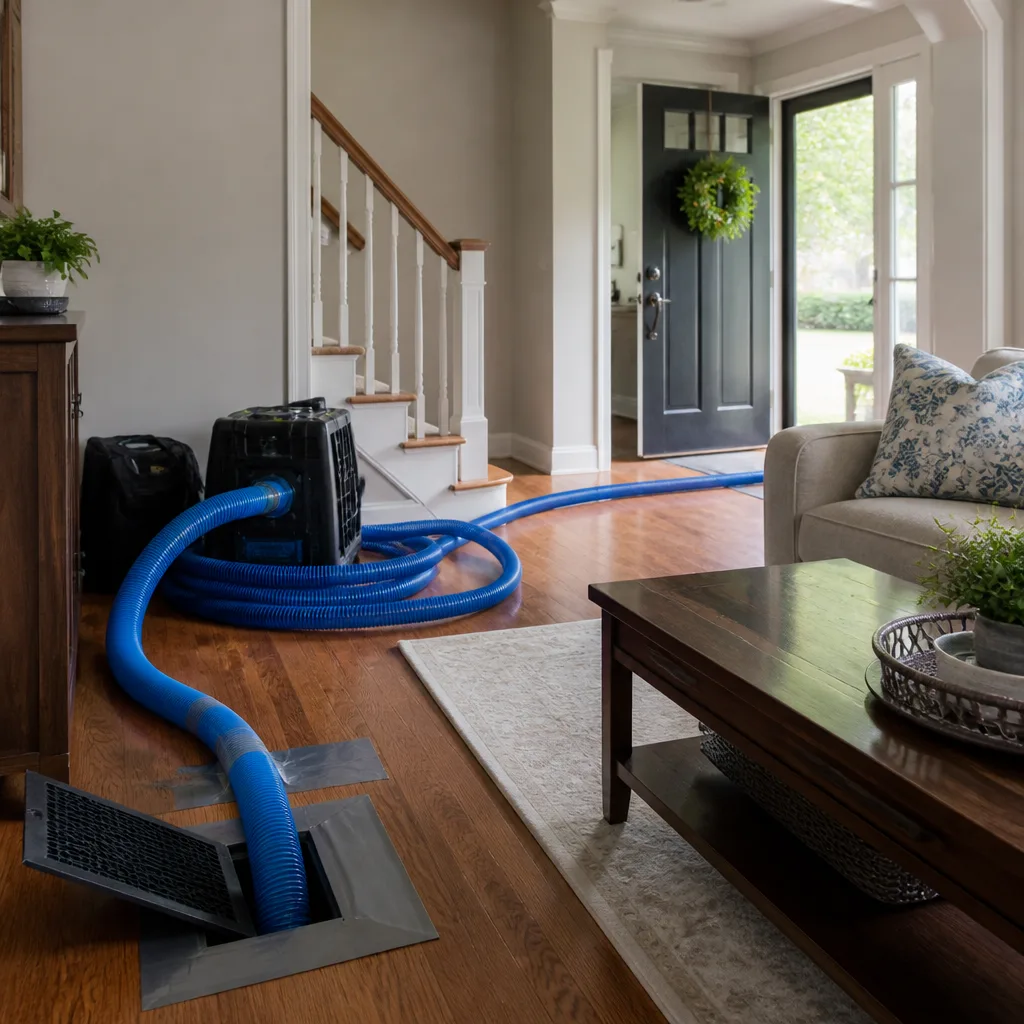 Whole-home duct cleaning
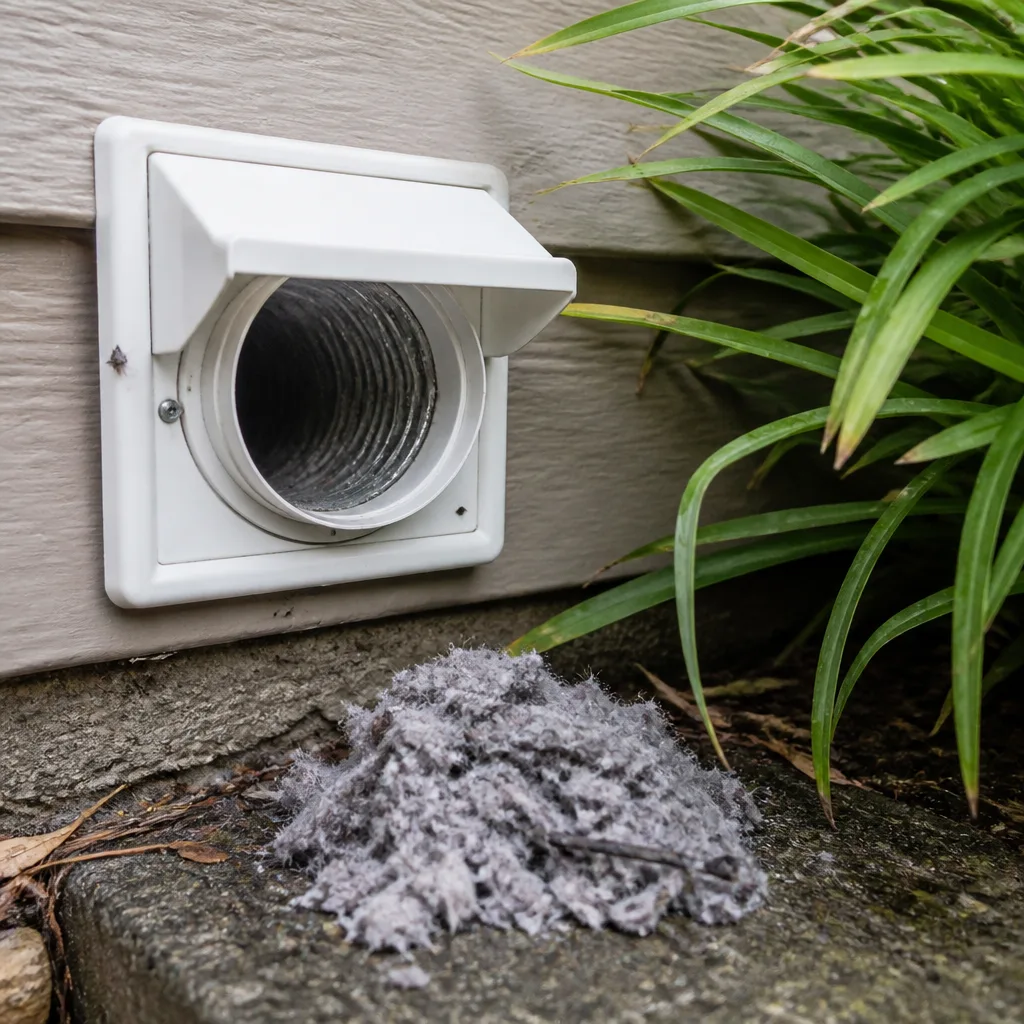 Dryer vent cleaning
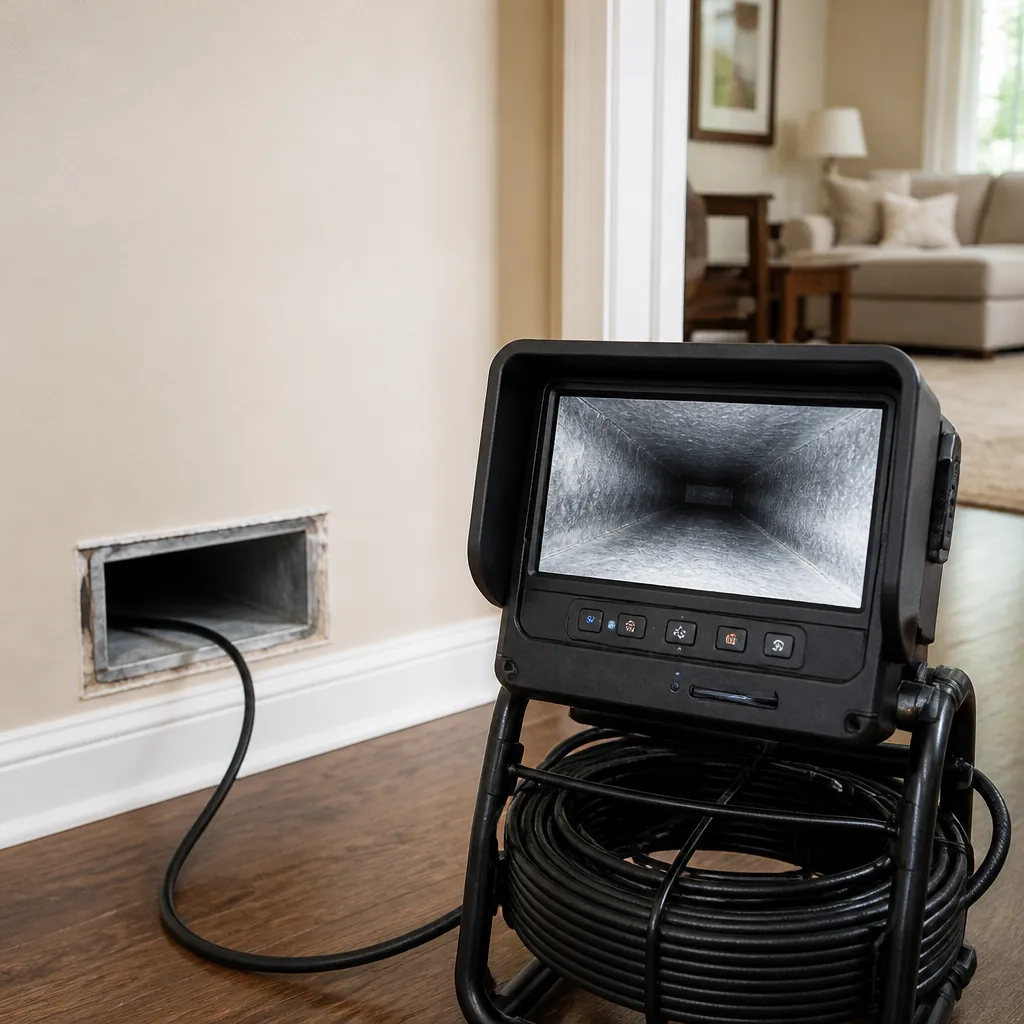 Camera inspection
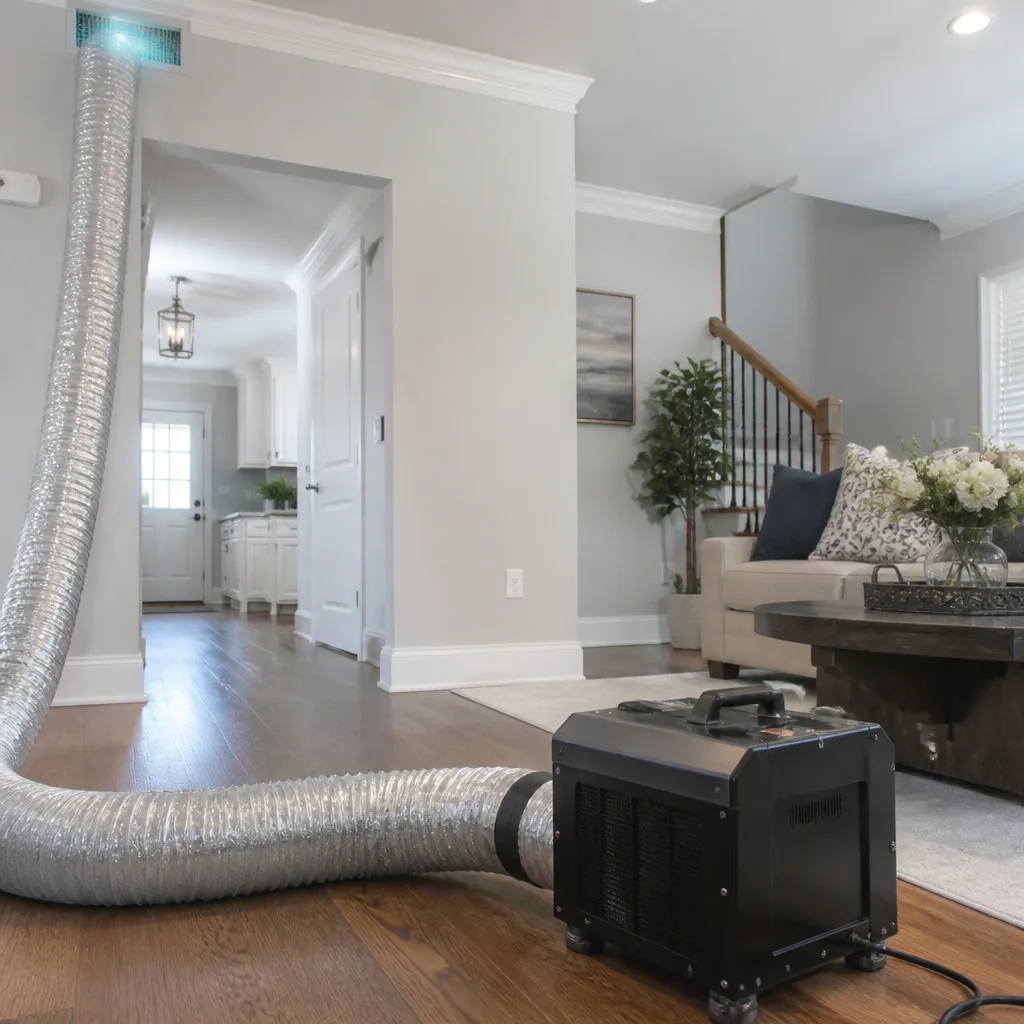 Sanitizing & deodorizing
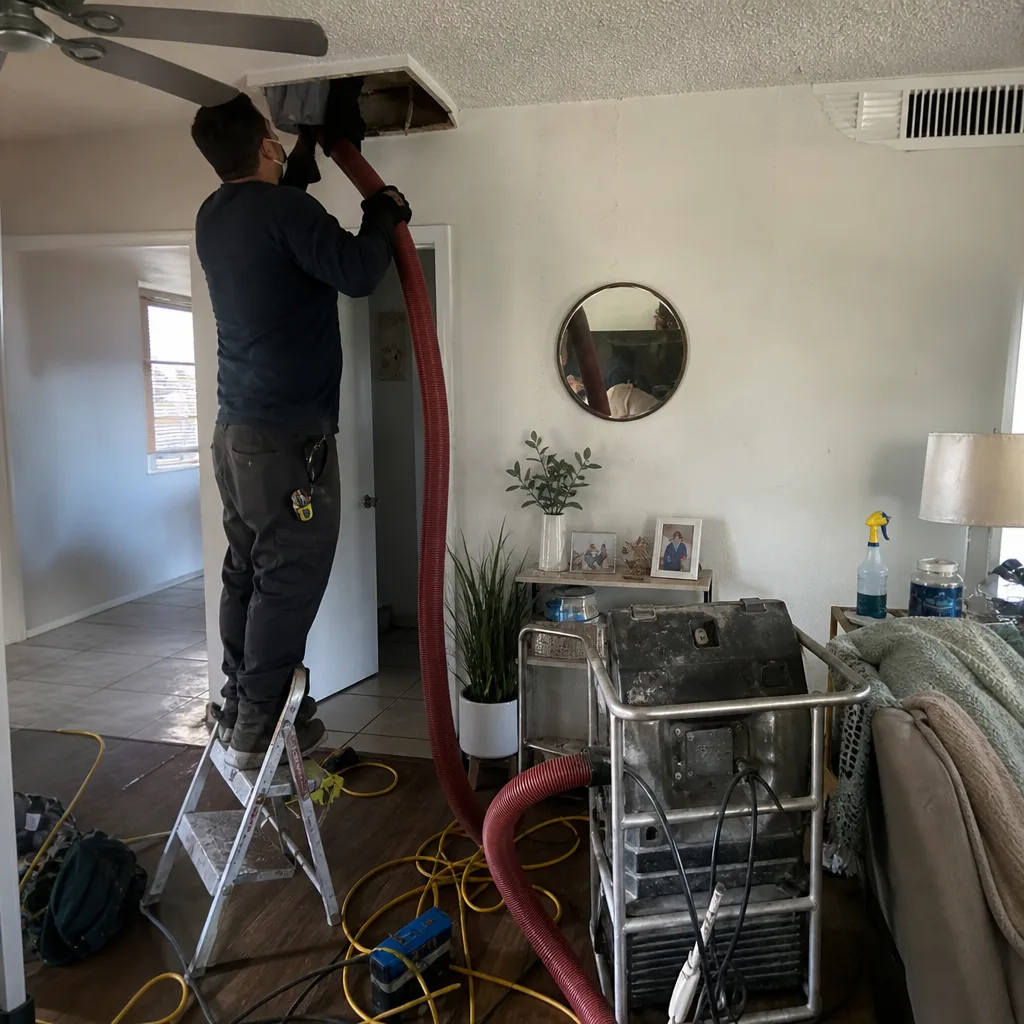
Whole-system duct and dryer vent check with before-and-after photos - you see exactly what came out of your vents
That "$99 whole-house special" is a bait ad - the real number appears once they are in your hallway, or the "clean" is a shop-vac at the register. We photograph the inside of your ducts before and after instead.
Air Duct Cleaning Troubleshooting in Glendale: Common Problems and How to Fix Them
Most homeowners assume the worst when a room runs hot or the airflow feels weak: the air conditioner is failing, the unit is undersized, or the whole system needs replacing. That leap to the expensive conclusion is usually wrong. In most Glendale homes we look at, the AC itself is running exactly as designed. The problem lives downstream, in the duct system that carries the conditioned air from the air handler to the rooms. A sagging flex run, a disconnected supply boot, a clogged return, or debris packed against the coil will all produce the same symptoms a failing system does: uneven temperatures, dust, rising bills. This guide teaches you to read those symptoms correctly, isolate where the fault actually lives, and decide whether it’s a job for a flashlight and a tissue or for professional equipment.
Quick Answer
Airflow problems in Glendale homes are usually duct-side, not equipment-side. Weak or uneven airflow most often traces to a clogged return, a disconnected or crushed supply run, or debris buildup at the air handler, and each cause has a different fix. Cleaning corrects a dirty duct problem; repair corrects a damaged one, and those are not the same job.
Styles & brands we work with
- Whole-home duct cleaning
- Dryer vent cleaning
- Camera inspection
- Sanitizing & deodorizing
Table of Contents
- How do you tell a duct blockage from a duct leak?
- What does Glendale’s monsoon season do to attic ductwork?
- Dirty ducts vs. damaged ducts: why cleaning won’t fix a broken run
- Diagnosing poor airflow: clogged return, disconnected supply, or air handler debris
- When a vacuum and brush work vs. when you need commercial equipment
- Why your dryer vent is a separate troubleshooting problem
- What duct noise is telling you
- Common mistakes to avoid
How do you tell a duct blockage from a duct leak?
You can separate a blockage from a leak with a tissue, a flashlight, and an hour of your time. The distinction matters because they demand completely different fixes, and paying for a cleaning when the real problem is a leak wastes money and solves nothing.
The tissue test works on supply registers. Hold a single-ply tissue against the grille of a register while the system fan runs. On a healthy supply, the tissue is pushed away from the grille with steady force. On a register fed by a crushed or disconnected run, the tissue barely moves or flutters. If several registers across the house push hard and one specific room’s register pushes weakly, the fault is almost always local to that branch: a kinked flex line, a disconnected takeoff at the trunk, or a closed damper.
Then check for leaks, which behave differently. A leaking duct doesn’t starve one room quietly; it bleeds air into the attic or a wall cavity where you’re paying to cool the desert. With a flashlight, look along accessible duct joints and at the connections where flex meets metal collars. Torn flex jacket, separated seams, and tape that has dried out and curled are the usual suspects. A strong way to confirm: feel for air movement escaping near joints with the fan running. A blockage restricts flow at the register. A leak dumps flow before it gets there.
To summarize the diagnostic logic:
- Weak at one register, strong elsewhere: branch blockage or closed damper, isolated to that run.
- Weak at every register: clogged return, collapsed main trunk, or a dirty air handler choking the whole system.
- Strong at registers but rooms still hot: duct leakage dumping cooled air into the attic before it reaches the room.
- Dusty air and high bills with decent flow: accumulated debris in the ducts themselves.
This is the exact reasoning our technicians walk through on a first visit for air duct cleaning across Glendale. Reading the symptom correctly is what keeps a small repair from becoming a system replacement.
What does Glendale’s monsoon season do to attic ductwork?
The monsoon is the single biggest seasonal threat to attic ductwork in Glendale, and it works on flexible duct runs in a way homeowners rarely see coming. Flexible duct is largely a foil-and-mesh jacket wrapped around a wire helix, with insulation and a plastic liner inside. It’s tough, but it isn’t indifferent to heat and humidity, and Glendale attics have both in extremes.
During the summer, attic temperatures climb far above the outdoor air reading, and the humidity that arrives with monsoon storms adds moisture to the mix. The result on aging flex duct is predictable. The outer jacket that has been baked brittle for years cracks and splits. The insulation inside compresses and sags. And here’s the part that matters: a flex run that sags between its hangers loses its round cross-section. A run that should be a circle becomes a flattened oval, and a flattened duct moves far less air than a round one. That’s a partial collapse, and it’s one of the most common hidden causes of a hot room in a Glendale house that otherwise tests fine.
Moisture does a second kind of damage. Where a flex jacket has a small tear, humid summer air can enter the insulation, weigh it down, and pull the liner taut across the inside of the run. A taut, sagging liner acts like a flap inside the duct, further restricting flow.
What to check after a storm:
- Walk the accessible attic and look for flex runs that dip or bow between supports. Sagging is visible.
- Inspect jacket surfaces for cracks, splits, and tape that has lifted. A torn jacket is a leak and a moisture entry point.
- Look at the connections where flex meets metal collars at the trunk. Monsoon wind-driven attic pressure changes work taped joints loose.
- Note any run that touches a sharp edge or metal flashing. Vibration over a season can wear through the jacket.
Because Glendale winters are mild, attic ductwork here sees the worst of its stress in the heat and storm season, not the cold. Ruling out heat-related sag and storm damage first saves a lot of misdiagnosis.
Dirty ducts vs. damaged ducts: why cleaning won’t fix a broken run
A dirty duct problem and a damaged duct problem are two different jobs, and confusing them is the most expensive mistake homeowners make. Cleaning removes accumulated debris from a duct system that is structurally sound. Repair restores a duct system that is physically compromised. If you book a cleaning for a system that has a crushed run, a disconnected boot, or a torn trunk, the cleaning machine will do its job and your airflow will stay exactly as bad as it was.
Here’s how the two separate out.
Dirty duct signals point to buildup, not breakage:
- Visible dust and debris around supply registers, especially a dark ring where air exits.
- Dust settling on furniture faster than usual after the system has run.
- A musty or stale odor when the fan kicks on, pointing to debris and microbial growth in the system.
- Allergy-type symptoms that flare when the HVAC runs.
- Airflow that’s adequate but the air still feels dirty.
Damaged duct signals point to a structural fault that restricts or diverts flow:
- One room that stays stubbornly 8-10°F off the rest of the house no matter the season.
- Stale or outdoor-smelling air at a register when the system runs, which can mean a torn jacket pulling air from the attic.
- A whistling or fluttering noise at a specific register.
- Higher energy bills with no change in how you run the system.
- Airflow that’s strong at the air handler but weak at the rooms.
If a fair share of the second list describes your home, you’re looking at a repair situation, not a cleaning one. That’s precisely why we keep air duct repair as its own separate service rather than bundling it into a cleaning. A cleaning machine can’t reconnect a boot or re-support a collapsed run, so diagnosing which problem you actually have is the first job. The second job is fixing the right one.
Diagnosing poor airflow: clogged return, disconnected supply, or air handler debris
Poor airflow has three main homes in a residential system, and you can narrow down which one by following the air path from room to filter to air handler. Working through it in that order isolates the fault without opening anything.
- Start at the return. The return grille pulls air back to the air handler. If the return is clogged with a matted filter, blocked by furniture or a rug, or the return grille itself is packed with dust, the whole system starves. Pull the filter and hold a tissue to the return grille with the fan on. Weak pull at the return means a return-side restriction, and no amount of supply cleaning will fix it.
- Check the supply registers room by room. With the fan running, note which registers push strong and which are limp. A whole-house pattern points to the return or main trunk. A one-room pattern points to that branch: a crushed run, a closed damper, or a supply boot that has pulled off the floor or ceiling penetration. A disconnected supply boot dumps conditioned air into the attic, so the register feels weak and the room stays warm even though the system is working hard.
- Check the air handler for debris accumulation. The evaporator coil and the blower wheel sit at the air handler. A coil coated in dust and debris can’t transfer heat, and a blower wheel caked with dust moves far less air than it should. If airflow is weak everywhere and the return and supplies show no obvious fault, dirt at the air handler is the likely cause. This is the one place where professional equipment matters most, because a dirty coil and blower need proper cleaning and inspection, not a homeowner reaching into a live system.
The order matters. Confirm the return is pulling, confirm the supplies are pushing, then look at the air handler. Once you know which of the three is the culprit, the fix becomes obvious: clean the return, reconnect or repair the supply run, or clean the air handler components. Our team at Glendale Duct Cleaning runs this same sequence on the first visit so the diagnosis and the service line up.
When a vacuum and brush work vs. when you need commercial equipment
A shop vacuum and a brush handle a small, isolated problem cleanly and safely. Everything beyond that, particularly whole-system cleaning and anything touching the air handler, calls for commercial-grade equipment. Here’s how to draw the line before you invest time or money.
Reasonable with a vacuum and brush:
- Dust and debris visible inside a single supply register’s grille or boot.
- Light dust at the return grille face, cleaned with the filter removed.
- Surface dust on grille covers themselves.
- Clearing a small obstruction you can see and reach at a register without opening the duct.
Not a job for a home vacuum:
- Cleaning the inside of the duct runs. A house vacuum doesn’t have the suction or the reach, and pushing a brush into a run without negative pressure can dislodge debris into the whole system.
- Cleaning the evaporator coil or blower wheel at the air handler, which is a live electrical component and requires care.
- A system with a crushed or collapsed run, where the duct has to be repaired, not swept.
- A whole house with visible dust and musty odor, which needs every branch cleaned under negative pressure.
This is where equipment separates a real job from a surface sweep. Our systems use a Rotobrush rotary-brush-and-vacuum setup to agitate and capture debris inside the runs, and Abatement Technologies equipment for negative-pressure, remediation-level air quality work. Negative pressure holds the system under suction during cleaning so dislodged debris is captured rather than blown back into your rooms. Rotary brushes reach the full inside surface of a run; a coat-hanger-and-shop-vac approach disturbs the debris without capturing it. Using the right machine isn’t a sales line, it’s the difference between cleaning and stirring.
Why your dryer vent is a separate troubleshooting problem
The dryer vent runs on a completely different troubleshooting logic from the supply ducts, and it deserves its own attention because the stakes are about safety rather than comfort. A clogged dryer vent is a fire risk, and it also degrades dryer performance in obvious, measurable ways.
Symptoms that point at the dryer vent rather than the ducts:
- Clothes take two or more cycles to dry, or come out still damp.
- The dryer feels hot to the touch on top or at the door.
- Lint is accumulating in the lint trap less than expected, or a lint film appears around the outside vent hood.
- The outdoor vent flapper doesn’t open strongly when the dryer runs, or stays closed entirely.
- A musty smell on dried laundry.
The underlying problem is lint accumulation along the vent run, often where the flexible connector transitions to rigid duct and along the length of the run itself. Lint is highly combustible and the heat from the dryer keeps it in a dry, warm environment. A vent run that bends sharply or runs longer than it should collect lint faster. Our separate dryer vent cleaning service addresses this as its own job, using brushes and vacuums sized to the vent run, because a clogged terminal vent is a fire-prevention issue, not just a convenience one. If your outdoor flapper barely moves when the dryer runs, that’s your cue to look harder.
What duct noise is telling you
Duct noise is diagnostic. The type of sound narrows down the cause, and you can usually hear which direction to look just by standing under a vent while the fan runs.
- Whistling at a register: restricted flow, often a partly closed damper, a crushed flex run, or a register that’s undersized for the boot. Whistle means air is being squeezed through a gap that’s too small.
- Fluttering or a flapping sound: a loose damper, or a torn flex jacket or liner flapping inside the run. This often follows a monsoon-season jacket tear.
- Rattling through the house: loose metal trunk sections, hanging supports that have let go, or a blower imbalance. Metal duct expands and contracts and works joints loose over time.
- Rumbling or a hollow roar: a return that’s undersized or blocked, forcing the system to pull harder, or a blower wheel that’s caked with debris and out of balance.
Noise often shows up before comfort problems do, which makes it a useful early signal. A register that’s been quiet for years and suddenly whistles is telling you flow has changed. That’s the moment to run the tissue test from earlier in this guide rather than wait for a room to turn uncomfortably warm.
Common Mistakes to Avoid
- Booking a cleaning for a damaged system. If a run is collapsed or a boot is disconnected, a cleaning leaves the airflow problem untouched. Diagnose dirty vs. damaged first, then book the right service.
- Ignoring the return side. Homeowners focus on supply registers and forget the return, which is the more common cause of whole-house weak airflow. Check the return filter and grille before blaming the supply side.
- Using a shop vac on the main runs. A home vacuum stirs debris without capturing it and can shove it deeper into the system. That’s a problem that calls for negative pressure and rotary equipment.
- Putting off the dryer vent. Lint buildup in the vent is a fire hazard, and a lazy outdoor flapper or a dryer that needs two cycles is a clear warning. Treat it as a separate safety job.
- Cleaning the ducts but not looking at the air handler. A dirty evaporator coil and blower wheel keep churning out weak airflow and high bills even after the runs are clean. Address both ends.
- Skipping the post-monsoon inspection. A cracked flex jacket or a sagging run after storm season will leak and choke airflow slowly. Checking the accessible attic after the monsoon catches it early.
- Assuming a hot room means a dying AC. Uneven room temperatures are almost always duct-side. Get the duct system diagnosed before pricing a system replacement.
See the difference
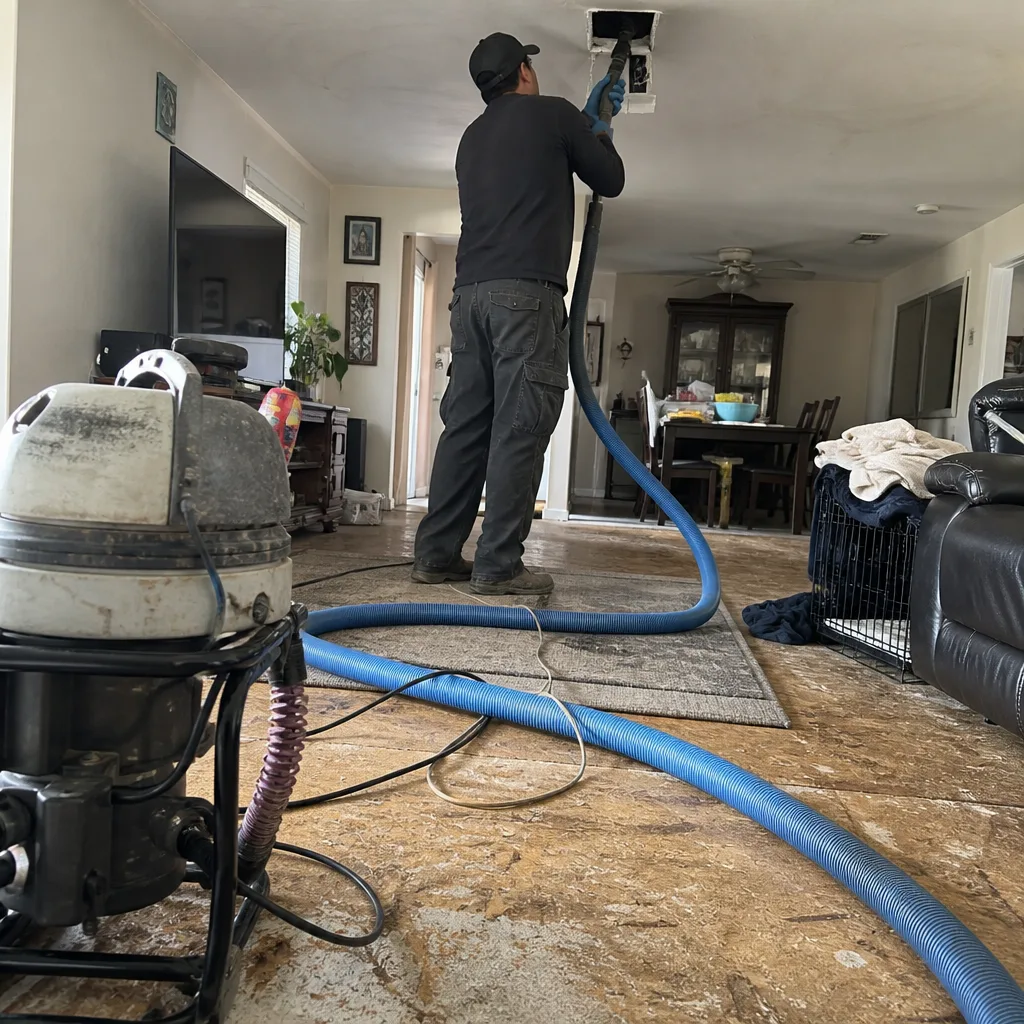 Before
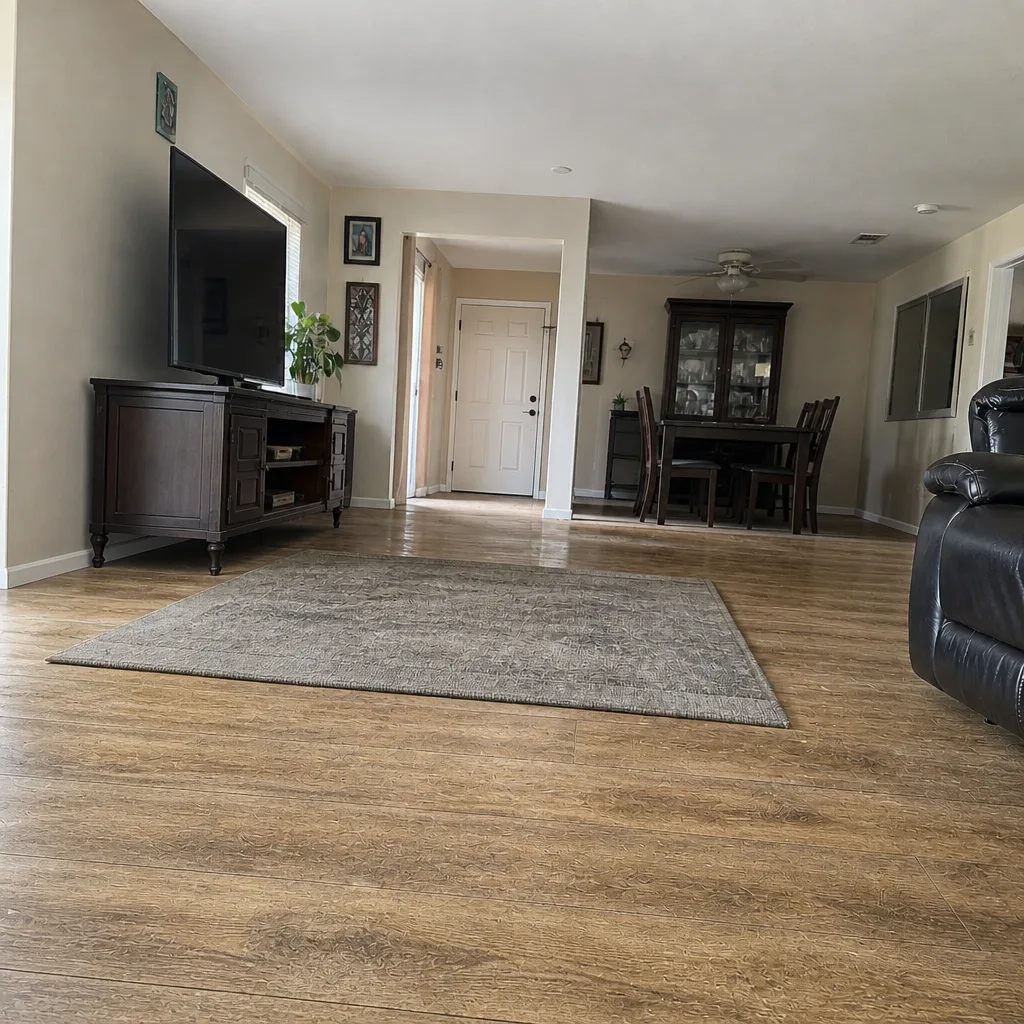 After
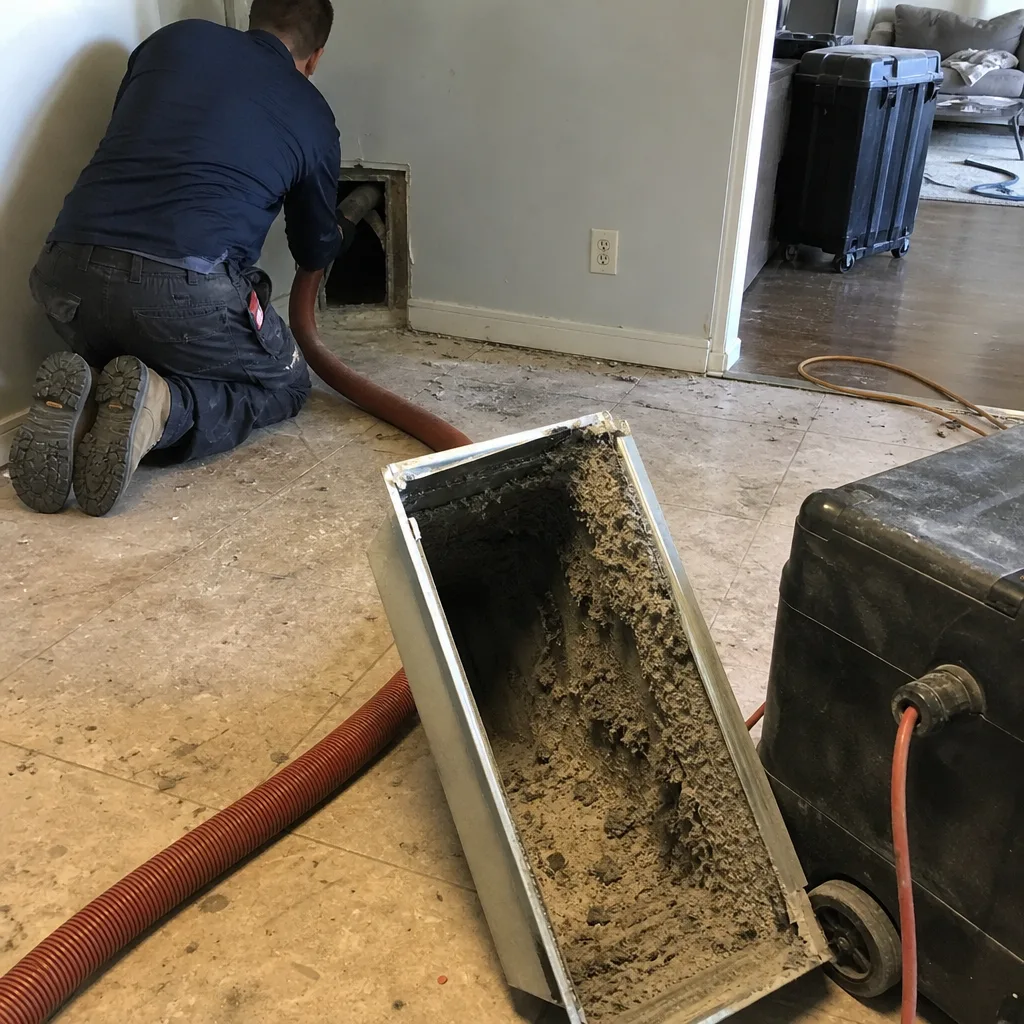 Before
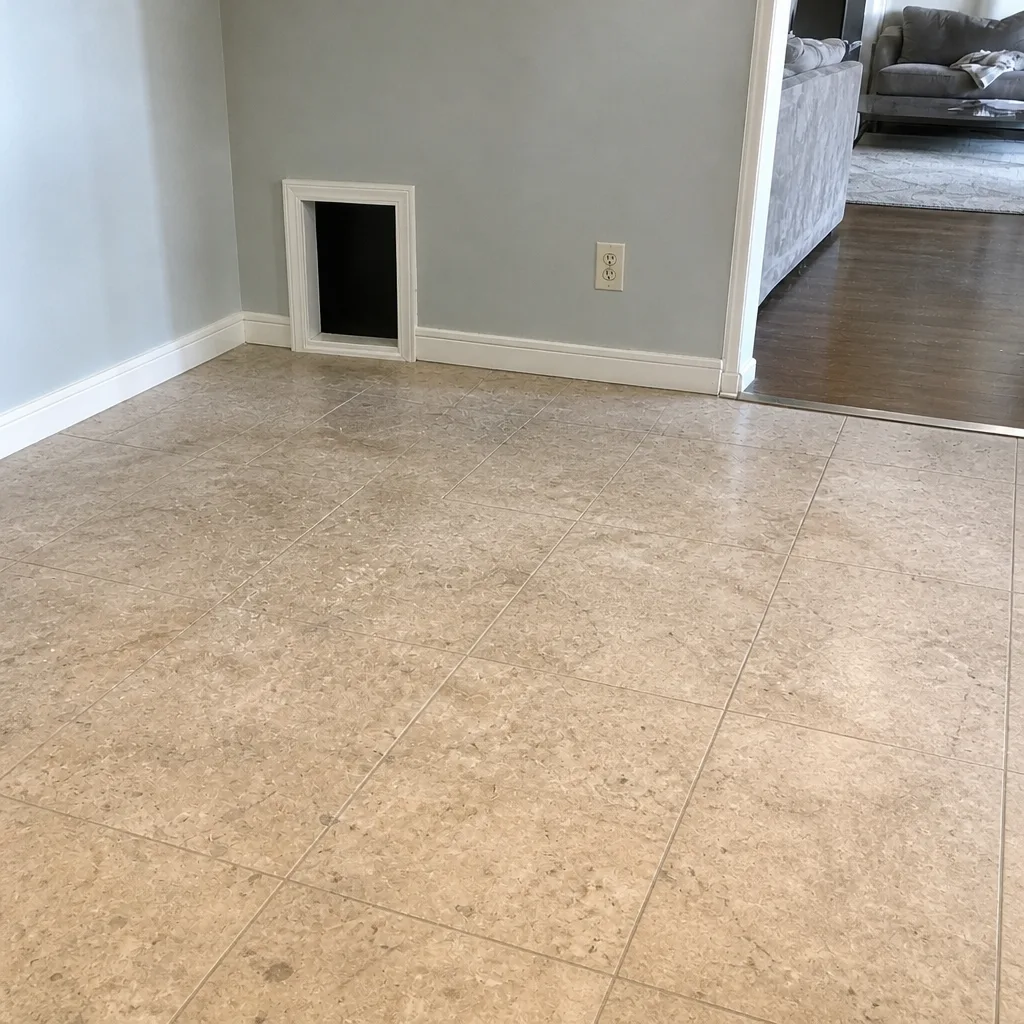 After
 Before
 After
When to Call a Professional
Some troubleshooting ends with you turning a damper or swapping a filter. Others need equipment and a trained eye. Call us when you’ve run the tissue test and can’t find the cause, when a room stays 8-10°F off the rest of the house despite strong airflow elsewhere, when you see a crushed or disconnected run in the attic, or when the coil and blower at the air handler need cleaning and inspection. Call us too if your dryer needs two cycles to dry a load or the outdoor vent flapper won’t open, since that’s a fire-prevention issue with a dedicated fix. Commercial-grade cleaning has its place when the whole system is dirty, and repair has its place when the problem is structural. Glendale Duct Cleaning offers free estimates in Glendale. Call (855) 745-4301. We answer 24/7. Fast dispatch from 7am to 7pm, Sunday through Friday. Our technicians have up to experience reading exactly these symptoms.
Frequently Asked Questions
A single hot room almost always points to a duct-side fault on that room’s branch: a crushed flex run, a disconnected supply boot, a closed damper, or a leak dumping air into the attic before it reaches the room. The AC itself is typically fine. Run the tissue test at that room’s register and compare it to a register in a comfortable room to confirm it’s isolated to the branch. Call (855) 745-4301 for a diagnosis if the register shows weak flow.
There’s no way to give a real number before seeing the system, because every home’s layout, number of runs, and dirt level is different, and honest pricing is quoted per system by a written estimate rather than a teaser figure. Steer clear of a low advertised coupon that turns into a much larger invoice once a technician is on site. We quote one flat price per system agreed before work starts, with before-and-after photos of your own ducts so you can see the job was done. Call (855) 745-4301 for a free estimate.
Cheap quotes usually skip negative pressure and proper equipment, which means debris gets disturbed and left in the system rather than captured and removed. A quote built around a coupon price tends to grow once the technician is inside and “discovers” a problem. We use Rotobrush rotary-brush-and-vacuum systems and Abatement Technologies equipment for remediation-level work, and we set one flat price per system before we start. Call (855) 745-4301 to compare an honest estimate.
The proof is before-and-after photos of your own ducts, not a sales sheet, and a fixed price agreed in writing before work starts. Any reputable cleaner should document the job and let you see the difference. Ask for photos up front, and be wary of a technician who won’t show them. Call (855) 745-4301 and ask to see how we document a job.
Only if the weak airflow was caused by debris buildup. If the real cause is a crushed run, a disconnected supply, or debris at the air handler, cleaning alone won’t restore proper flow and you’d need a repair. That’s why we diagnose dirty versus damaged before recommending a service, and why air duct repair is a separate line. Call (855) 745-4301 to get the flow problem diagnosed correctly.
There’s no fixed schedule that fits every home; the right interval depends on how fast your system accumulates dust and hair, whether you have pets or allergy concerns, and whether the system needs after-monsoon attention. A whole-house cleaning tends to make sense when you see dust rings at the registers, musty smells when the fan runs, or a steady rise in dust around the house. Call (855) 745-4301 and we’ll tell you honestly whether your system is due.
Yes, and the damage is often invisible from inside the house. Heat and monsoon humidity work on flexible duct: jackets crack, insulation sags, and runs lose their round shape between supports, which chokes airflow and opens leaks. A quick look at the accessible attic after storm season catches a torn jacket or sagging run early, before it turns into a comfort problem. Call (855) 745-4301 if you’d like the attic side inspected.
The Bottom Line
The symptoms that make homeowners suspect a failing HVAC system usually come from the ducts, not the equipment. Weak or uneven airflow, a stubborn hot room, rising bills, and dust are duct-side signals with specific, fixable causes: a clogged return, a disconnected supply, a crushed flex run, debris at the air handler, or a leak dumping air into the attic. The trick is reading the symptom correctly and separating a dirty-duct problem from a damaged-duct problem, because each needs a different fix. Use the tissue test, check both ends of the system, inspect the attic after the monsoon, and treat the dryer vent as the safety job it is. Glendale Duct Cleaning handles the full lifecycle: clean it, fix it, protect it. Call (855) 745-4301. We answer 24/7. Fast dispatch from 7am to 7pm, Sunday through Friday.
Written by the team at Glendale Duct Cleaning.