
Last updated November 16, 2026
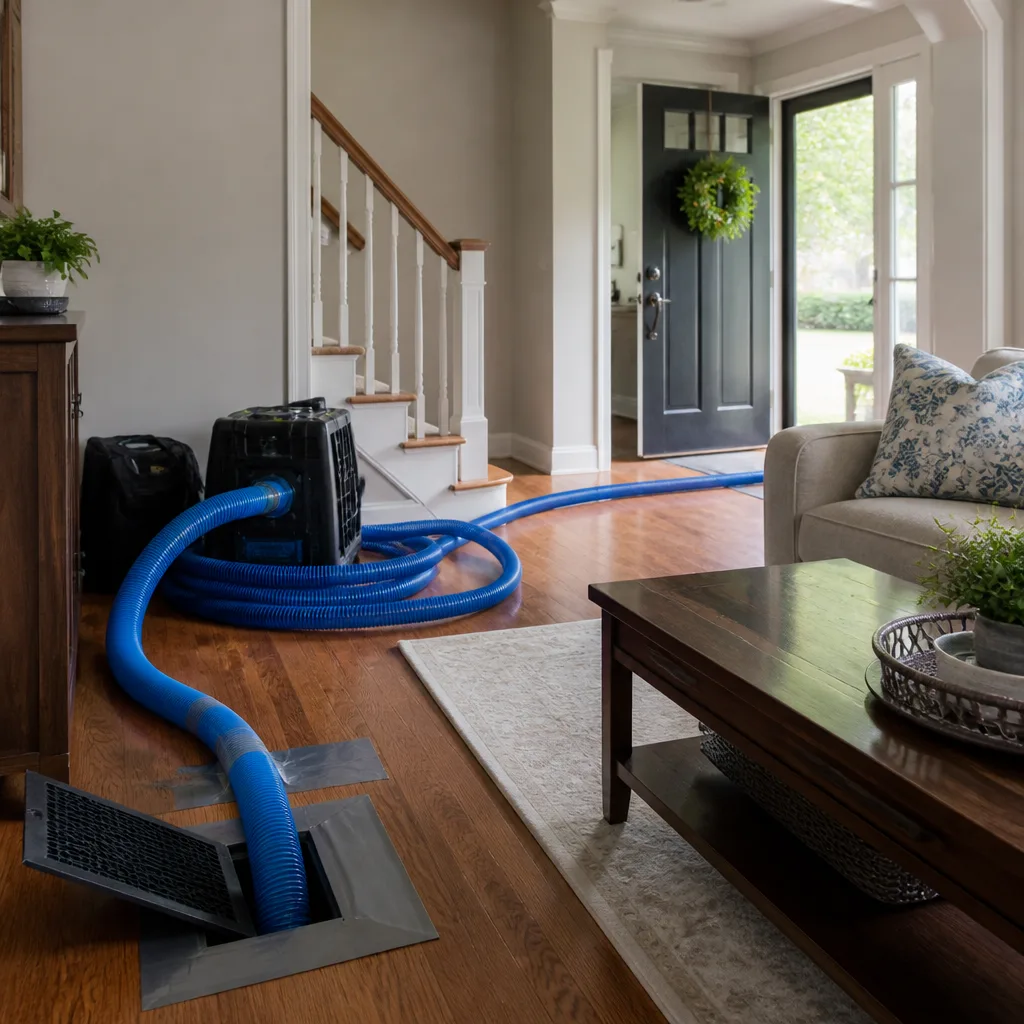 Whole-home duct cleaning
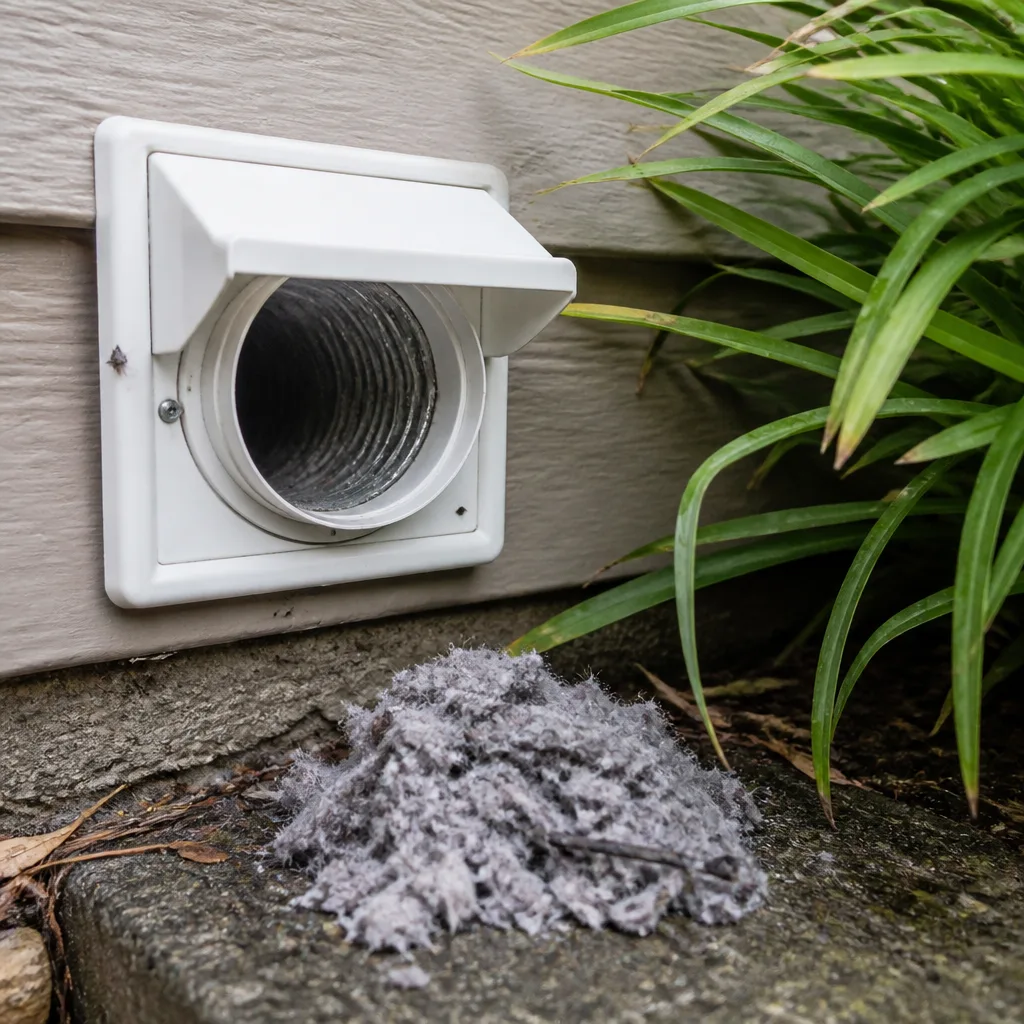 Dryer vent cleaning
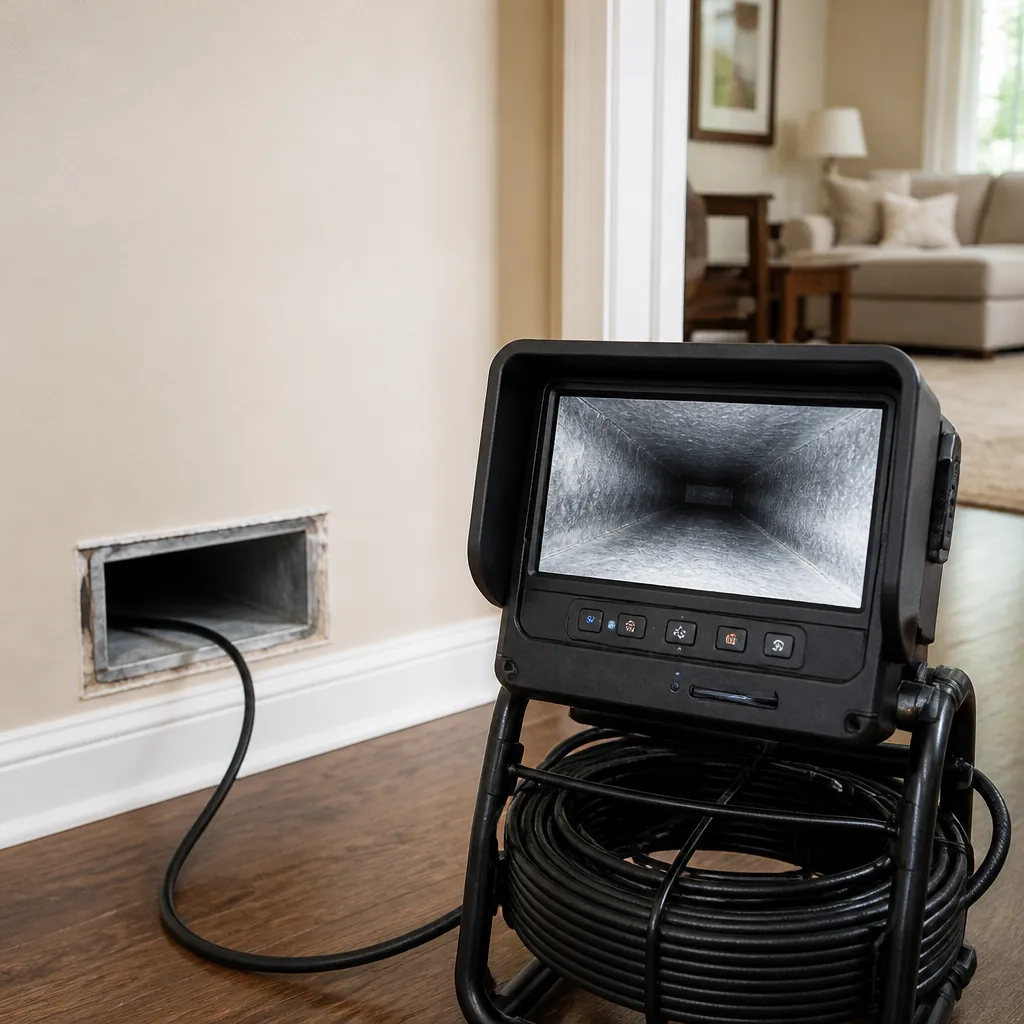 Camera inspection
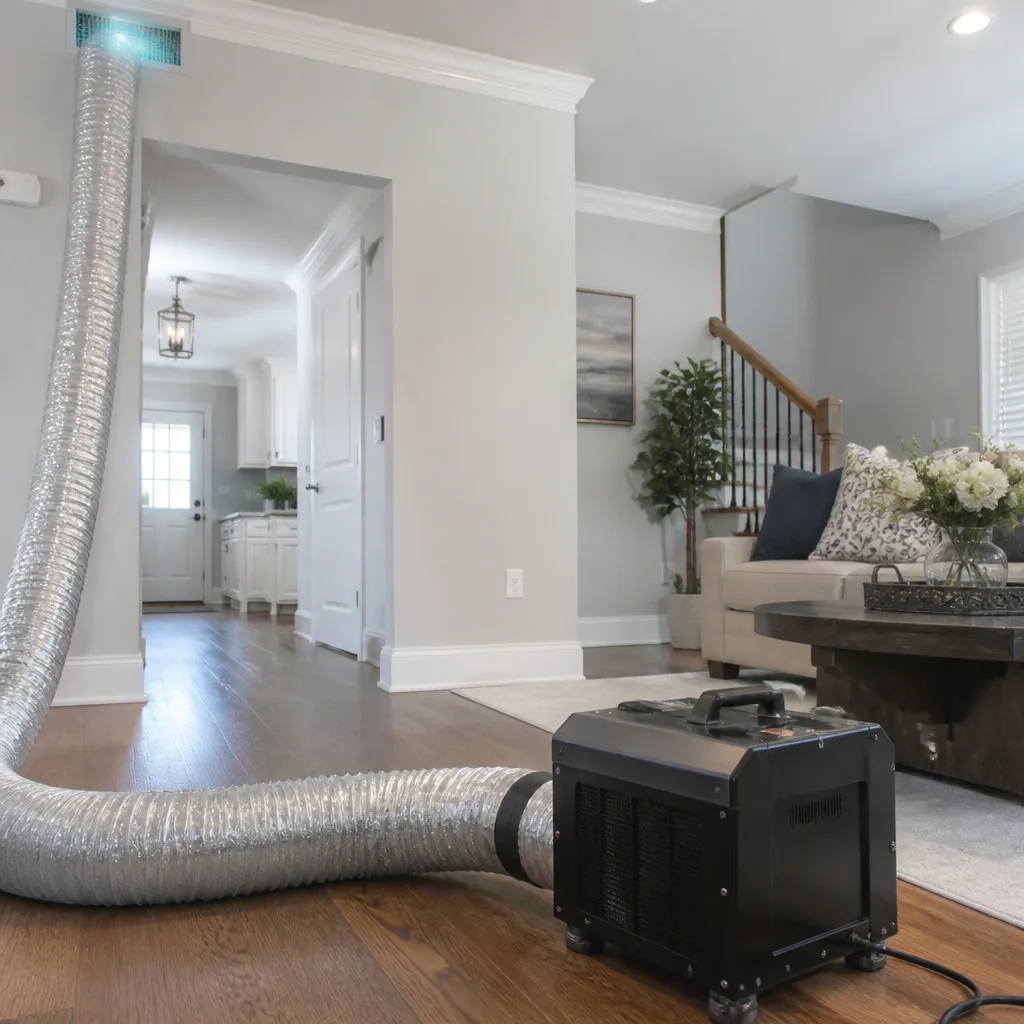 Sanitizing & deodorizing
Whole-system duct and dryer vent check with before-and-after photos - you see exactly what came out of your vents
That "$99 whole-house special" is a bait ad - the real number appears once they are in your hallway, or the "clean" is a shop-vac at the register. We photograph the inside of your ducts before and after instead.
Air Duct Cleaning Permits, Codes & Inspections in Glendale, AZ: What You Need to Know
Here’s the part of duct work most homeowners never hear about: cleaning your ducts doesn’t require a permit, but repairing them often does. In Arizona, the moment a contractor cuts into a duct connection, adds a return, or seals a trunk line, that job becomes licensed mechanical work. Cleaning is one thing. Modifying the system is another. A company that quietly blurs that line can leave you with unpermitted alterations that surface at the worst moment, usually during a home sale. This guide walks through what Glendale actually requires, how the 2018 International Mechanical Code applies here, how to check a contractor’s license with the Arizona Registrar of Contractors, and what to do if someone already crossed the line in your home.
Quick Answer
Routine air duct cleaning in Glendale, AZ does not require a city permit or a licensed mechanical contractor. But duct repair, modification, or replacement of duct connections falls under licensed HVAC work in Arizona, typically requiring a C-39 air conditioning license through the Arizona Registrar of Contractors, and any job that alters the system’s structure usually needs a Glendale building permit under the 2018 International Mechanical Code. Cleaning and repair are two different scopes, and only one of them is paperwork-free.
Styles & brands we work with
- Whole-home duct cleaning
- Dryer vent cleaning
- Camera inspection
- Sanitizing & deodorizing
Table of Contents
- Cleaning vs. Repair: Where the Permit Line Actually Sits
- Arizona ROC Licensing: What C-39 Means for Duct Work
- Glendale Permit Triggers Under the 2018 IMC
- How to Verify a Contractor’s License Before Work Begins
- What to Do About Unpermitted Duct Modifications Before Selling
- What an Inspection Actually Covers
- Why Glendale’s Desert Climate Makes Duct Integrity Matter More
- How to Choose a Duct Contractor Who Stays on the Right Side of the Line
Cleaning vs. Repair: Where the Permit Line Actually Sits
The distinction between cleaning and repair is the single most misunderstood part of this trade. Cleaning removes debris from a duct system that stays structurally exactly as it was. Repair changes the system. Those are different categories of work in the eyes of the state, and they carry different licensing and permitting rules.
Cleaning, in the regulated sense, means mechanical agitation and negative-pressure extraction of dust, debris, and buildup from supply and return ducts, registers, and the air handler connection. Nothing is cut, extended, reconnected, or resealed in a way that alters airflow. No permit applies to this because the building’s mechanical system isn’t being modified. When we run a Rotobrush rotary brush through a main trunk line, we’re removing material, not changing the duct.
Repair is where the ground shifts. These tasks typically cross into licensed mechanical work:
- Cutting, splicing, or reconnecting flexible or rigid duct runs
- Adding a new supply or return register
- Sealing a damaged trunk line with mastic, tape, or a mechanical joint
- Rebuilding a crushed flex duct or straightening a sagging run
- Resizing or relocating a duct section to improve airflow
- Replacing duct board, duct insulation, or the metal collar at a boot
Any of those tasks is a modification of the mechanical system, not a cleaning. In Arizona, that work falls under the state’s contractor licensing framework, and depending on scope, under Glendale’s mechanical permitting process. If a company offers to “fix a couple of connections” during a cleaning visit without paperwork or a licensed HVAC subcontractor, that’s a flag worth pausing on. A licensed Glendale air duct cleaning company knows the boundary and stays on the right side of it.
We think about this line constantly in our own work. If a technician finds a collapsed flex run during a routine job, the honest move is to write a separate repair estimate with a clear scope, not to quietly add $200 to the invoice and call it cleaning. You deserve to know which service you’re paying for and what paperwork, if any, should follow the work.
Arizona ROC Licensing: What C-39 Means for Duct Work
Contractor licensing in Arizona runs through the Arizona Registrar of Contractors, usually shortened to the ROC. Not all mechanical trades fall under the same license. The class most relevant to residential duct work is the C-39 Air Conditioning license, which covers the installation, repair, and maintenance of heating, ventilating, and air conditioning systems, including the ductwork those systems rely on.
Here’s the part that matters for homeowners. A company that only cleans ducts typically isn’t required to hold a C-39 license because cleaning doesn’t constitute mechanical repair. But the moment that company performs structural duct modifications, it either needs to hold a C-39 license itself or subcontract the work to a licensed HVAC contractor who does. That subcontractor should appear on the estimate and on any permit paperwork.
Other classifications you might encounter in duct and air quality work:
- C-39 Air Conditioning – the primary license covering residential HVAC and ductwork modification
- B-1 General Commercial or B-2 General Residential – general building licenses that may cover structural work, not mechanical duct modification
- C-37 Plumbing, Heating, and Boiler Installation – can overlap when duct work interacts with furnace or boiler systems, though C-39 is the standard for air distribution
Active status matters as much as license class. Arizona publishes each license’s status as active or inactive. Inactive means the contractor isn’t authorized to pull permits or perform work under that license, even if the number exists and their website still shows it. Always check current status, not just that a number appears on an estimate. That single check filters out a surprising amount of seasonal and poorly managed outfits.
Our technicians have up to experience in this trade, and we’ve watched enough cleaning visits go sideways to know the license check is not busywork. It’s the difference between a job that stays on the books and one that shows up on a home inspection report.
Glendale Permit Triggers Under the 2018 IMC
Glendale, Arizona has adopted the 2018 International Mechanical Code, which is the same base code used across most of the metro. The IMC sets the rules for how ductwork is installed, sealed, supported, and connected to the air handler. For cleaning, those rules don’t come into play. For repair or replacement, they do.
Under the IMC as adopted in Glendale, work that typically triggers a mechanical permit includes:
- Any addition or relocation of a supply or return register
- Replacement of a section of duct or a duct run
- Installation of a new duct system or substantial modification of an existing one
- Work that changes the path of a duct run through framing
- Alteration of duct sizing that affects the system’s design balance
- Any repair that involves opening a wall or ceiling to access the duct system
Minor in-kind repairs, like reconnecting a knocked-off flex duct at a boot without changing its path, often don’t require a permit. The line between “repair” and “modification” is not perfectly sharp in code language, and it’s the kind of thing a Glendale building department employee can clarify with a quick call before work starts. A legitimate contractor will pick up the phone and ask. If yours won’t, that’s the tell.
Glendale’s building department also inspects permitted mechanical work at rough-in and final stages. A rough-in inspection catches poor duct connections, sagging runs, and insufficient sealing before the drywall goes back up. A final inspection verifies the system is intact and connected properly. Skipping permits means skipping those checks, which is exactly the scenario that produces a home inspection surprise later.
For our part, we don’t pull permits for cleaning because none are required. When a repair does require one, we work with licensed mechanical contractors who do. That’s how we keep our Air Duct Repair scope honest.
How to Verify a Contractor’s License Before Work Begins
Verifying a contractor’s license in Arizona takes about three minutes and can save you thousands. The process is public and free, and you should do it every time, even for a job that “is just a cleaning.”
Here’s the step-by-step:
- Ask for the license number in writing. Any legitimate contractor can produce it before you sign anything. If the number appears only on their website and not on the estimate, ask them to add it.
- Go to the Arizona Registrar of Contractors website and use the license lookup tool.
- Check the license class. For duct repair or modification, you want to see a C-39 Air Conditioning license. For cleaning-only work, no C-39 is required, but a licensed company is generally a stronger choice.
- Check the status. Active means the license is in good standing. Inactive means the contractor cannot legally perform work under that license right now, even if they claim otherwise.
- Check the complaint history and any disciplinary actions. Every state license record shows whether complaints were filed, how they resolved, and whether the ROC took action.
- Confirm the name on the license matches the name on your estimate and the name of the entity doing the work. If the estimate is from one company and the license belongs to another, ask why.
The active-inactive distinction trips people up. A license that lapsed three months ago still resolves in a lookup, and the contractor may have forgotten to renew or may have let it lapse on purpose. Inactive isn’t automatically a red flag; it could be an honest paperwork lapse. But it does mean they cannot legally perform work under it, and you should not sign until you see active status or a written explanation with a licensed replacement.
Ask about insurance separately. Ask for a certificate of insurance naming the work performed and confirm it’s current, not a certificate that expired last year. Insurance and licensing are separate checks, and both matter. When you call Glendale Duct Cleaning, we can walk you through our insurance and licensing status before we book anything.
What to Do About Unpermitted Duct Modifications Before Selling
Unpermitted duct work is one of the quieter problems we hear about from Glendale homeowners, and it almost always surfaces during a home sale. A previous contractor “added a return” or “sealed the trunk” without pulling a permit, and now the buyer’s inspector has flagged it. The good news is there’s a clear path forward. The bad news is that ignoring it makes it worse.
The steps that actually resolve it:
- Document what’s there. Photograph the duct connections, take note of any obvious additions, and pull whatever paperwork the previous owner left behind. Your real estate agent can often help track down receipts.
- Call the Glendale building department and describe what you see. Ask whether the modification as described would have required a permit at the time it was done and what it takes to legalize it now.
- Get a licensed C-39 HVAC contractor to inspect and, if needed, bring the work up to code. In many cases the fix is a reseal, a proper support strap, or a reconnection done to IMC standards.
- If a permit is required, file for it through the licensed contractor. Retroactive permits are common; they aren’t a crisis.
- Attend the inspection. The inspector will confirm the work meets code, and you walk away with documentation.
Most home inspectors in the Phoenix metro know what to look for in ductwork, and an unpermitted modification will show up. The buyer’s lender may also require proof that any flagged mechanical work was permitted and inspected. Coming to the table with a cleared permit and a signed-off inspection is a far stronger position than a promise to “fix it after closing.”
We ran into this ourselves on recent repair calls in the Westgate area, where a previous renovation had added a return with no documentation. The cost to legalize it was modest; the cost to argue about it during escrow was not. If you’re getting ready to list, a pre-listing duct inspection is cheap insurance.
What an Inspection Actually Covers
A duct inspection isn’t just someone shining a flashlight into a register. When properly done, it’s a structured review of the entire air distribution system, and it produces a written record you can keep. This matters for Glendale homeowners because the same inspection that catches a collapsed flex run can also flag a permit that was never pulled.
An inspection typically covers:
- Visual inspection of accessible supply and return runs, flex duct, duct board, and metal trunk lines
- Connection checks at boots, collars, and the air handler plenum, looking for gaps, sagging, or misalignment
- Contamination assessment – dust, debris, pest activity, or moisture intrusion inside the ducts
- Airflow verification at registers to spot restricted runs or disconnected sections
- Seal integrity at any joint that should be mastic-sealed or taped per IMC standards
- Air quality review of filtration hardware, including Honeywell and Aprilaire filter cabinets if they’re present
- Documentation – photos, notes, and a written scope you can hand to an HVAC contractor or your real estate agent
For Glendale homes, duct inspection also intersects with a specific local issue: attic heat. In summer, attic temperatures in Glendale can push well past 140 degrees, and that environment accelerates the failure of flex duct seals, mastic, and duct insulation. A duct that seemed fine two summers ago can have opened joints today. An inspection that focuses only on visible dust misses that.
After the inspection, a real professional will lay out options. If the system is dirty and structurally sound, cleaning. If it’s dirty and structural issues exist, a repair estimate first. If a repair needs a permit, someone licensed needs to be on the job. Our Air Duct Cleaning work pairs well with an inspection because we’re already up in the attic and registers. Sometimes we find the problem the homeowner suspected. Sometimes we don’t, and we say so.
Why Glendale’s Desert Climate Makes Duct Integrity Matter More
Duct systems in Glendale face conditions that ducts in most of the country never see. The summer attic temperatures, the fine dust that circulates through a home during monsoon season, and the near-constant HVAC runtime from May through October all stress the system harder than a typical northern climate does.
The dust is the biggest factor. Desert dust is fine, and it migrates. It gets pulled into return air, lodges in filters, sneaks past poorly sealed joints, and settles in duct runs that don’t get airflow to sweep it out. Over time, an unsealed joint that would be a minor leak in Ohio becomes a steady dust pathway in Glendale. This is where proper cleaning and proper sealing both earn their place, and where a company that only cleans without evaluating the structure leaves half the problem untouched.
Summer heat is the second factor. Attic temperatures in Glendale routinely climb to extremes, and flex duct, mastic, and duct board all degrade faster in that environment than they do in a conditioned crawlspace. Seals that were intact when installed can dry, crack, and separate. This is not a hail problem or a cold-climate freeze-thaw problem; it’s a sustained heat problem that shows up as loose connections and deteriorating duct insulation year after year.
Monsoon season adds a third factor: humidity. For a few weeks each year, Glendale gets rain and elevated humidity, and duct systems in unconditioned spaces can see moisture condensation on cold surfaces. That’s a real concern for IAQ because moisture plus dust equals a place mold can grow. During a proper inspection, we look for moisture evidence at the air handler plenum and any duct run that passes through unconditioned space. Abatement Technologies equipment is on hand for the cases where contamination is more than surface dust.
The takeaway: Glendale duct work benefits from a specialist who understands how the local climate is going to age the system. A company from a mild-climate market might not recognize that a “normal” duct run has already accumulated two summers of stress.
How to Choose a Duct Contractor Who Stays on the Right Side of the Line
You don’t have to guess whether your ducts are actually clean, and you shouldn’t have to guess whether the contractor doing the work is licensed for what they’re about to do. A few questions will separate a specialist from a generalist with a shop vac and a business card.
What to ask before booking:
- What equipment do you use? Professional rotary-brush-and-vacuum systems like Rotobrush are the standard, not consumer-grade vacuums. If the answer is vague, ask again.
- Is the quote per-duct or per-system? Per-system pricing means one flat price for the whole job, agreed before work starts. Per-duct pricing almost always produces a bigger total than the initial quote suggests.
- Will I get before-and-after photos? Every reputable company should be able to show you the actual condition of your ducts, not a stock image.
- What happens if you find a repair issue? You want a separate written estimate, not a verbal add-on. If the repair requires a permit, you want to know which licensed C-39 contractor will file it.
- What’s your ROC license situation? For cleaning-only work, not strictly required, but ask anyway. For repair, C-39 is required.
- Do you offer dryer vent cleaning as a separate service? Dryer vents are a distinct fire safety category, not a side project. If a company mentions it as an afterthought, that’s where their training ends.
We lead with equipment because it’s the most honest proof point in this trade. Rotobrush and Nikro systems don’t come cheap, and a company that invested in them had to commit to this niche seriously. The same goes for handling Honeywell and Aprilaire filtration systems on the IAQ side. Cleaning a duct and then leaving the homeowner with a clogged or incorrectly sized filter cabinet is a half-job.
One thing worth clarifying on the front end: a legitimate company doesn’t promise permits it can’t pull. If a repair requires C-39 work, the licensed mechanical contractor’s name goes on the paperwork, and the cleaning specialist’s name doesn’t. That’s not a weakness; that’s how the licensing framework is supposed to work. The answer you want isn’t “we handle everything.” It’s a clear explanation of who handles what.
Common Mistakes to Avoid
- Assuming “cleaning” and “repair” are the same service. Cleaning is permit-free. Repair that changes duct structure usually requires a permit and a C-39 license. Ask a contractor which one your quote covers before you sign.
- Skipping the ROC license check. Three minutes on the Arizona Registrar of Contractors site is the cheapest insurance you’ll buy. Check the license class, active status, and complaint history every time, even for a small job.
- Accepting verbal change orders. If a technician says a duct is crushed and needs to be fixed on the spot, ask for a written estimate with scope and price. Verbal add-ons during a cleaning visit are the classic bait-and-switch pattern in this industry.
- Hiring a per-duct quote. Per-duct pricing is designed to grow mid-job. A flat price per system, agreed before the work begins, is the standard you want.
- Ignoring unpermitted duct work during a home sale. An inspector will find it. Getting a retroactive permit through a licensed contractor is far cheaper than negotiating a price cut during escrow.
- Treating the attic as a storage closet during a duct inspection. Technicians need clear access to traverse the tree and check connections. If boxes are piled on and around the equipment, the inspection gets partial, and the report will say so.
- Hiring the cheapest quote without verifying what’s included. A low coupon price that excludes the air handler, or charges extra per register, is not a bargain. Ask for the whole-system scope in writing before you compare numbers.
See the difference
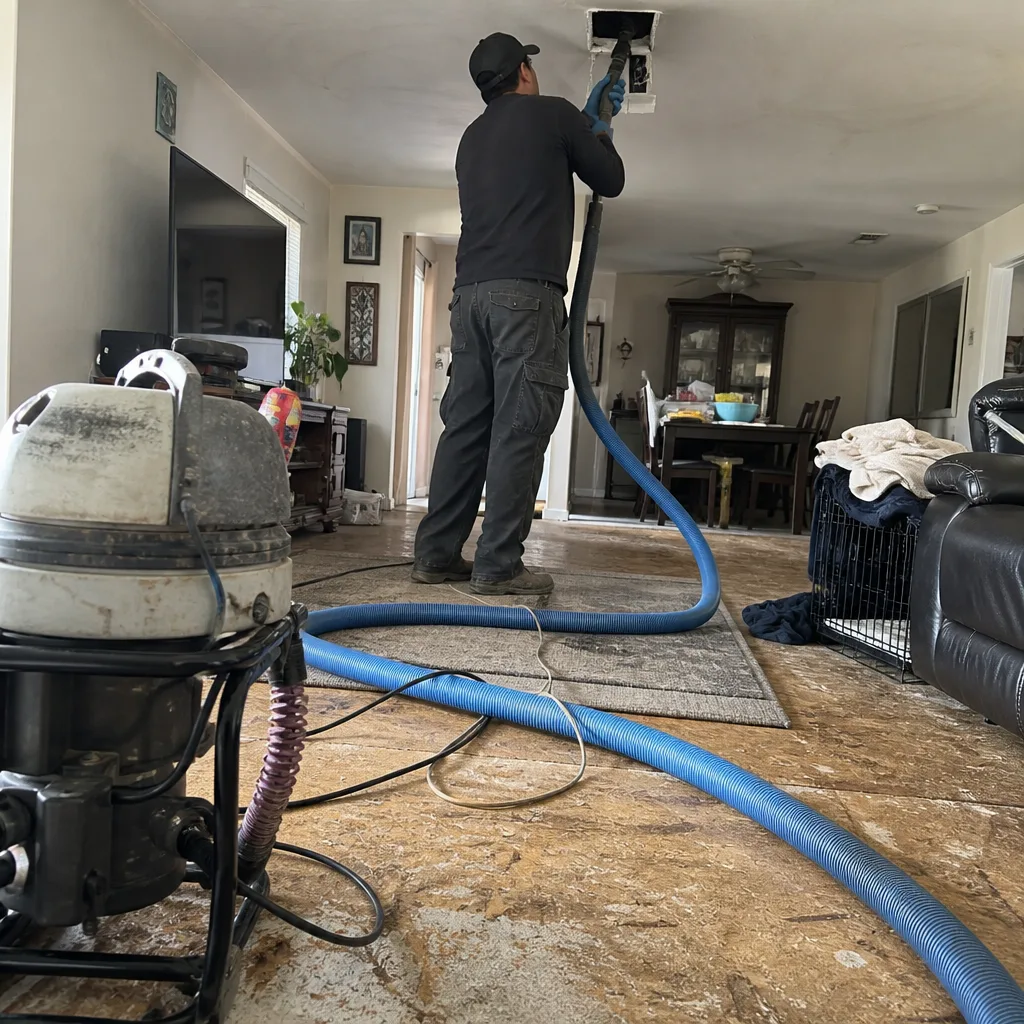 Before
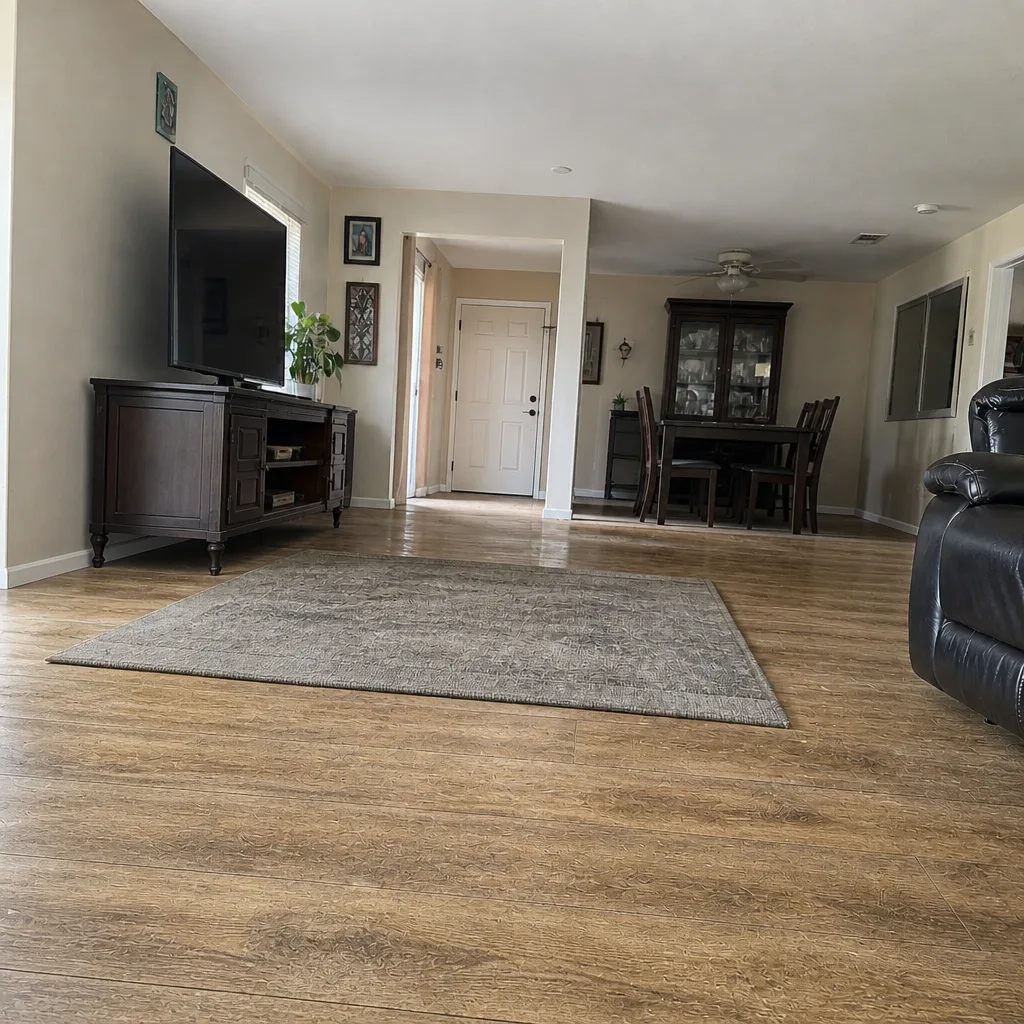 After
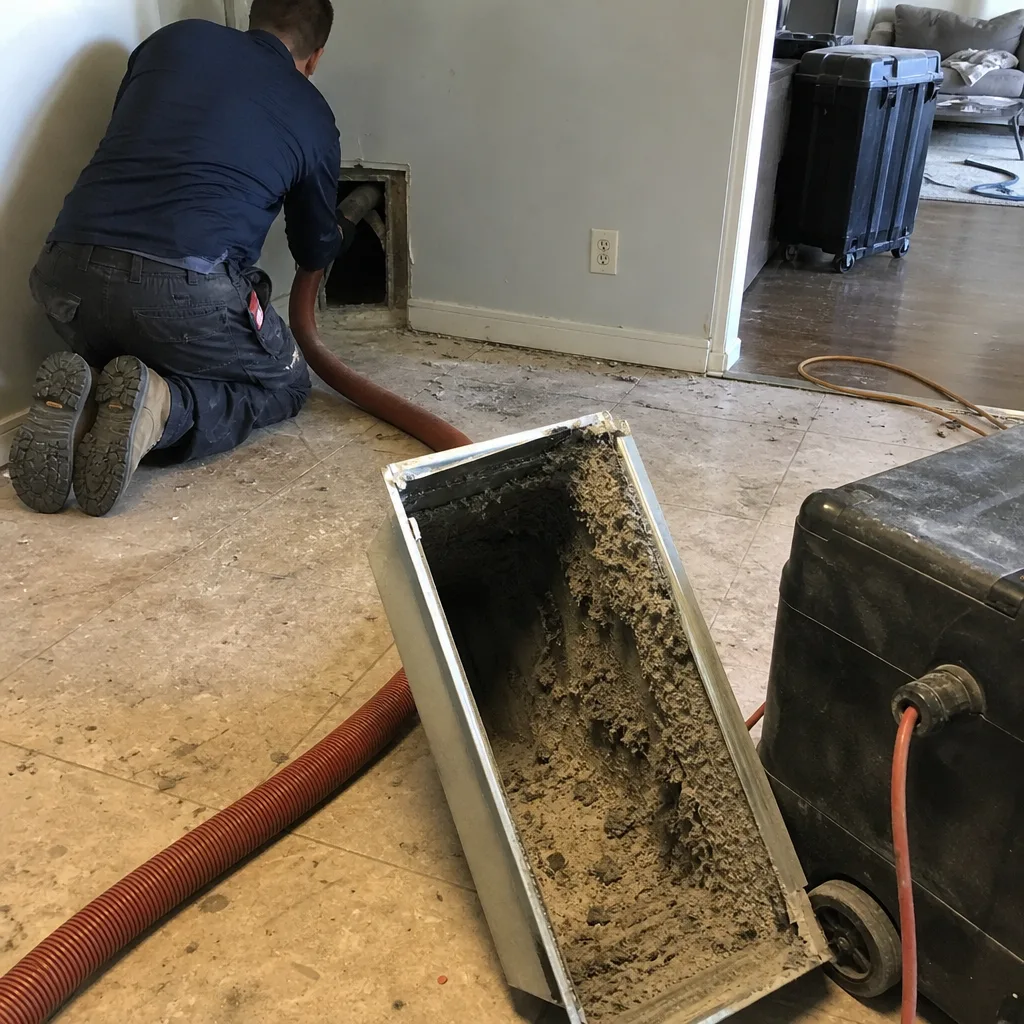 Before
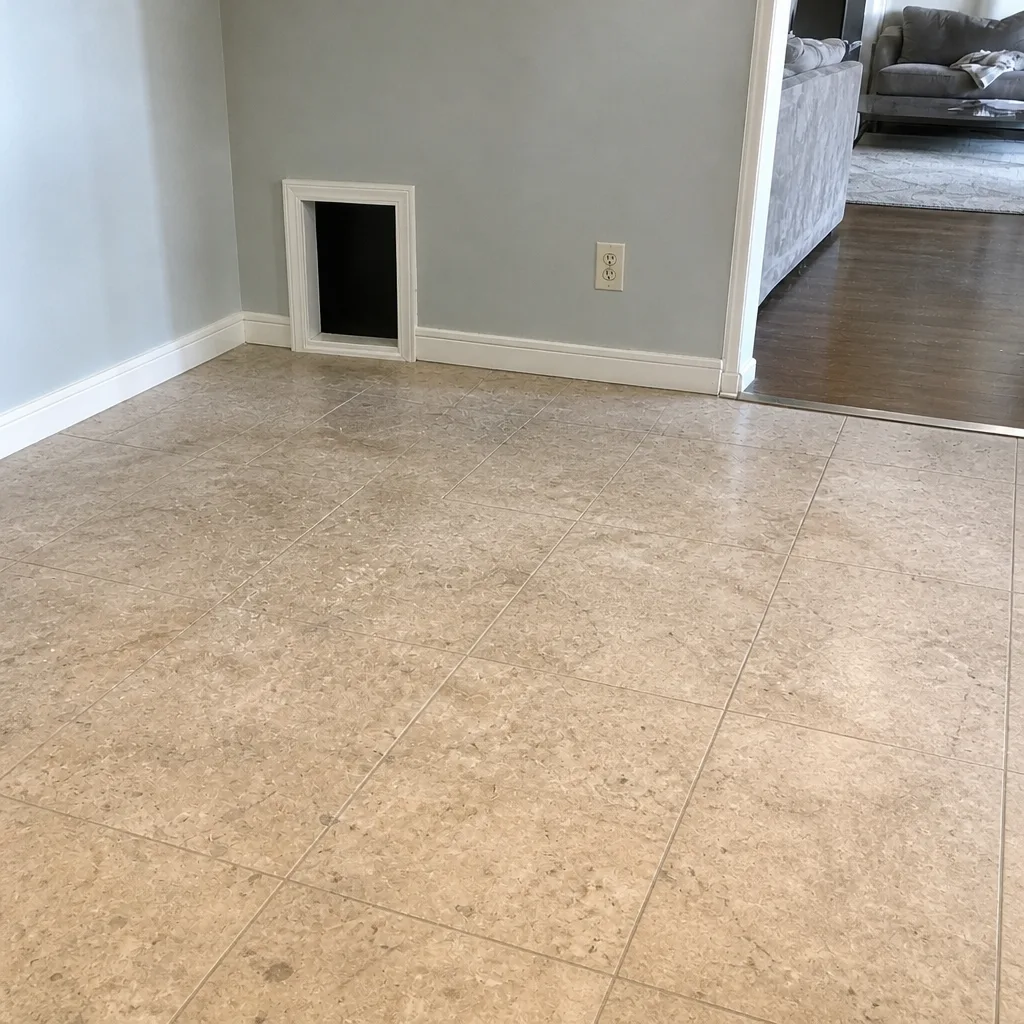 After
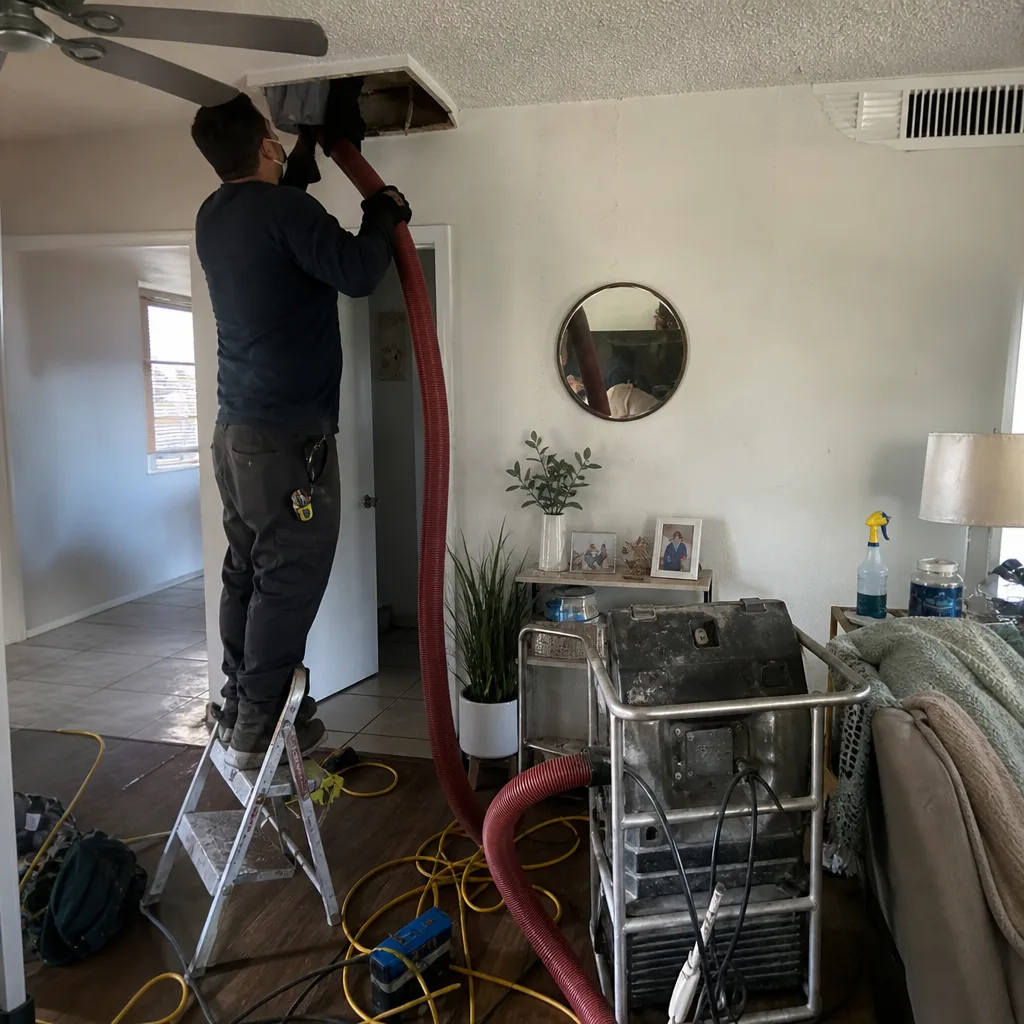 Before
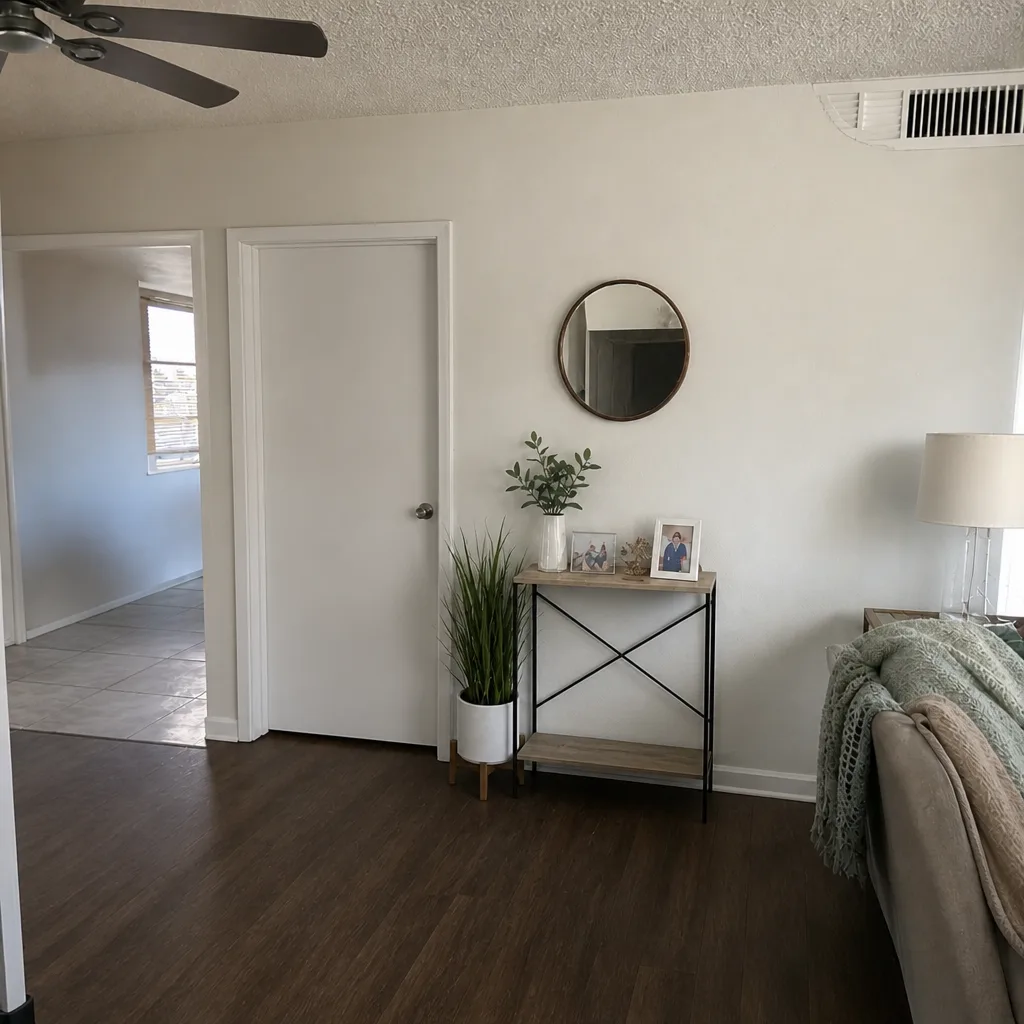 After
When to Call a Professional
Call a professional if you see dust blowing out of a register right after the HVAC cycles on, if airflow has dropped noticeably at some registers compared to others, if you’re getting a musty smell when the system runs, or if your energy bills have drifted up with no change in how you use the house. Older Glendale homes frequently have unsealed joints or degraded flex runs, and those tend to show up first as higher bills or uneven temperatures. Dryer vent lint buildup is a separate but related concern. If you haven’t had the vent inspected and it’s been more than a couple of years, that’s worth a look for fire-safety reasons alone. Glendale Duct Cleaning offers free estimates in Glendale. Call (855) 745-4301. We answer 24/7. Fast dispatch from 7am to 7pm, Sunday through Friday.
Frequently Asked Questions
No. Routine air duct cleaning does not require a Glendale permit or a licensed mechanical contractor because cleaning doesn’t alter the mechanical system. A permit becomes necessary when the work involves modifying, repairing, or replacing duct connections, which falls under licensed HVAC work and the 2018 International Mechanical Code as adopted by Arizona. If your quote includes cutting or resealing a duct, ask whether a permit was pulled.
Yes. Structural duct work, including cutting, splicing, adding a return, or resealing a trunk line, falls under Arizona’s contractor licensing framework, and the relevant license for most residential duct work is the C-39 Air Conditioning license through the Arizona Registrar of Contractors. If a company offers to “fix a couple of connections” during a cleaning but doesn’t hold a C-39 themselves, they should be subcontracting the work to one who does, with the licensed contractor named on the permit.
Ask for the ROC license number in writing, then look it up on the Arizona Registrar of Contractors website. Confirm three things: that the class matches the work (C-39 for duct repair), that the status is active rather than inactive, and that the name on the license matches the entity on your estimate. Inactive status means the contractor can’t legally perform work under that license, even if the number still appears on their website.
It’s fixable. Start by documenting what’s there with photos and any remaining paperwork, then call the Glendale building department and describe the modification to ask what’s required. A licensed C-39 HVAC contractor can inspect the work and bring it up to code, then pull a retroactive permit if needed. Retroactive permits are common and don’t automatically mean major cost. Getting this cleared before listing your home is far less stressful than handling it during escrow.
Costs vary by system size and condition, so the honest answer is that you need a written estimate to compare. What you should insist on is a flat price per system, agreed before work starts, rather than a per-duct or per-vent quote that grows the invoice once the technician is on site. Reputable companies will show you before-and-after photos of your own ducts so you’re not guessing whether the work was actually done. Call (855) 745-4301 for a free estimate. Estimates are free.
There’s no single schedule that fits every home. Glendale’s dust and long HVAC runtimes can justify more frequent cleaning than a milder climate, but the real triggers are visible dust at registers, allergy or respiratory concerns, recent renovation, or never having had the system cleaned. A professional inspection tells you more than a calendar does. If the ducts are structurally sound and reasonably clean, we say so. If they need cleaning, we’ll quote a flat price for the whole system.
Professional rotary-brush-and-vacuum systems like Rotobrush, plus negative-pressure containment equipment. Consumer-grade shop vacuums don’t move enough air to dislodge the dust that’s clinging to duct interiors, and they don’t provide proper extraction. Glendale Duct Cleaning uses Rotobrush and Nikro systems, and we keep Abatement Technologies equipment available for cases that need remediation-level care. We also work with Honeywell and Aprilaire filtration hardware when the post-cleaning recommendation is an IAQ upgrade.
The Bottom Line
Cleaning your ducts in Glendale doesn’t require a permit, but the work that sometimes gets bundled in with a cleaning does. Duct modification, repair, or replacement of connections is licensed mechanical work in Arizona, usually requires a C-39 license through the Arizona Registrar of Contractors, and often needs a Glendale building permit under the 2018 International Mechanical Code. Check the license every time, insist on a written estimate before any add-on work, and resolve unpermitted duct work before it complicates a home sale. A company that stays on the right side of this line is one worth keeping. Call (855) 745-4301. We answer 24/7. Fast dispatch from 7am to 7pm, Sunday through Friday.
Written by the team at Glendale Duct Cleaning.