
Last updated November 16, 2026
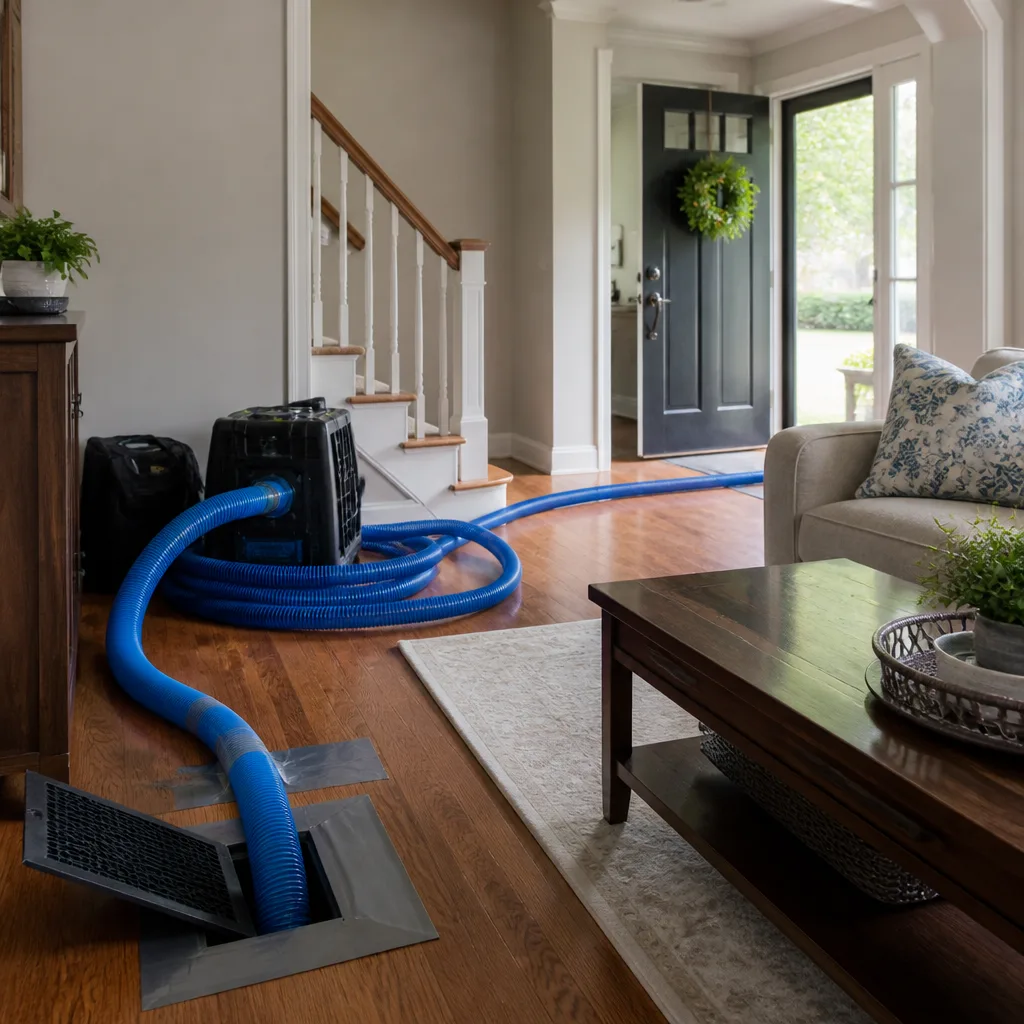 Whole-home duct cleaning
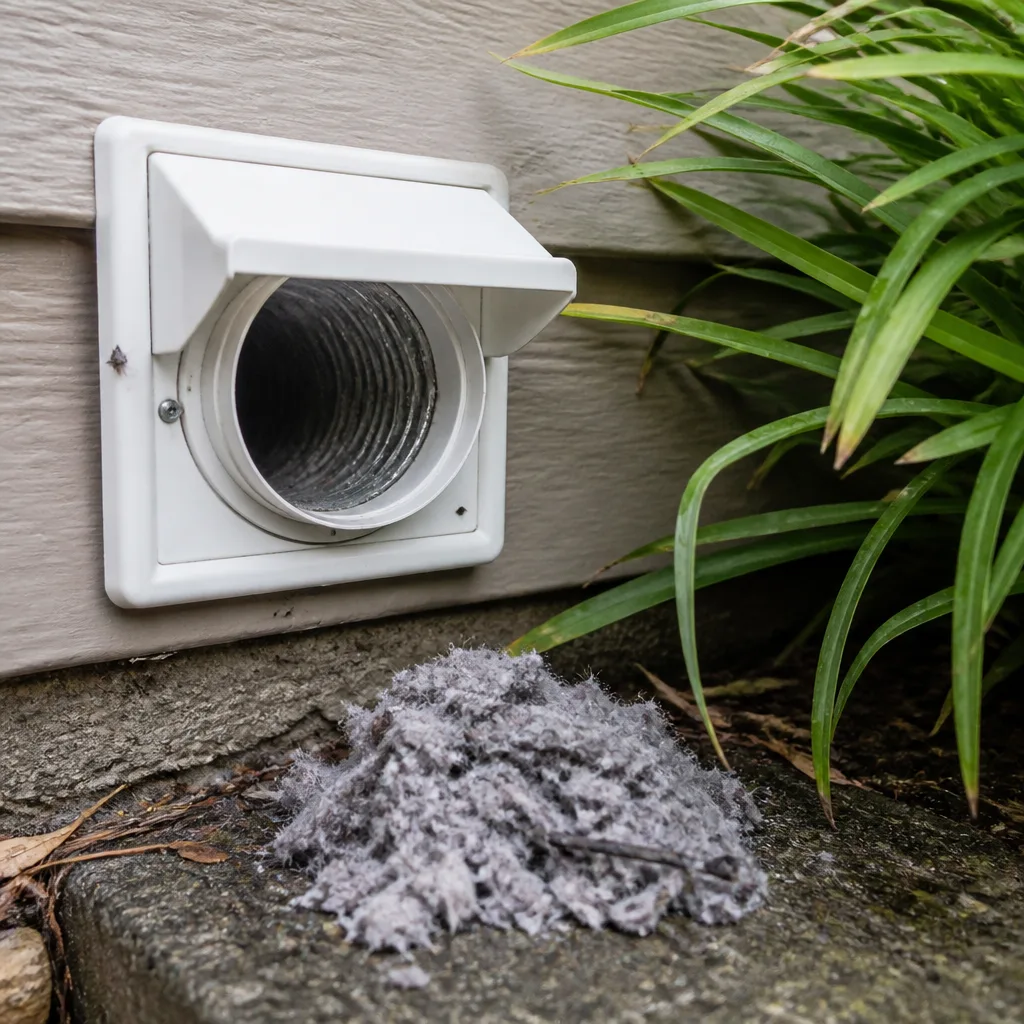 Dryer vent cleaning
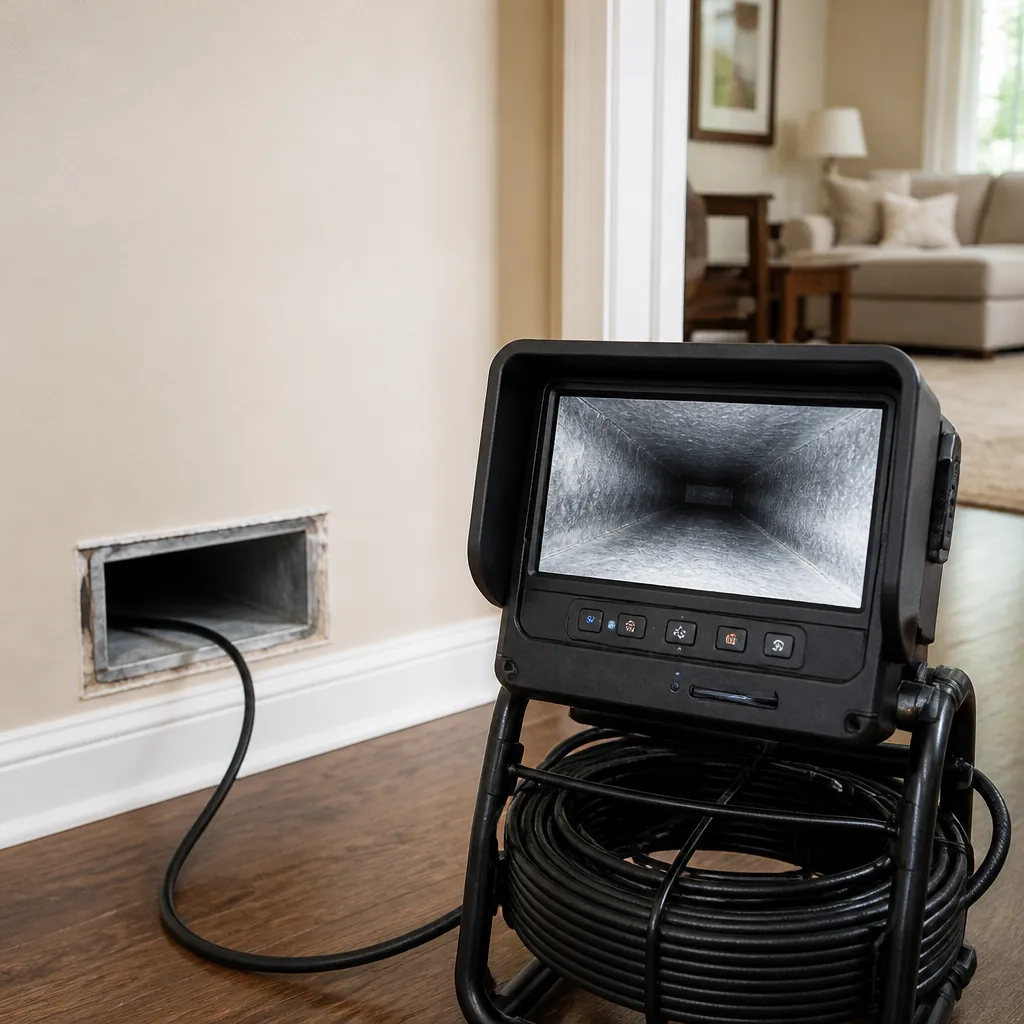 Camera inspection
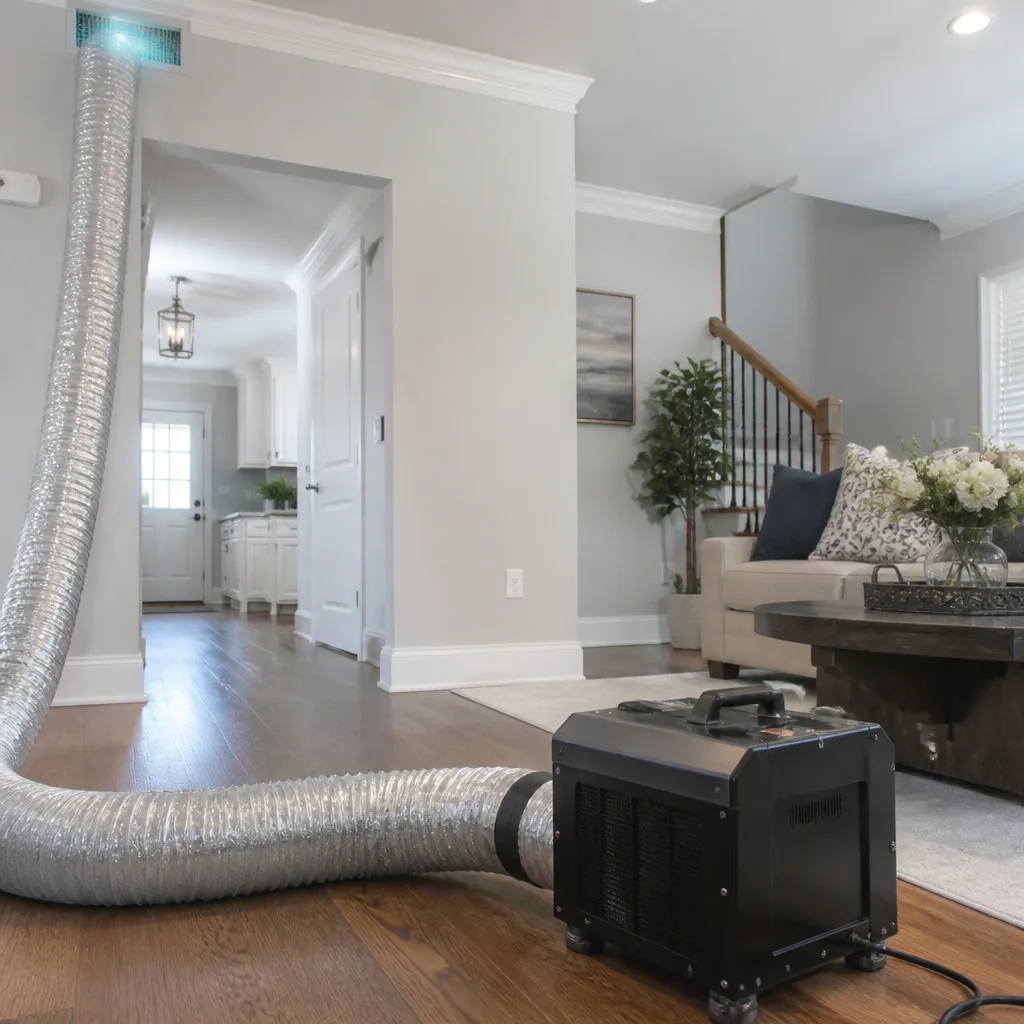 Sanitizing & deodorizing
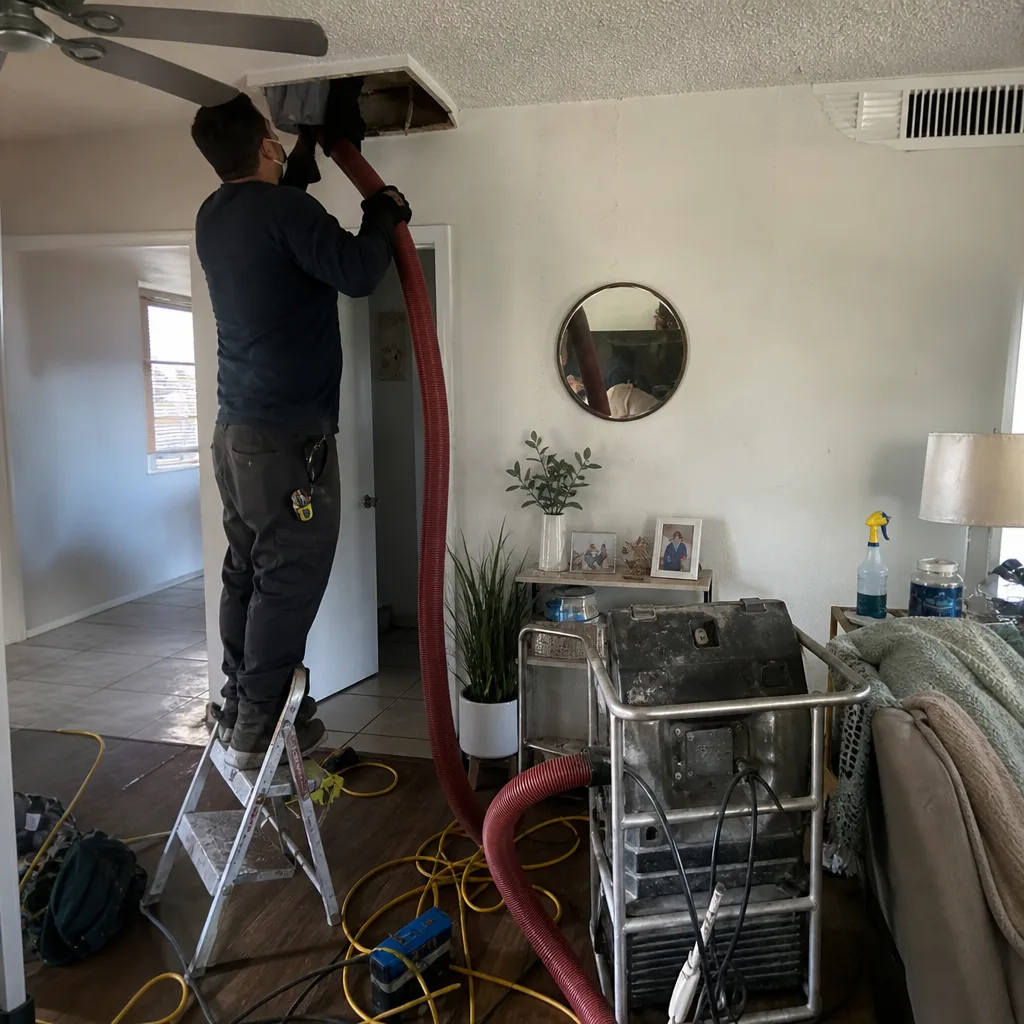
Whole-system duct and dryer vent check with before-and-after photos - you see exactly what came out of your vents
That "$99 whole-house special" is a bait ad - the real number appears once they are in your hallway, or the "clean" is a shop-vac at the register. We photograph the inside of your ducts before and after instead.
Air Duct Cleaning Maintenance Checklist for Glendale Homeowners
Changing your filter on schedule feels responsible. And it is, as far as it goes. But a 1-inch MERV-8 filter doesn’t stop the fine particulate that moves through the valley during dust storm season, and whatever does get past it settles inside your ductwork and stays there. Cleaning is a starting point, not a finish line. What happens between cleanings decides whether you’re breathing yesterday’s dust two years from now. This guide gives you a month-by-month checklist tied to Glendale’s actual climate calendar, the visual checkpoints you can do yourself, filter thresholds for pets, renovations and allergies, and the documentation habit that turns guesswork into evidence.
Quick Answer
The short version: clean your ducts when contamination is confirmed rather than on a blind schedule, inspect registers and flex-duct joints yourself four times a year, upgrade filtration for pets, renovations or allergies, and photograph every register twice a year. In Glendale, the two dates that matter most are May, before haboob season, and July through August, after the first major dust storms. Clean the dryer vent separately and more often than most people do.
Styles & brands we work with
- Whole-home duct cleaning
- Dryer vent cleaning
- Camera inspection
- Sanitizing & deodorizing
Table of Contents
- Why Glendale’s Climate Rewrites the Standard Checklist
- The Month-by-Month Checklist
- Visual Inspection Checkpoints You Can Do Yourself
- Filter Upgrade Thresholds: Pets, Renovations, Allergies
- The Dryer Vent Is a Separate Job on Its Own Clock
- The Documentation Habit That Settles Arguments
- When to Call a Specialist vs. When to Wait 30 Days
- Common Mistakes to Avoid
Why Glendale’s Climate Rewrites the Standard Checklist
Most duct maintenance advice you’ll find online was written for a generic American house in a generic four-season climate. Glendale doesn’t run on that calendar. Our dust season is concentrated and violent, our winters are mild enough that heating runs only briefly, and the long cooling season means the air handler moves a large volume of air through the same ducts for most of the year. That changes what you should check, when you should check it, and how often.
The single biggest factor is airborne particulate. Valley dust storms push fine material into the air that a standard filter simply isn’t rated to capture. Some of it lands on furniture and gets wiped away. The rest finds its way into return grilles, plenum spaces and the seams of flex duct, where it accumulates quietly. Once it’s inside the ductwork, it doesn’t leave on its own. Every time the system runs, a portion of it gets stirred back into the living space.
That’s the reasoning behind a date-driven checklist instead of an interval-driven one. If you clean in April and a serious dust event hits in July, a “clean every three years” rule tells you to do nothing for two years and eleven months. That’s the wrong answer. Your ducts may be carrying material that arrived after the cleaning and never got addressed.
Here’s what we’ve seen while working throughout Glendale: the timing of cleaning matters as much as the cleaning itself. A thorough job performed just before dust season holds up far better than the same job performed in November.
The other local reality is housing stock. Glendale has a lot of ranch-era homes where ductwork has been modified, extended or rerouted over the years. Additions, converted garages and remodeled kitchens often leave flex duct runs that sag, kink or connect loosely. Those joints are where dust accumulates first and where you’ll spot trouble earliest if you know what to look for.
The Month-by-Month Checklist
This is the working calendar we recommend to Glendale homeowners. It isn’t a rigid schedule. It’s a map of when to pay attention, so nothing sneaks up on you.
January: Post-Holiday and Post-Renovation Review
January is the month for the forgotten source: renovations. If you had drywall work, flooring, painting or a kitchen remodel done in the fall or over the holidays, fine construction dust has been circulating through your system for weeks. Drywall dust is especially stubborn and abrasive. Check your filter. If it’s grey and heavy, replace it, then walk the house looking at register faces for a visible film. A recent renovation is one of the clearest reasons to schedule professional cleaning rather than wait.
February through April: The Quiet Window
These are the mild months. Use them for the jobs that don’t depend on weather. Replace filters on schedule. Vacuum register covers with a brush attachment. If your dryer vent hasn’t been cleaned in a year or more, this is the window to get it done quietly, before summer heat pushes dryer run times up. If a professional cleaning is on your list for the year, spring is the smart timing.
May: Pre-Haboob Prep
This is the most important month on the Glendale calendar. Before dust storm season, do three things. First, change the filter so the system starts the season unrestricted. Second, seal or note any gaps around return grilles and air handler cabinets. Third, look at your flex duct joints, especially in the attic, for disconnected or sagging sections. Small openings that are harmless in March become dust injection points in July.
June: System Walkthrough
Heat is on and the system is running hard. Watch for rooms that never cool evenly. Uneven cooling is often a duct problem, not an equipment problem, and a collapsed or disconnected flex run in a hot attic is a common cause. If one room is consistently warmer than the rest, that’s a signal worth acting on.
July and August: Post-Storm Inspection
After the first major dust storm of the season, do a full inspection. Check filter condition, look at register faces for a fresh dust film, and note any musty or dusty smell when the system starts. If you see a visible change, photograph it (more on that habit below). A dust storm can undo months of good behavior in a single afternoon, which is exactly why the post-storm check exists.
September through November: Recovery and Reset
The dust season winds down. This is the natural time to schedule professional cleaning if the year’s inspections turned up real contamination. It’s also the time to make any duct repairs identified over the summer. Repairing a disconnected joint before heating season means the system runs efficiently when temperatures finally drop.
December: Heating Season Check
When the heat first comes on for the season, pay attention to smell. A brief dusty smell on first use is normal. A smell that persists for days means something is sitting in the ducts, and it’s worth investigating. Check the filter once more and note the date of your last change.
Visual Inspection Checkpoints You Can Do Yourself
You don’t need equipment to catch most duct problems early. You need a flashlight, a few minutes, and knowing what normal looks like. These are the four checkpoints to look at every season.
1. Register Color and Surface
Pull a register cover off and look at the metal face. A light, even film is normal. A dark, thick, uneven deposit, or any greasy or fuzzy texture, is not. Compare registers in different rooms. If one register is visibly darker than the others, that room may be getting more contaminated air, or that run may have a leak pulling attic or garage air into the system.
2. Condensation Near Flex Duct Joints
In Glendale’s heat, condensation on ductwork is a warning sign, not a cosmetic issue. Look at flex duct joints in the attic or wherever ductwork is exposed. Moisture at a joint usually means a loose connection or a damaged vapor barrier. Both allow attic air, insulation fibers and dust into the system, and moisture plus organic dust is exactly the combination that grows biological material. A joint that stays damp needs repair, not a cleaning.
3. Filter Bypass Gaps
This one is the most overlooked. Pull the filter and look at how it sits in the cabinet. Is it a snug fit, or can you see gaps around the edges? A filter that doesn’t fit tightly lets a significant amount of air bypass the filter entirely. That unfiltered air carries dust straight into the plenum, the coil and the ducts. A cardboard-and-foam shim or the correct filter size will close the gap, and closing it will do more for air quality than buying a higher-rated filter that fits badly.
4. Airflow at Each Register
Hold a tissue or your hand in front of each supply register. Airflow should feel strong and similar from register to register. A run with noticeably weak airflow may have a collapsed flex duct, a disconnected joint or a closed damper. Write down which rooms feel weak. That list gives a professional a starting point when you do call.
Filter Upgrade Thresholds: Pets, Renovations, Allergies
Filter advice gets oversimplified, so let’s be specific. The right filter for a household with no pets, no recent work and no allergy issues is not the right filter for a household with two dogs and a recent remodel. Here’s a practical set of thresholds.
Standard Household
A 1-inch MERV-8 filter is reasonable for a Glendale home with no special conditions, changed on schedule. It captures the larger material and keeps the system from loading up. Understand what it doesn’t do: it doesn’t reliably capture the fine particulate that comes with valley dust. For that, duct cleanliness matters more than filter rating.
Households with Pets
Pets raise the volume of hair and dander in circulation, and hair loads a filter fast. Filter change frequency should roughly double compared to a pet-free home. If you can see a visible layer on the filter after a few weeks, you’re changing it too late. Higher-rated filtration helps here, but only if it fits tightly and the system can handle the added restriction.
Recent Renovations
After drywall, flooring or paint work, upgrade filtration temporarily and change it more often during the dust-heavy phase. Construction debris generates material a basic filter won’t catch. Once the renovation dust settles, professional cleaning may be warranted to remove what got into the system despite your best efforts.
Allergy Sufferers
In Glendale’s dry air, fine particulate stays airborne longer than it does in humid climates, so it has more opportunity to be drawn into the system. Households with allergy concerns should focus less on a single filter upgrade and more on the whole chain: a snug-fitting filter of appropriate rating, a thorough professional cleaning to establish a clean baseline, and careful attention to duct joints that let unfiltered air in. We’re trained on Honeywell and Aprilaire filtration systems, and matching a filtration approach to your specific system matters more than buying the highest-numbered filter on the shelf.
The Dryer Vent Is a Separate Job on Its Own Clock
Your dryer vent is not part of your HVAC ductwork, and it’s not on the same schedule. It doesn’t care when haboob season begins. What it does care about is lint, which accumulates every single load and is highly combustible.
NFPA guidance is clear about the fire risk of lint-clogged dryer vents, and this is the reason we treat dryer vent cleaning as a fire-prevention service rather than a convenience. Glendale’s dry, hot climate means lint dries out and stays dry, and dry lint ignites easily.
Here’s what to check monthly:
- Clearance: is anything resting against or piled around the back of the dryer?
- Dryer run time: if a normal load now takes noticeably longer to dry, airflow is probably restricted.
- Heat: is the exterior of the dryer or the wall around the vent unusually warm when running?
- Exterior flapper: does the outside vent flap open freely when the dryer is running, or does it stick or stay shut?
A dryer that takes two cycles to dry a load, or a vent flap that won’t open cleanly, is a signal to stop using the dryer until the vent is cleared. This is one of the few areas where a delay genuinely carries a safety cost, and professional dryer vent cleaning addresses it directly with the right equipment to clear the full length of the vent, including the section you can’t reach from either end.
The Documentation Habit That Settles Arguments
This one costs nothing and solves a real problem: how do you know whether your ducts are actually getting dirtier, or whether last year’s dust just looks familiar?
The answer is photographs. Twice a year, take a photo of the inside of each main register cover. Use the same angle, the same lighting and a consistent reference point. Over time, you’ll have a visual timeline of the condition of your ducts in your own home.
Why this matters: dust and contamination are easy to imagine and hard to prove. Before-and-after photographic evidence is how a professional cleaning job should be documented anyway, and it cuts both ways. A company that can show you photos of the material removed from your own ducts is giving you something far more concrete than a promise that they “cleaned everything.”
Your twice-a-year records do the same thing from your side. If a technician tells you your ducts need cleaning and your photos show no visible change over two years, you can ask questions. If the photos show a clear, worsening film after a dust season, that’s solid evidence of real contamination and you don’t have to wonder.
When to Call a Specialist vs. When to Wait 30 Days
Most checklist findings fall into one of two categories: call now, or note it and re-check in 30 days. Here’s how to sort them.
Call a Specialist Now
- Persistent musty or dusty odor from registers that doesn’t clear after days of running the system
- Visible biological growth (dark staining, fuzzy texture) anywhere in the ductwork
- A flex duct joint that is disconnected, torn or holding moisture
- Rodent droppings or nesting material found at a register or in an exposed duct run
- Weak airflow to one or more rooms that persists after checking dampers and filters
- A dryer vent that is restricted despite basic cleaning at the dryer end
These aren’t cleaning questions; they’re repair or remediation questions. A professional who handles duct repair as a standalone service can address structural issues that cleaning alone won’t fix. We work with Abatement Technologies equipment for jobs that call for remediation-level care, and not all residential companies have that capability. Air duct cleaning in Glendale done properly means identifying the cause of contamination, not just vacuuming what’s there.
Monitor for 30 Days
- A light, even dust film on registers during dust season
- A brief dusty smell on first use of the system in fall or winter
- A filter that’s dirty on schedule with no unusual symptoms
- One slightly weaker register with no other signs
Note these, photograph them, and check again in 30 days. If they get worse, escalate. If they don’t, you’ve saved yourself an unnecessary job.
Common Mistakes to Avoid
- Cleaning on a blind schedule instead of evidence. A “clean every five years” rule ignores what actually happened to your ducts in that time. In Glendale, a dust storm can change everything in a day. Let the condition of your ducts, and your photos, drive the decision.
- Buying a higher-rated filter that doesn’t fit. A MERV-13 that leaves gaps around the edges is worse for your air quality than a MERV-8 that seals tightly. Check the fit before you check the rating.
- Assuming a filter change is a maintenance plan. Filters protect the equipment and reduce what gets into the ducts. They don’t remove what’s already inside. Fine particulate that a basic filter misses is already in your ductwork.
- Forgetting the dryer vent entirely. It’s a separate system with a separate risk. If you’ve never had it cleaned and have lived in the home for several years, it’s overdue. Lint accumulates on every load, not just occasionally.
- Skipping the post-storm inspection. September is too late to check for damage that July caused. If you only do one inspection a year, make it the July-August one, after the first big dust event.
- Ignoring a damp flex duct joint. Moisture at a joint is not cosmetic. It’s a sign of a damaged connection and a place where biological material can grow. Cleaning a duct with an active moisture problem doesn’t fix the moisture problem.
- Working with a company that can’t show you the evidence. A shop vac and a promise isn’t professional cleaning. Ask what equipment will be used. Professional-grade rotary-brush-and-vacuum systems like Rotobrush and Nikro are what commercial contractors use, and the difference in what comes out of your ducts is not subtle.
See the difference
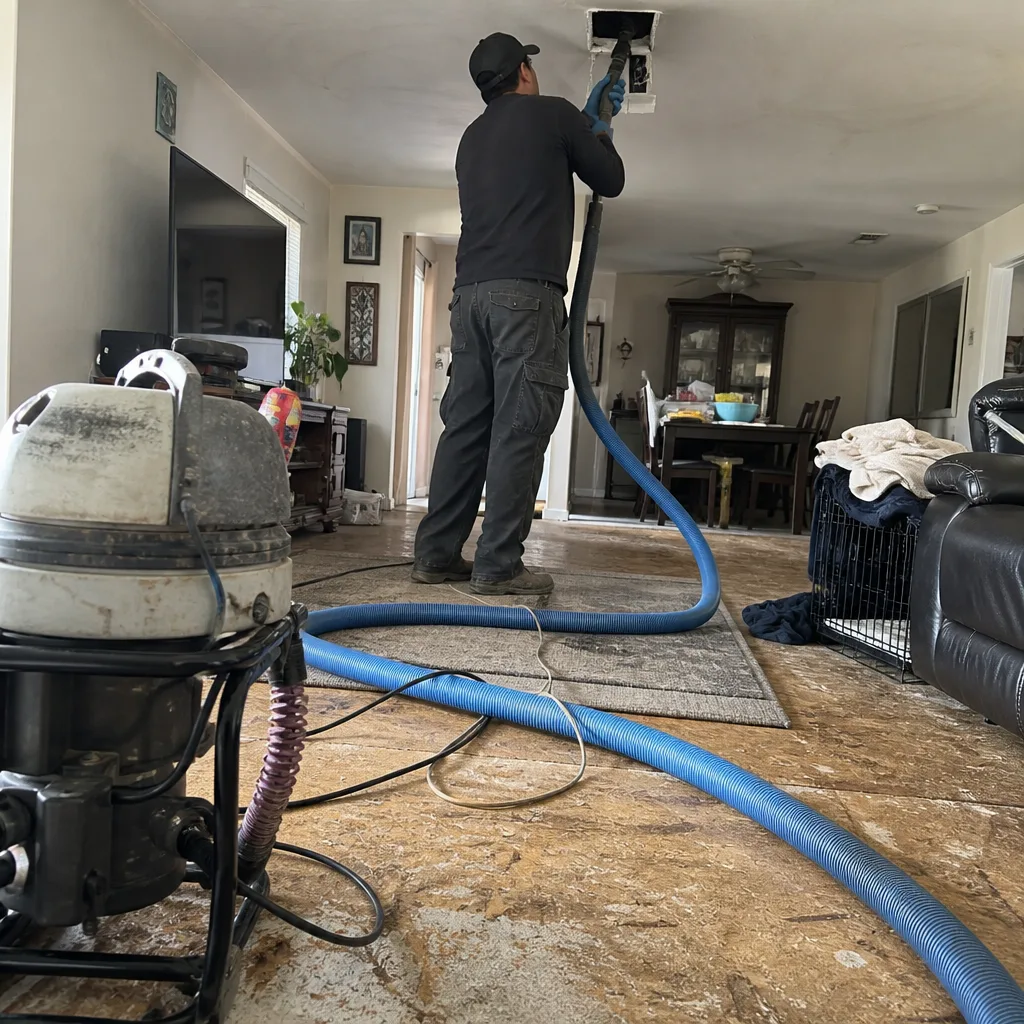 Before
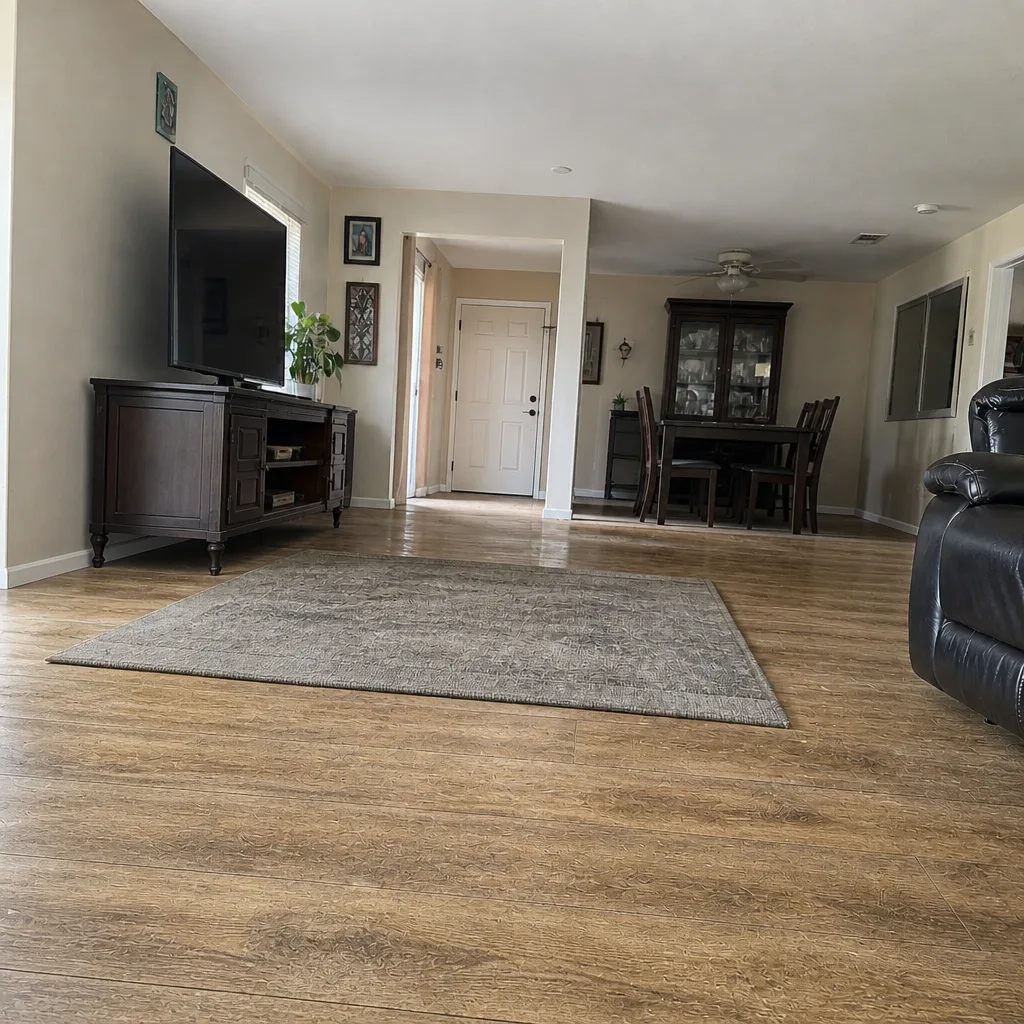 After
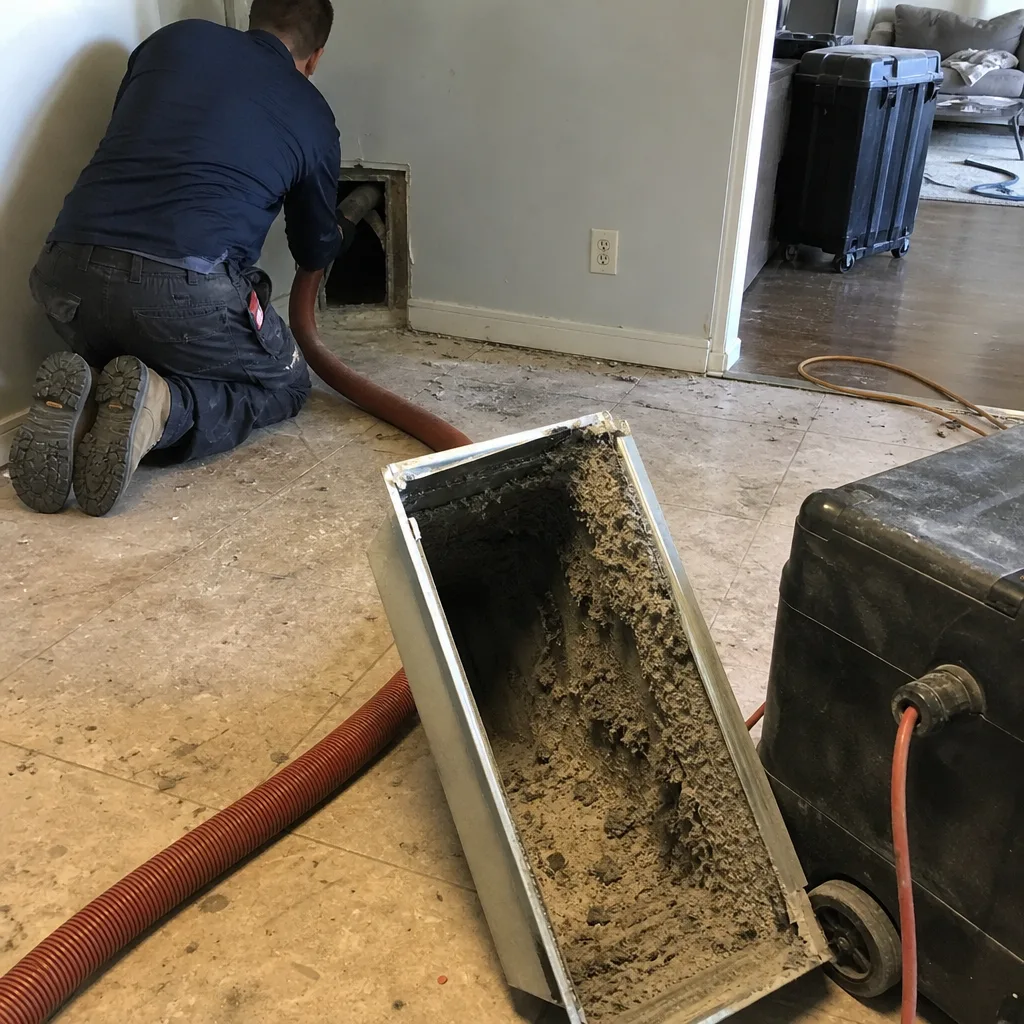 Before
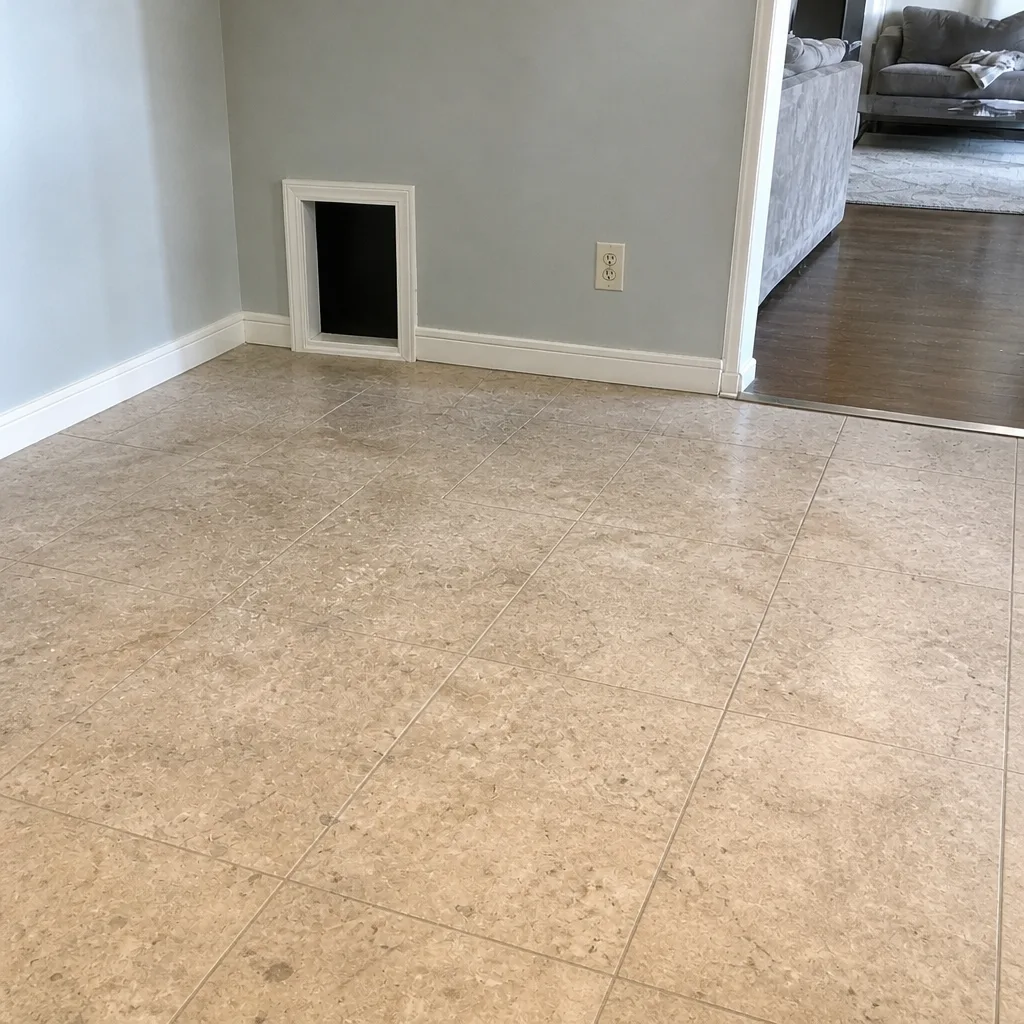 After
 Before
 After
When to Call a Professional
Most of this checklist is built for you to do yourself. A handful of situations aren’t, and it’s worth knowing where the line is.
Call a professional when you find biological growth, rodent evidence, a disconnected or torn flex duct joint, a moisture problem that keeps returning, or persistent airflow problems that you can’t trace to a damper or filter. Call when a habitat-level dust event has visibly changed the color of your registers and the change doesn’t resolve after a week of running the system. And call when your dryer vent is restricted despite basic cleaning, because that’s a fire-safety issue and it isn’t something to keep monitoring.
If a visual finding turns up over a day we aren’t open, we’re closed Saturday. Call us and we’ll book you into the next opening, Sunday through Friday, 7am to 7pm. Glendale Duct Cleaning offers free estimates in Glendale, and our technicians have up to experience. Call (855) 745-4301.
Frequently Asked Questions
There’s no universal interval, and any company that gives you one without inspecting your ducts is guessing. For most Glendale homes, a professional cleaning every few years is reasonable, but the timing should follow your inspections and your dust-storm exposure, not the calendar alone. A home that runs a high-quality filter, maintains tight duct joints and has no pets may go longer. A home with pets, allergies, recent renovations or a summer of heavy dust may need it sooner. The checklist above tells you what to look for. Call (855) 745-4301 for an exact quote; estimates are free.
Yes, in the situations where contamination is confirmed, because filters and duct cleaning do different jobs. A filter captures material before it reaches the ducts and keeps the equipment from loading up. It doesn’t remove what settles inside the ductwork over time, and a standard 1-inch filter won’t reliably capture the finest particulate that comes with dust storms. The short answer: keep changing the filter, and clean the ducts when the inspections show real contamination rather than on a fixed schedule.
Cheap quotes usually reflect a smaller scope of work: consumer-grade vacuums instead of professional rotary-brush systems, a quick pass over the registers instead of the full duct runs, or no inspection of joints and the air handler. The price also tends to arrive as a per-vent number that grows once the technician is on site. We quote per system, not per vent, and the flat price is agreed before any work starts. A written estimate should tell you exactly what’s included and what equipment will be used. Call (855) 745-4301 for an exact quote; estimates are free.
Ask for before-and-after photos of your own ducts, not stock images. A professional cleaning should be documented at each register and at the air handler, so you can see what came out. This is also why we recommend photographing your registers twice a year yourself: it gives a technician a baseline, and gives you a way to judge the “after” photos. If a company can’t or won’t show you evidence from your own home, that’s your answer.
Cleaning removes accumulated material from inside the ductwork. Repair fixes structural problems: disconnected or torn flex duct, crushed sections, sagging runs, gaps at joints, and poor connections at the air handler or registers. Cleaning a system with a disconnected joint is a temporary fix, because the joint will keep pulling unfiltered attic or garage air into the ducts. Our air duct cleaning service can identify those problems, and we offer air duct repair in Glendale as a standalone service when the finding is structural rather than just dirty.
No. We’re closed Saturday. We’re open Sunday through Friday, 7am to 7pm. Call (855) 745-4301. We answer 24/7, and a call outside dispatch hours is booked into the next opening, Sunday through Friday, 7am to 7pm.
The Bottom Line
Duct maintenance in Glendale isn’t a once-a-year chore. It’s a short checklist tied to a climate that has a hard dust season, a long cooling season and a dryer vent that runs on its own clock. Do the four visual checkpoints every season. Photograph your registers twice a year. Upgrade your filter when your household calls for it, and make sure it fits. Clean the dryer vent on its own schedule, because that one is about fire prevention. And let your inspections decide when professional cleaning is actually needed, not a generic interval.
The one thing to remember: cleaning a system with a bad joint, a moisture problem or a collapsed flex run is wasted effort. Fix the cause, then clean.
If your checklist turns up something that needs a closer look, call Glendale Duct Cleaning at (855) 745-4301 for a free estimate. We answer 24/7, with fast dispatch from 7am to 7pm, Sunday through Friday. We use Rotobrush and Nikro systems, carry Abatement Technologies equipment for remediation-level work, and handle cleaning, dryer vent service and repair as one specialist. Clean it. Fix it. Protect it.
Written by the team at Glendale Duct Cleaning.