
Nikro Air Duct Cleaning in Glendale: A Homeowner’s Guide
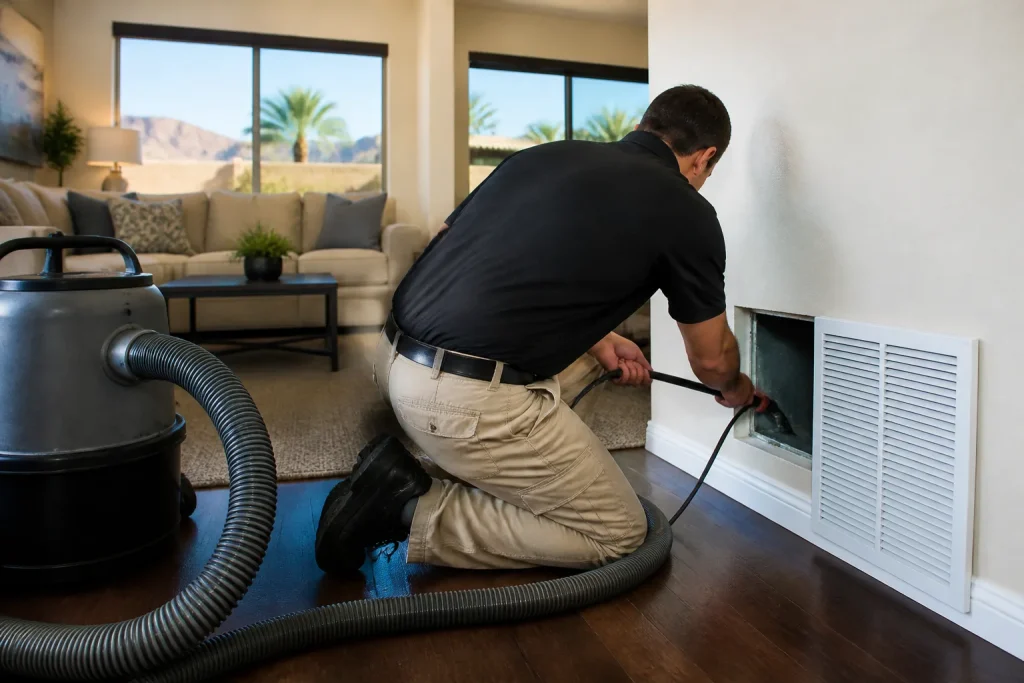
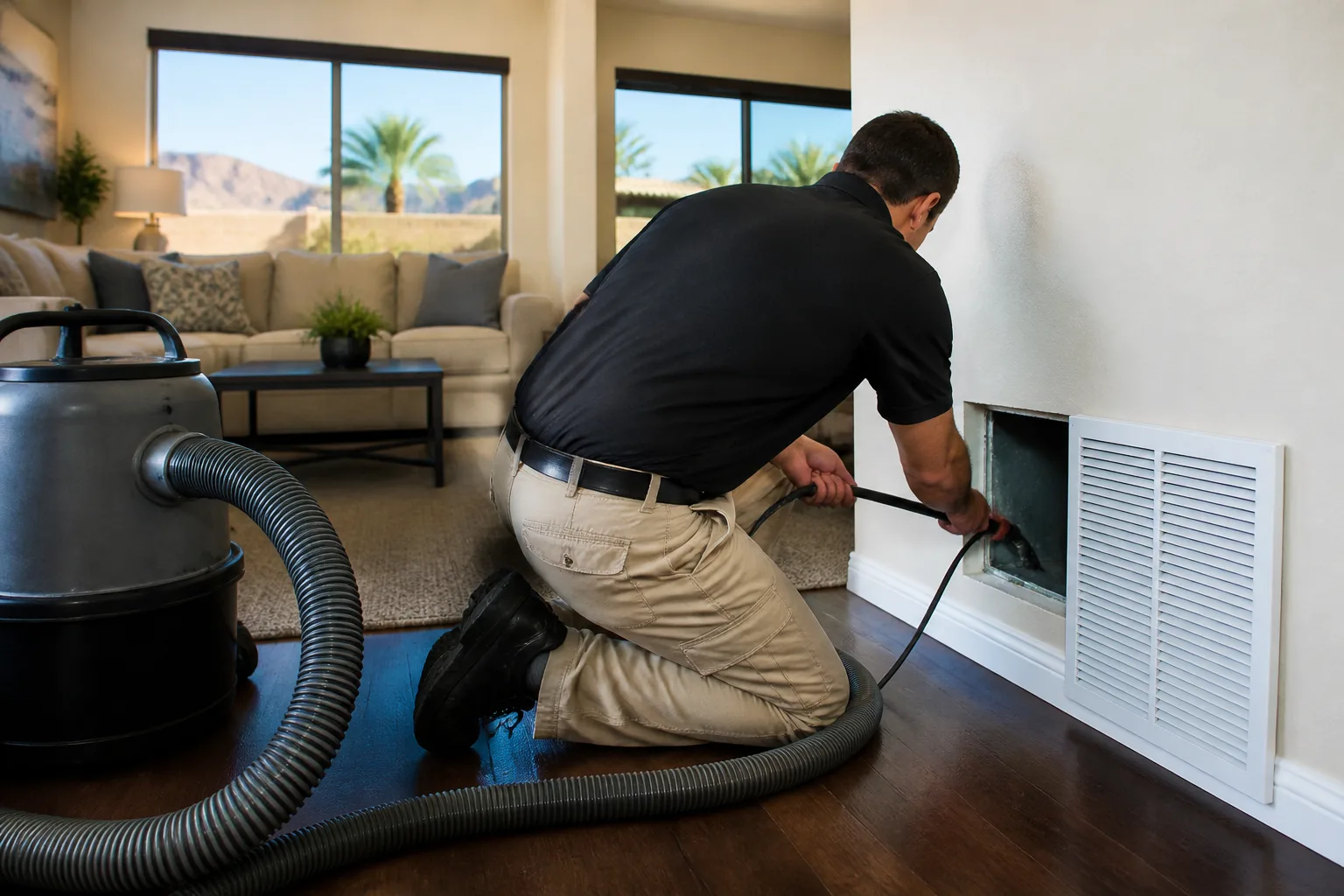
Nikro is a manufacturer of commercial-grade duct cleaning machinery: negative air machines, HEPA-filtered vacuums, and agitation tools built for remediation work, not weekend maintenance. A cleaner running Nikro equipment isn’t just vacuuming your vents – they’re controlling air pressure inside the duct system so loosened debris travels toward containment instead of into your living room. If you’ve ever watched a cut-rate crew work and wondered where all that dust was actually going, the answer usually comes down to the equipment. If you’d rather not dig through spec sheets yourself, call (855) 745-4301 and we’ll walk you through it.
What does “negative air” actually mean in a real Glendale home?
Negative air means the pressure inside your ducts is lower than the pressure in the room around them. When a Nikro negative air machine connects to the system, it draws air out faster than the room can push air in, so every seam, register and loose joint pulls inward. Dust that gets agitated inside the ductwork has one path to travel: toward the machine’s collection point. Without that pressure differential, brushing a duct is like sweeping a floor with a fan running – some of it lands in the bag, and the rest finds your furniture.
This matters more in Glendale than the general advice suggests. Homes here sit in a desert valley where fine particulate from exposed soil, gravel yards and dry air settles constantly, and a large share of it ends up inside the return system. When the air conditioning runs through the long hot season, that load cycles through the house repeatedly. A vacuum without a pressure control plan stirs that fine material back into the airstream. We’ve seen return plenums that looked clean on the surface and dumped visible dust the moment the system kicked on – because nothing was holding the pressure.
With a proper negative air setup, three things happen in sequence:
- The machine establishes and holds the pressure differential before anyone touches a brush.
- Agitation tools loosen debris while the system is already pulling it away.
- Containment captures the material at the source, so living spaces stay out of the loop.
Anyone can own a big vacuum. Holding consistent negative pressure through an entire air duct cleaning job is what separates a real system from a prop.
Why does HEPA filtration at the vacuum stage matter in Glendale?
HEPA filtration at the vacuum stage traps particles that standard filters let straight through. In a Glendale home, the dust you’re trying to remove is largely fine desert particulate – the kind small enough that a shop-vac filter or a thin bag catches the coarse grit and passes the rest. If the vacuum exhausts that fine fraction back into the room, you’ve paid to relocate dust, not remove it. HEPA-rated filtration on the vacuum side closes that loop.
Nikro builds its machines around this idea. The vacuum and the negative air unit work together so the smallest particles get captured at the filter rather than redistributed. For households with allergy concerns, that distinction is the whole point of the service. For households without them, it’s the difference between a duct system that reads clean and one that actually is.
We also look at what happens after cleaning. Filtration systems from Honeywell and Aprilaire are common in Glendale homes, and if the media cabinet or filter housing is the weak link, a clean duct system will load back up fast. Checking that hardware and recommending the right filter is part of a professional job, not an upsell. Clean it, then protect it – otherwise you’re back to square one by the next dust season.
How does Nikro equipment handle flex duct versus hard-pipe systems?
Flexible duct and rigid metal duct fail in different ways and need different handling, and that’s exactly where a full Nikro setup earns its keep. Flex duct is corrugated, so debris collects in the ridges. It’s also easy to damage – too much force from the wrong tool and the inner liner tears or the duct sags. Hard-pipe systems have smooth walls but seams, joints and elbows where debris settles and where air pressure behaves differently. A house with a mix of both – common in Glendale, where additions and retrofits leave a system with several generations of ductwork in it – needs a cleaner who can switch approach mid-job.
Nikro’s lineup covers that range. Lighter agitation tools and controlled vacuum pressure suit the flexible runs. More aggressive rotary tooling handles the metal trunk lines and plenum. The negative air machine stays connected throughout, so the pressure differential doesn’t drop when the tool changes. That continuity is what keeps a mixed-duct Glendale home from turning into a partial job.
Air duct repair is the other half of this. Ducts that are crushed, disconnected at a joint or leaking at a seam won’t clean up well no matter what equipment is used, because the system can’t hold pressure to begin with. We treat Glendale homes with structural duct problems as repair jobs first, cleaning jobs second. Cleaning a broken system is just moving dirt around.
When is Nikro equipment the right tool, and when does a Rotobrush system lead?
Both belong in a specialist’s toolkit, and knowing which leads is part of the craft. Rotobrush systems are built around rotary brush agitation – a spinning brush head travels the duct run while a vacuum pulls material out. That approach excels on standard residential layouts with moderate buildup, and it’s fast and thorough on trunk-and-branch systems.
Nikro equipment tends to take the lead in three situations:
- Heavy contamination. When buildup is significant enough that a pressure-controlled negative air setup is needed to keep debris contained, Nikro-style machinery handles the load.
- Remediation-level work. Jobs where air quality is the primary concern rather than routine maintenance.
- Mixed or delicate duct systems. Where flex runs need gentler handling and pressure has to stay consistent through tool changes.
We run both, alongside Abatement Technologies air quality equipment for the jobs that call for it. A company that owns one system and claims it does everything is telling you something. A specialist who owns the full range can match the tool to the ductwork instead of the other way around. If you want to compare what full-system equipment means for dryer vent cleaning, it’s the same principle: the right tool for the material, not a blower and a prayer.
What questions should you ask any duct cleaner before booking?
Ask about the equipment by name and listen for whether the answer holds up. A cleaner running professional systems will tell you exactly what they use and why. Someone improvising with residential gear tends to stay vague or pivot to price. Here’s what to ask:
- “What’s your vacuum rated for, and does it run HEPA filtration?” If they can’t answer, that’s your answer.
- “Do you establish negative pressure before you start brushing?” This is the single most important technical question you can ask.
- “How do you handle flex duct differently from hard pipe?” A real answer involves different tools and controlled force.
- “Can you inspect for duct damage and repair it if you find it?” Cleaning a broken system is wasted money.
- “Do you check dryer vents in the same visit?” Dryer vent cleaning is a fire prevention service, per NFPA guidance, and separate from duct cleaning for good reason – lint is dense and needs its own attention.
- “Will you show me before-and-after photos of my own system?” You shouldn’t have to guess whether your ducts are actually clean.
When to call a pro
If your registers blow visible dust when the system starts, if anyone in the house has persistent allergy symptoms that don’t improve, if you’ve never had the ducts serviced in a home you’ve owned for years, or if your dryer takes two cycles to dry a load, get an inspection booked. Those are signs the system is asking for help. Our technicians have up to 15 years of experience reading those signals. Estimates are free and the price is set per job by a written estimate before work starts.
Related services in Glendale: Glendale Duct Cleaning handles air duct cleaning, dryer vent cleaning and air duct repair as three standalone services.
The Bottom Line
Nikro equipment is worth understanding because it explains the gap between cleaning that works and cleaning that only looks like it did. Negative air pressure pulls debris toward containment instead of into your rooms. HEPA filtration at the vacuum stage captures the fine desert particulate that standard filters pass right through. And a mixed-duct Glendale home needs a specialist who can move between tools mid-job without losing pressure control. Fifteen minutes of asking the right questions before booking saves you a lot of dust afterward. You shouldn’t have to guess whether your ducts are actually clean, and with the right equipment on site, you won’t have to.
If you’re in Glendale and need help, Glendale Duct Cleaning offers free estimates – call (855) 745-4301. We answer 24/7. Fast dispatch from 7am to 7pm, Sunday through Friday.
Frequently Asked Questions
No. Nikro builds negative air machines and HEPA vacuums designed around pressure control and containment. Rotobrush builds rotary-brush agitation systems that loosen debris inside the duct run. They do different jobs in the same cleaning process, which is why a full-service specialist uses both rather than picking one.
For real removal, negative air equipment is what keeps fine desert dust out of your living space. A standard vacuum can lift loose material, but without a pressure differential the smallest particles escape the exhaust and settle back into the house. If your main concern is allergy symptoms or visible dust at the registers, ask specifically about negative pressure before you book. Call (855) 745-4301 for a free estimate.
Ask for the equipment brand names and the model family, and ask how negative pressure is established. Professional cleaners answer without hesitation and often show photos of the setup. Vague answers, or a pivot to a low price, tell you the equipment story doesn’t exist.
Most Glendale homes benefit from cleaning every few years, though heavy dust exposure, pets and recent remodeling can shorten that. If you can’t remember the last service, that’s usually a sign. Call (855) 745-4301 – estimates are free and the price is set per job before work starts.
Written by the team at Glendale Duct Cleaning.
Need Air Duct Cleaning Help?
Call Glendale Duct Cleaning - licensed & insured, here with fast help in Glendale.
(855) 745-4301